Nebraska tax revenues hold steady ahead of new economic forecasts
Oct 15, 2026 | 6:00 pm ET
Description
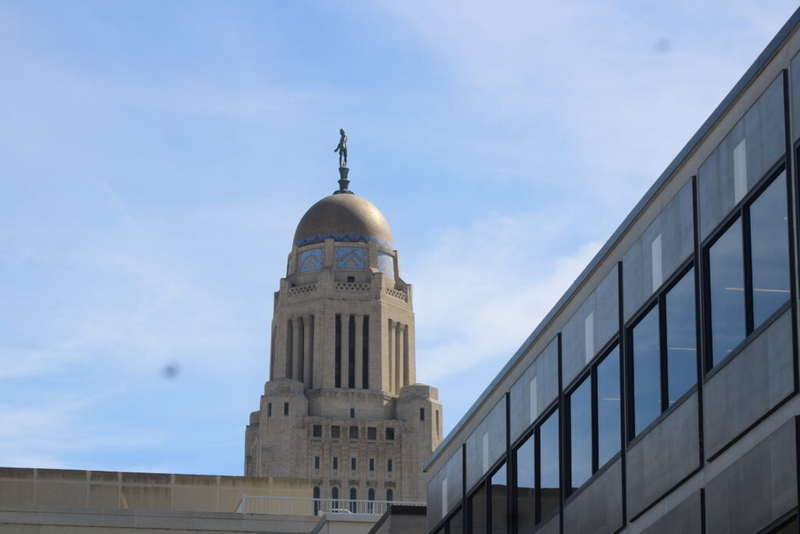
The top of the Nebraska Capitol Mar. 19, 2026. (Juan Salinas II/Nebraska Examiner)
LINCOLN — With a crucial economic forecasting meeting just weeks away, the last round of monthly revenue reports available to forecasters held mostly level with their previous predictions.
The Nebraska Department of Revenue’s report on September’s tax receipts showed a net gain of 0.2% compared to what Nebraska’s Economic Forecasting Advisory Board had predicted in late February. That difference equates to about $1.2 million in extra revenue headed to the state’s coffers.
Though $1.2 million is meager compared with Nebraska’s multibillion-dollar annual budget, it was an encouraging sign to state Sen. Rob Clements of Elmwood, the term-limited chair of the Nebraska Legislature’s Appropriations Committee. Prior to August’s tax report — which broke the pattern — the state’s monthly tax receipts had fallen below forecasts for five months in a row.
“I’m glad to see that we’re stabilizing with our revenues and our receipts,” Clements said.
For legislative fiscal analyst Keisha Patent, September’s tax report showed a continuation of many trends seen throughout 2026. Sales and use tax revenues have consistently risen above predictions — in September they were 13.9% above forecast at $28.3 million. However, those gains were offset by individual income tax revenues, which have regularly fallen below forecast, this time by 16.4% for a $54.9 million loss.
September also continued the trend of Nebraska tax refunds steadily waning, yet still coming in above projections. The latest report shows that refunds were 1.8% — $2.4 million — above forecast, while August’s report had refunds 2% above forecast.
Lawmakers divided on influence of newest Nebraska Economic Forecasting Board Pillen appointees
One notable difference in September’s report were corporate income taxes, which came in 6% — $7.3 million — above forecast after consistently falling below projections through most of 2026. Patent noted that September is typically a big month for corporate income tax revenues, as it’s when businesses submit their estimated tax payments for the third quarter.
The forecasting board will meet Oct. 30 to make new predictions, which will determine the size of the projected budget deficit state lawmakers will be tasked with filling when they convene in January. The 2027 session is expected to be the third consecutive session the Legislature will deal with a projected deficit.
Clements said he anticipates that the board’s new projections will increase the deficit somewhat, but not by a large margin.
Nebraska’s projected deficit currently stands at $208 million by the end of the current budget period ending June 30, 2027. An $846 million deficit is also projected for the next biennium ending June 30, 2029.
Lincoln, NE