Nearly 18,900 CT children have lost SNAP benefits over past year
Jul 30, 2026 | 2:50 pm ET

Description
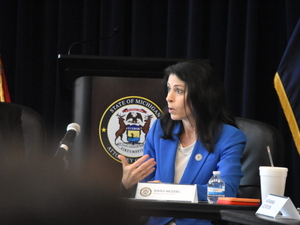
Photo courtesy of CT Mirror
Nearly 18,900 Connecticut children have lost access to federal nutrition benefits since July 2025, when Congress and President Donald Trump ordered a wide array of human services cutbacks, state officials reported this week.
Connecticut’s erosion rate of 15.7% is worse than the 13% average rate that a nationally recognized policy group recently found in a survey of 19 states where Supplemental Nutrition Assistance Program enrollment data was readily available.
“There are severe consequences, not just for the children but for society at large” with these enrollment trends, said Luis Nuñez, a research analyst for the Center on Budget and Policy Priorities, a nonpartisan policy institute based in Washington, D.C.
Enrolling households in Supplemental Nutrition Assistance Program benefits long has been recognized to improve birth and other health outcomes. Losing SNAP benefits also can cost a family access to free school meals.
Nuñez also noted the federal government’s own agricultural research service estimates every $1 spent on SNAP boosts overall economic impact by $1.50.
Finding data about declining SNAP enrollment isn’t always easy
Equally concerning, according to the center, is that many states fail to make SNAP data easily accessible online.
The center could discover the decline in child participation since July 2025 using online resources in just 13 states, though six others provided data that normally isn’t published.
Many states in the Northeast and mid-Atlantic regions did provide SNAP information for the report, including Maine, Maryland, Massachusetts, New Hampshire, New Jersey, Pennsylvania and Vermont.
Still, the center didn’t report receiving any information from Connecticut, where anti-hunger advocates have pushed to use state dollars to supplant vanishing federal resources for nutrition programs.
The state Department of Social Services operates an online dashboard that provides aggregate information, but not monthly totals, about adults and children who have entered the SNAP program each year. Families and individuals can join and leave the program rolls multiple times annually.
Jalmar De Dios, chief external affairs officer for the Department of Social Services, said the department strives to provide timely and easily accessible information about the many programs it manages amid a rapidly changing human services environment.
“We are always calling other states to see what best practices they have,” De Dios said. “We know that there’s a lot of things we still need to learn.”
The department and Gov. Ned Lamont’s administration have felt pressure from legislators and others to mitigate big cutbacks in federal spending on healthcare and social programs.
State officials have made $550 million in surplus funds since last November available for this effort.
Over the past year, Lamont and legislators have tapped these funds several times since November to combat hunger, committing:
- $8.5 million to provide $300 grocery store gift cards to assist an estimated 25,000 residents who have lost access to SNAP benefits.
- $4.7 million to regional community action agencies and to the United Way of Connecticut’s 2-1-1 information line. These nonprofits help households navigate new SNAP eligibility rules or identify other forms of nutrition assistance.
- Millions of dollars in supplemental payments to bolster Connecticut Foodshare and affiliated pantries.
They also included $12 million in the state budget adopted in May to provide universal free breakfast at Connecticut schools starting this fall.
Still, other members of the General Assembly’s Democratic majority say Connecticut needs to do more, and the first step is getting more information about declining SNAP enrollment and the problems it creates.
“I think we need vastly more data on the human toll … and the changes to SNAP in particular,” said Sen. Matthew Lesser, D-Middletown, who co-chairs the General Assembly’s Human Services Committee.
“We cannot do everything,” he added, “but we can do something.”
Lesser’s inquiry about the center’s analysis, and Connecticut’s absence from it, prompted state officials Tuesday to generate the latest estimate of child participation in SNAP.
The enrollment numbers led state Sen. Cathy Osten, D-Sprague, co-chairwoman of the Appropriations Committee, to renew her push this week to create an ongoing state-funded nutrition benefit to help those pushed off SNAP who cannot otherwise obtain enough food.
Osten proposed such a program last spring, but legislative leaders and Lamont didn’t include it in the budget. More readily available hard numbers could be the key to getting something passed, she said.
“I know the legislature would like to have more data on the participants of SNAP,” Osten said, adding that enrollment relative to age, race ethnicity and regions within the state all are important.
Rep. Jillian Gilchrest, D-West Hartford, the other co-chair of Human Services, is running this fall for Connecticut’s 1st Congressional District seat. But she predicted Tuesday state lawmakers will demand more data about and options to assist those who’ve lost SNAP benefits once the 2027 General Assembly session begins Jan. 6.
“I think it’s going to continue to get louder,” she added, “because the need continues to grow.”
Hartford, CT