National report shows growth in telehealth abortions as concerns about access in Ohio continue
Jan 08, 2026 | 4:55 am ET

Description
Medication abortion has become the most common way to terminate a pregnancy.(File photo from Getty Images)
A national report shows a growing trend in telehealth abortions, something advocates in Ohio are concerned may be stifled with new legislation and varying protections across the country for all abortion services.
The academic Society of Family Planning, a group who supports “equitable abortion and contraception informed by science,” released their most recent report on the number of abortions in the nation, and the way in which those services are provided and protected from state to state.
The new WeCount report noted provider-conducted abortions, both medication and surgical, that were completed by a licensed clinician in the U.S., via medical office, hospital or telehealth, between January and June 2025.
Nationwide, the report found more than 500,000 abortions were given in that time period, and 27% of abortions in the first half of 2025 were done through a telehealth service.
The use of telehealth services has increased since the WeCount surveys began in 2022, with usage up from 25% in 2024 and just 5% in 2022, researchers stated.
Most of the increases were in the 13 states with “shield laws,” that is protections for medical professionals who provide abortions in states where abortion is banned or restricted.
Nearly 15,000 abortions per month were provided under shield laws by June 2025, the study stated.
“Telehealth has become a lifeline for people accessing abortion care, especially those in states with abortion bans,” according to Ushma Upadhyay, a professor at the University of California, San Francisco, in a statement announcing the WeCount findings. “But this care is under assault by abortion opponents’ relentless attacks on mifepristone and telehealth.”
Ohio has a constitutional amendment that protects abortion services, which passed with 57% of the vote in 2023. But legislation in the Ohio General Assembly has caused concern for physicians and pro-abortion advocates about how protected not only abortion itself will be in the future, but telehealth access specifically.
Ohio has also seen legal debate over telehealth, in a case in which a Hamilton County court has blocked a 2021 law prohibiting telehealth abortions three times.
Dr. Alison Norris, a public health professor at Ohio State University spoke out against a bill recently passed out of the Ohio House that would require an in-person exam and follow-up for any drug categorized as having severe adverse effects in more than 5% of users. She spoke in the House Health Committee in October, saying the level of scrutiny on reports of severe adverse effects needs to be higher than the bill allowed. She also said limiting the ability for Ohioans to use telehealth would impact many people on many medications, but would directly impact medication abortion access as well.
Norris is listed as a co-chair of the just-released WeCount study, and is also a co-principal investigator for the Ohio Policy Evaluation Network, a group of academics and medical professionals who research the state of contraception and abortion care in the state.
As legislation continues to make the rounds in the Ohio Statehouse that would directly and indirectly impact reproductive health care, Norris said even in a state with protections, diligence when it comes to measures holding abortion care providers to different standards is needed to make sure legislation doesn’t effectively create bans.
“Abortion bans don’t stop people from needing and pursuing essential abortion care,” said Norris, who is also co-chair for the Society of Family Planning’s WeCount study. “Telehealth is helping people in states with bans to access abortion care – and yet it isn’t the answer for everyone. Abortion bans are causing harm (in other states), and all too often, your access to health care depends on where you live and how much money you have.”
Despite a patchwork of coverage and protections from state to state, the U.S. has still seen an increase in abortions, from an average of 80,000 monthly abortions in 2022 to 99,000 per month from January and June of this year, according to the society’s study.
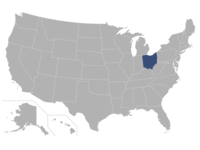
Columbus, OH