The mountain elite: Wyoming’s Lorna Corson, among the first Grand Canyon boatwomen
Oct 05, 2026 | 6:20 am ET
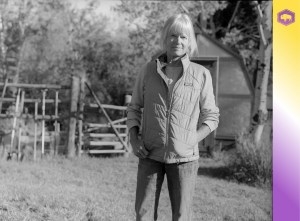
Description
Photo courtesy of WyoFile
Grand Canyon river guide Lorna Corson negotiated notorious rapids for more than four decades, keeping clients safe with her skills and knowledge. It took skill, determination and courage on the water. Clients have credited her safety lectures for saving their lives.
Yet one of the most fulfilling parts of her job was relating to her passengers and seeing them open up to the natural world, like the 300-pound city slicker.
After floating through the canyon his first time and enjoying the ambles and scrambles out of camps, “he started hiking — and came every single year for 30 years,” Corson said. “He got to half the weight he was.”
Guides can help passengers absorb the awe of a 6,000-foot deep gorge that stretches almost 300 miles. “Their values change,” Corson said of many clients. “I’ve seen people quit their jobs after one trip.
“Every guide appreciates how they made an impact on somebody’s life, created a life-altering experience. You hear it all the time. That’s pretty rewarding.”
Corson earned her way into the elite profession, among the first women to row clients through the Colorado River’s foam, frenzy and froth. She was an unlikely pioneer — only 5 foot 3 inches tall boasting a fighting weight of 120 pounds. On the oars of a large, inflatable raft capable of holding hundreds of pounds of gear and people, how could she possibly get through the V-wave at Lava Falls, the Charybdis holes of Crystal Rapid and the rock maze of Hance?
She succeeded by reading the water and rowing smart for Arizona Raft Adventures, safeguarding thousands of visitors through the canyon’s storied sandstone walls.
“As soon as I rowed, it just felt intuitive,” Corson said. “It just really clicked for me.”
That was in 1977 when she was a 23-year-old trainee, and mentors were testing her skills. A child of a National Park Service family, she lived in Flagstaff.
“They were kind of judging your ability and whether they would trust you with their boat,” she said of the veteran, male guides. “I had to convince people that I could row the big ones.”
“I got to row Lava early,” she said of one famous rapid. “Crystal was the last one. I don’t think anybody let me row Crystal till I had my own boat.”
Being a woman guide was “very much a new thing,” Corson said. But guide Louise Teal’s 1978 all-women’s expedition was a breakthrough. “We didn’t have that many women boatmen but they shipped them in from Idaho and California.” Corson said. (A photograph of Corson is the cover of Teal‘s book “Breaking into the Current” about boatwomen in the Grand Canyon.)
Regardless, the company boss wasn’t impressed, Corson said.
“I was pretty introverted, and most guides tend to be extroverts. And my size — definitely he was not sure about that.”
His wife was. “She’s the one that actually hired me.”
Courson learned the character of the desert river – pool, drop, pool, drop and of the elusive seam between current and eddy.
“There’s a lot of slow water … it’s hard to see the currents, especially in the wind. Then there’s these huge eddies. If you get in an eddy, you can row your brains out and you won’t get anywhere. You can see very large, strong people struggling.”
Rapids present a different challenge — knowing where you want to go and then maneuvering.
“Where you enter the rapid is huge. (If) someone’s a foot left of you or right of you, they have a different run.”
Keeping the boat angled correctly is paramount, “especially if you’re entering a difficult rapid where you have to do a downstream ferry.
“You enter backwards and pull really hard at like 45 degrees to the current to get exactly where you want. Eventually you turn forward again to face the big waves.
“Because I was small, I felt like it was more imperative that I have my timing exactly right — the entry and my angle — so that I could make sure I was where I wanted to be without having to pull too hard.
“If you kind of hesitate on the entry a little bit longer and you’re bigger, maybe you can get where you want to be. But I felt like I had to be on it and have that perfect angle.”
In the tumult, there’s a sweet spot to pull or push on the oars to reorient or move the raft.
“If you’re on the peak [of a wave} and you take a couple strokes, you’re going to pivot very quickly. If you’re in the trough, you’re going to have to work a lot harder to because there’s so much more resistance on the boat.”
Reading water and rowing came naturally, “more than anything else I’ve done in my life.” But passengers couldn’t see her abilities and were hesitant to ride with her “because I was young and female.
“In the end it was just the opposite,” Corson said of her career. “I don’t know why. Things did change. Maybe (it was) just being older. As soon as they hear you’ve been working down there for decades, that gives some confidence.”
When Corson got hired, other boatwomen began appearing on the scene. “It made the dynamics of the whole trip better for the passengers and the boatmen and the boatwomen. It was just much more balanced.”
Flagstaff was too big a city and decades ago an “inner voice” told her to move north. Wyoming had the “perfect climate” and few people. “Once I got here, it was obvious that it was where I wanted to be.
“Right away it felt safe in many ways,” Corson said. “I like Wilson and the mountains, of course.”
Today, Jackson Hole embraces women guides. “I think it’s pretty liberated that way now because it’s a town or community where people are playing a lot. But [it] was a while — decades, in the making. I don’t think it was [liberated] 45 years ago at all.”
Corson also is a carpenter and cabinetmaker, in business with her husband Norm Larson. It was hard to convince people in that profession that she was capable. It was harder than breaking into the Grand Canyon current.
“Carpenters were more old-style, more traditional … it’s a totally male-dominated field.”
After decades, people still don’t get it, she said.
“I’ve been doing carpentry for 40 years, but people always ask me what Norm is doing. We’re partners, and we have been for a long time, and we both work in the shop, and it’s our business. That always seemed kind of strange. Even people I know well still go, ‘What’s Norm working on?’
“I got a lot of recognition as a boatwoman, but I got hardly any as a carpenter, and I’m a big part of our business.
“I’m surprised,” she said.
A geology major in college, Corson is an avid rock climber, embracing the physical challenge, enjoying the movement and “a little bit of adrenaline.” With Larson, she’s completed exceptional routes, including on the dominating Lotus Flower Tower in Canada’s Northwest Territories.
“I like it more and more,” she said of rock climbing. At 72, “it’s getting physically harder.”
“We don’t care how hard we’re playing or what anybody else is doing,” she said, “It just feels good.”
Cheyenne, WY