The mound next door: A celebration of the Ohio mound builders for Indigenous Peoples’ Day
Oct 12, 2026 | 3:30 am ET
Description
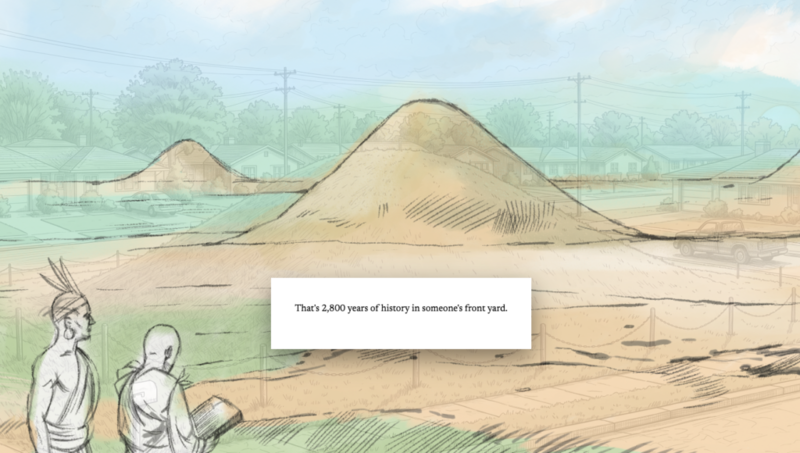
Graphic from digital scroll-telling website produced by Ohio University class.
When I enrolled at Ohio University in Athens, I had no idea that ancient burial mounds built by Indigenous peoples were next door to my college, in a nearby hamlet called The Plains.
I graduated from Bellbrook High School, south of Dayton, in 2023, so I had grown up in Ohio, but I still knew very little about what was just beyond my college campus.
Many Ohioans recognize The Plains, an unincorporated community north of Athens, as the hometown of football star Joe Burrow, who graduated from Athens High School in 2015. It is also home to a much older part of Ohio’s history, dating back three millennia.
A college assignment to tell the story of the Adena Mounds in The Plains broadened my perspective about our past. We are surrounded by elements of Indigenous history and culture that can be easy to overlook.
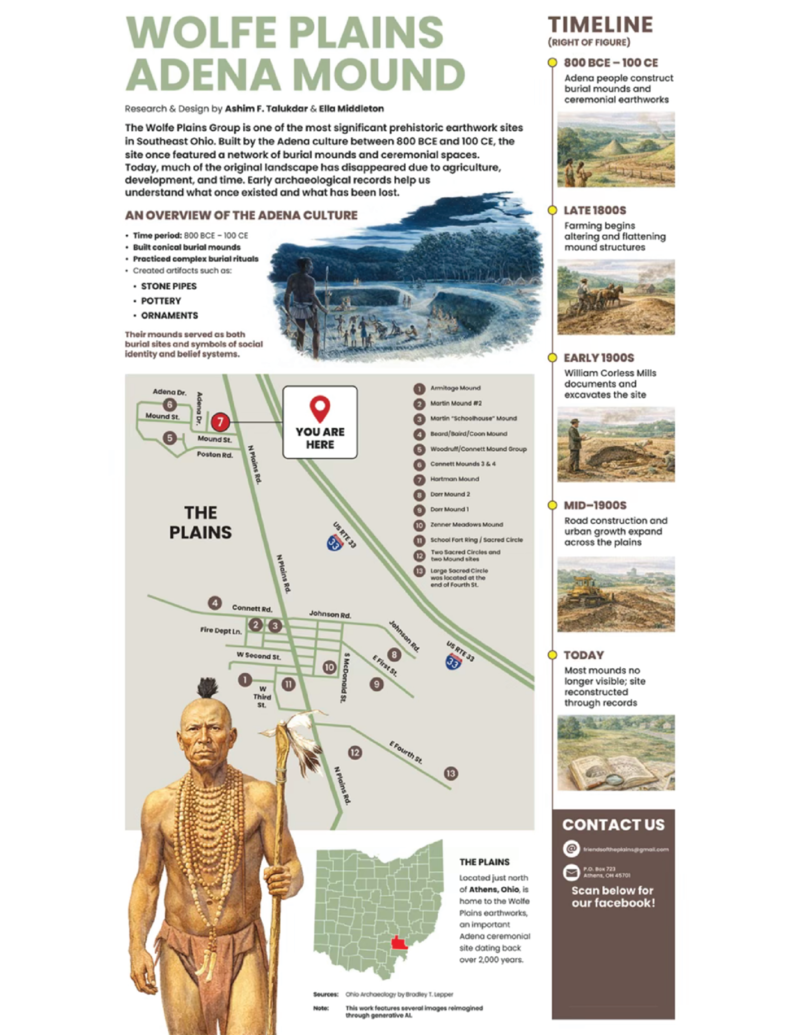
The Adena culture was a prehistoric Native American civilization that flourished in the Ohio River Valley and surrounding regions from roughly 1,000 BCE to 200 CE.
Someone can drive through The Plains without realizing an earthwork is nearby. Students can spend four years at Ohio University without ever visiting one. I had been in the area without knowing much about what was there.
The mounds are not simply remnants of a distant past that exist only in photographs or history books. They are physical sites that remain part of the Ohio landscape, even as the areas around them have changed.
An eye-opening class assignment
“Immersive learning” is a favored phrase in higher education. In this case, I was part of a three-member team that spent six months studying nearby earthworks.
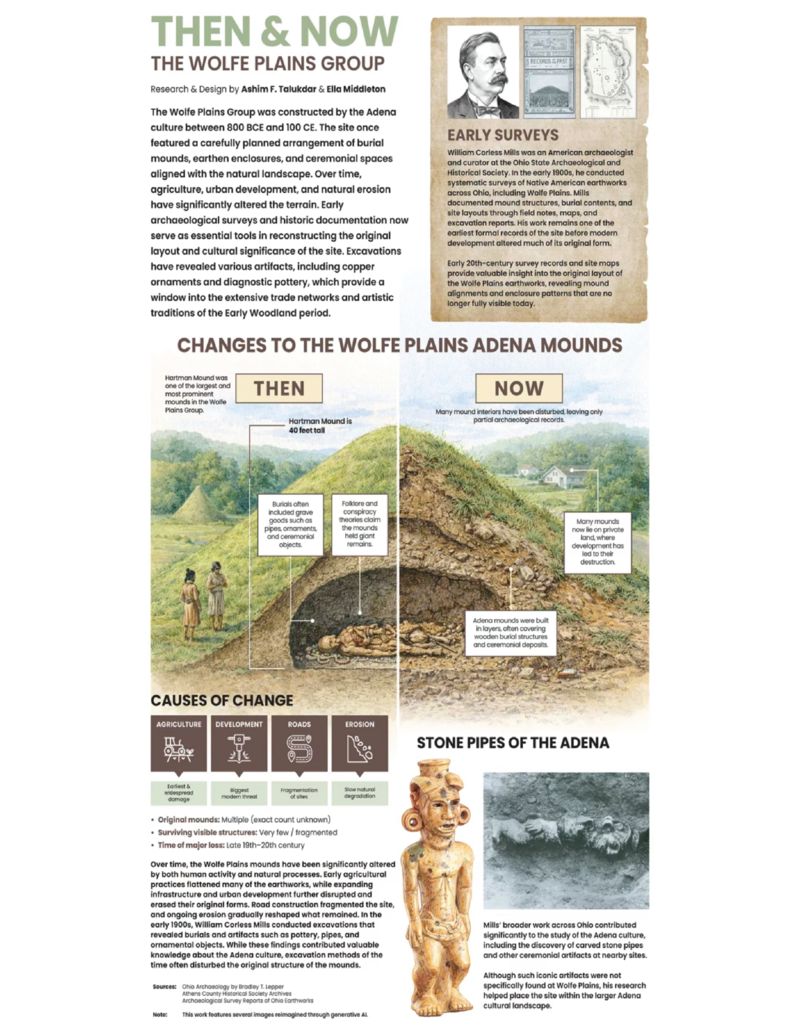
Our class visited the Adena earthworks in The Plains, primarily focusing on the Hartman Mound. We spent months researching the history of the earthworks, how they were constructed and what has happened to them over time.
The site once featured carefully planned burial mounds, earthen enclosures and ceremonial spaces. Excavations have revealed copper ornaments and pottery.
We also looked at other nearby mounds from a distance because they are on private property and are not always maintained or preserved in the same way. As we worked, it became clear just how easy these places are to miss.
For my colleagues, Ashim Faiaz Talukdar and Victor Morgan, and me, this six-month project was an opportunity to build skills in web design, photography, writing, fact-checking, graphics, animation and more. We submitted our work to the annual design challenge sponsored by the Society for News Design, or SND.
We wanted to document what is still there and give people a better understanding of the history and significance of these sites, including the differences in how nearby mounds have been preserved.
We created a form of digital storytelling called “scrollytelling.” The story unfolds as readers scroll through the page, allowing the research and visuals to guide them through the history of the mounds, their preservation and what could happen to them in the future.
Our “client” was a local support group, Friends of The Plains Mounds. We collaborated with the group’s president and subject-matter expert, Alex Armstrong, to help ensure accuracy and context.
Our title, “The Mound Next Door,” is not original. That phrase is also used by guides describing the Grave Creek Mound in Moundsville, West Virginia, a large Native American burial mound across the street from West Virginia Penitentiary.
Personal perspective
I am a college senior, on track to graduate in December.
As I grew up, America’s celebration of Columbus Day changed, prompting debate. In 2020, the City of Columbus designated October 12 as Indigenous Peoples’ Day. Some states recognize Indigenous Peoples’ Day, while Ohio does not.
As we reflect on Columbus Day and Indigenous Peoples’ Day, the research project in The Plains feels especially relevant because it highlights a part of Ohio’s history that can be easy to overlook.
The earthworks are part of that history, and unlike something that exists only in a textbook, they can still be seen today.
On the second Monday in October, I’ll be thinking about the Indigenous earthworks near my college campus and “The Mound Next Door.” We should look a little closer at what has been here all along.
Kayla Payne is a senior at Ohio University’s School of Visual Communication, an active member of Alpha Gamma Delta, and serves on the chapter’s Executive Council as Director of Property.
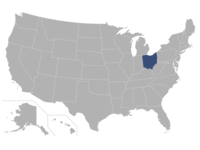
Columbus, OH