Mothers face barriers to accessing mental healthcare, survey shows
Oct 01, 2026 | 6:08 pm ET

Description
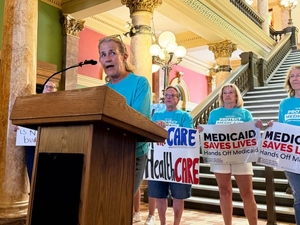
Count on Mothers surveyed 2,818 U.S. mothers and primary female caregivers between May 7 and 27 for the survey. (Photo by Maine Morning Star)
Having theoretical access to healthcare doesn’t mean you can take advantage of it, as underscored by a report examining mothers’ experiences for themselves and their children.
Released Thursday, Pulse Check 2026: Mothers on Mental Health, Care, and the Systems Around Their Families reports that nearly 48% of Florida mothers surveyed said they had struggled struggle to take care of their own mental health needs during the past month.
(Nationally that figure is 50% but jumps to 57% if there’s a child under 4 at home).
When asked to name a specific concern affecting their families, 41% of the mothers who responded listed financial stress, which was a top concern regardless of income. Mental health (11%) ranked as the second leading concern among mothers.
Physical health and healthcare (10%) tied with environment and safety as the third most pressing concern.
The report contains an anonymous quote from a Florida mother who participated in the survey. When asked what her top concerns were for her family’s wellbeing, she wrote: “Financial strain and lack of affordable and TRUSTWORTHY healthcare.”
Other findings show:
- More than 52% of Florida mothers surveyed reported finding it hard to access school-based mental healthcare for their children or to work with a school counselor.
- Nationally, 39% of the mothers surveyed said they had a child who needed mental, emotional, or behavioral support in the past year. Of those, 47% said they either got a portion of the care needed (and only after overcoming significant barriers) or their child didn’t get care at all.
- Regarding barriers, 56% of those mothers reported having at least one insurance-related problem and 34% reported having two or more problems related to their insurance coverage.
“It’s very hard to find appointments for kids. About half of moms said they ran into a barrier trying to get their kids care, and that’s not the only frustration and worry about their kids, but it takes a ton of time, which moms really don’t have,” Kathleen Kelly Daughety told the Phoenix in a telephone interview Thursday.
Daughety is senior vice president for campaigns and communications at Inseparable, a nonpartisan national research organization that champions access to mental healthcare.
Inseparable turned to Count on Mothers — a nonpartisan national research firm dedicated to measuring mothers’ perspectives on their “lived experiences, conditions, and priorities,” according to its website — to conduct the survey.
Financial strain and lack of affordable and TRUSTWORTHY healthcare.
“The findings in this report are pretty stark in that they really compound one another. So, I think lots of folks are thinking about maternal mental health right now,” Daughety said. “Mothers’ mental health is under a lot of pressure, and a lot of moms say they’re struggling.”
Count on Mothers surveyed 2,818 U.S. mothers and primary female caregivers of at least one child under 21 living in a household. It was conducted between May 7 and 27. The results were weighted to reflect the national population of mothers by region, race and ethnicity, education, household income, and the mother’s age.
Mothers named lack of time as the leading reason (49%) they neglected their mental health. Indeed, 20% of mothers said they spend more than five hours on administrative work for their families ranging from paperwork, childcare coordination, and school needs. Twenty-eight percent of mothers of children who have a developmental or intellectual disability reported spending at least five hours a week on administrative chores.
Costs of care ranked second (16%), followed by not knowing where to get help (11%), followed by insurance problems (9%).
Accessing mental healthcare was a bigger concern for mothers with employer-sponsored insurance compared to peers on or whose children are on Medicaid or the federal children’s health insurance program, which in Florida is known as KidCare.
The survey shows mothers with employer-sponsored or private insurance were the least confident their policies would provide sufficient mental health services.
Fewer than half of the mothers, 48%, were completely or moderately confident their commercial policies would cover care compared to 52% of mothers with Medicaid or whose children are covered through the federal children’s health insurance, CHIP.
One in four, 25%, reported little or no confidence, and 10% reported having no confidence. By contrast, 6% of the mothers on Medicaid surveyed reported having no confidence.
Mothers also were surveyed about AI and social media and how it can affect their children’s mental health. More than 70% said they want laws and regulations to govern social media and AI companies and the content their children are accessing online.
Specifically, 63% said they were concerned about their children seeing inappropriate sexual content for their age, 54% about content encouraging self-harm, eating disorders, or unhealthy body image, and 54% about their children being influenced by extreme views.
Tallahassee, FL