Morrisey’s vetoes strike several GOP foster care bills; one helped WV youth aging out of system
Apr 02, 2026 | 12:35 pm ET
Description
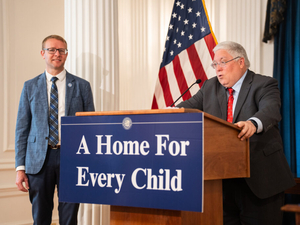
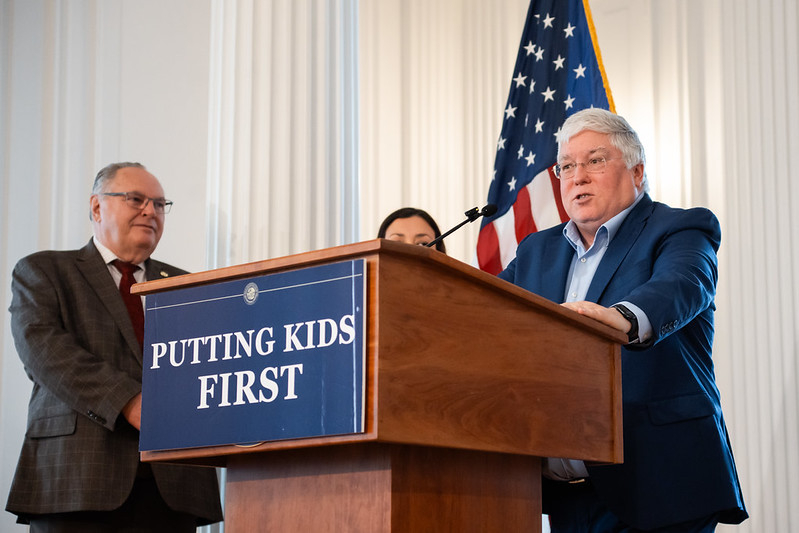
Gov. Patrick Morrisey announces a plan to expand programs in public schools aimed at helping children before they need the child welfare system in an effort to improve the state’s overburdened foster care system on Tuesday, Jan. 6, 2026 in Charleston, West Virginia. (Photo courtesy of the West Virginia Office of Gov. Patrick Morrisey)
Several GOP bills aimed at improving West Virginia’s troubled foster care system have been vetoed by the governor, including a measure connecting youth aging out of the system with resources like housing and employment.
Gov. Patrick Morrisey has also left a question mark about how the state will pay for new court commissioners focused on the high number of child abuse and neglect cases because he vetoed the bill with its funding source.
Foster care in West Virginia is struggling to meet the needs of nearly 6,000 children due to a shortage of in-state foster homes or facilities, lack of support services and overloaded Child Protective Services workers.
Morrisey has promised foster care reform, but progress has been slow or nonexistent. His first secretary of the Department of Human Services — Alex Mayer — exited the day after the legislative session wrapped.
Lawmakers this year declined to support Morrisey’s hallmark foster care proposal, a “Bring Them Home Fund” to move hundreds of West Virginia foster children back to West Virginia. The plan lacked details on how it would provide services in-state to high-needs kids.
On Thursday, Morrisey announced that he’d vetoed 12 bills, including three child welfare-focused measures sponsored by Republicans and a separate GOP bill that included funding aimed at helping children in abuse and neglect cases.
One vetoed measure aimed to streamline West Virginia’s inconsistent continuum of care for youth exiting the foster care system, according to sponsors. The legislation aligned West Virginia with President Donald Trump’s new foster care executive order.
In his veto message, Morrisey said the bill was “a noble attempt to assist youths who have been in foster care for significant portions of their lives as they age out of that program” and applauded the efforts of sponsor Del. Adam Burkhammer, R-Lewis, a foster parent who has spearheaded child welfare reform.
“The problem is that the bill requires the Department of Human Services to expand services already being offered through its Independent Living and Transitional Living programs and this expansion will cost at least $5,000,000 in the first year,” Morrisey continued.
The bill also would have required the state to maximize available federal funding earmarked for children aging out of foster care until the age of 21; the state returned millions of dollars to the federal government that was meant to help foster children transition into adulthood. DoHS would have been required to report annually to lawmakers about the use of those federal funds.
DoHS would have also been required, according to the measure, to pay providers helping children aging out of foster care based on accurate, up-to-date costs by using federal funds.
Morrisey said that the proposed changes inhibited the ability of DoHS to “develop a cost conscious program” to comply with Trump’s executive order on foster care.
Burkhammer was not available for an interview on Thursday.
The governor also vetoed a measure, sponsored by Burkhammer, that would have required the state to develop and implement a plan for preventing children from entering the foster care system.
Morrisey said in his veto message that he had concerns “about government intrusion” and felt that the legislation was too rigid in its requirements.
“According to this bill a child is at risk of entering foster care because the child is identified as having a family with an economic […] need. …. Yet, an economic need does not translate to abuse and neglect, and it is disconcerting to see that kind of linkage here,” Morrisey wrote. “The insertion of the state into the family should only occur when children are truly at risk. Ultimately, this is overly intrusive and paints with too broad a brush.”
The governor said that the changes to the state’s current prevention services could also jeopardize necessary federal funding that helps at-risk children.
“We must prioritize the safety and welfare of our most innocent and vulnerable West Virginians. On this there can be no debate. And, like the proponents of this bill, I believe that a statewide prevention plan is an important step in reaching this goal,” Morrisey wrote.
In a news release on Thursday, the West Virginia Democratic Party slammed Morrisey’s vetoes of child welfare legislation.
“Time and again, Governor Morrisey had a choice — to stand with kids and families, or to hide behind bureaucratic excuses,” said West Virginia Democratic Party Vice Chair Teresa Toriseva. “And time and again, he chose the excuses.”
Toriseva noted that Morrisey justified many of his vetoes by citing concerns about cost, administrative flexibility, or potential overlap with existing programs.
“Budgets are about priorities,” she said. “And Governor Morrisey just told us exactly where his priorities are—and it’s not with vulnerable kids, not with struggling families, and not with the people who need help the most.”
Changes to team reviewing child deaths vetoed
Morrisey vetoed a bill making changes to the state’s Critical Incident Review team, which lawmakers created to review child deaths in West Virginia following a girl’s death from starvation in 2024.
The Critical Incident Review Team reviews a fatality or near fatality of a child in DoHS custody, then the team must meet within 45 days of the fatality or near fatality to conduct the review and share a report with lawmakers and post it online.
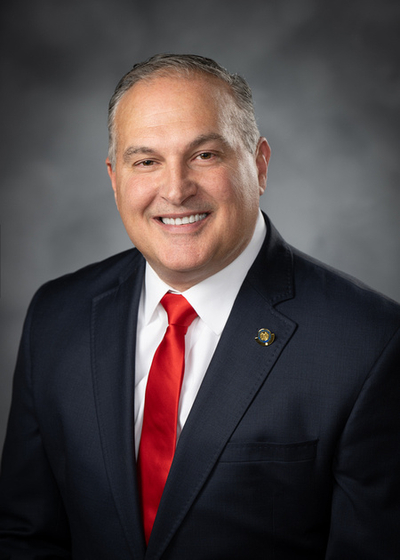
Senate Health Committee Chair Brian Helton, R-Fayette, proposed making changes to the review team, including that the state Office of Inspector General would be in charge of it instead of the West Virginia Department of Human Services. The measure passed the Senate and House unanimously during the session.
Morrisey said in his veto message that the bill “would upend the structure of the Department of Human Services Critical Incident Review Team established a mere eight months ago.”
The governor also didn’t like shifting management of the team to the inspector general, explaining that the office’s focus is more on financial management, not child welfare.
“Restructuring a program like this so soon after its initial implementation should always be done with caution because there will necessarily be so few data points on the current structure’s effectiveness, performance, and outcomes,” the governor wrote.
Helton said that he spoke to the governor about veto and supported his decision since the review team hadn’t yet had a chance to fully get underway.
“We probably need to let it develop and see what it looks like in a year or two,” Helton said.
The governor also vetoed a bill that would have, for the first time, allocated money from the state’s Medical Cannabis Program Fund to several initiatives. The fund has an estimated $38 million that hasn’t yet been spent. Morrisey said in his veto message that the state “can’t totally pre-commit future revenue streams like this if it’s going to have reserves to invest more in roads, water, sewer, site-selection, rail, and future tax cuts.”
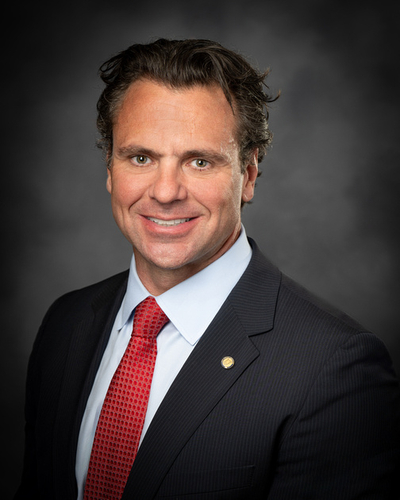
The measure he vetoed required that $5 million from the medical cannabis fund be spent on newly-created court commissioners that will focus on the overwhelming number of child welfare cases in the judicial system. Morrisey signed the bill creating the commissioner positions, but now the source of the funding is unknown.
“I am grateful the governor endorsed our new Child Protection Commissioner legislation. We need meaningful changes to our abuse and neglect system, and this bill is part of that,” said Del. J.B. Akers, R-Kanawha, who sponsored the legislation creating the court commissioners. “I was told the governor will sit down with us on funding after a separate bill for that was vetoed. I’m confident he will make good, and I look forward to working with him and the Supreme Court going forward.”
- 3:39 pmThis story was updated to include a quote from the West Virginia Democratic Party.
Charleston, WV