Moral Monday leader, activists arrested in U.S. Senate Office Building
Aug 03, 2026 | 5:30 pm ET
Description
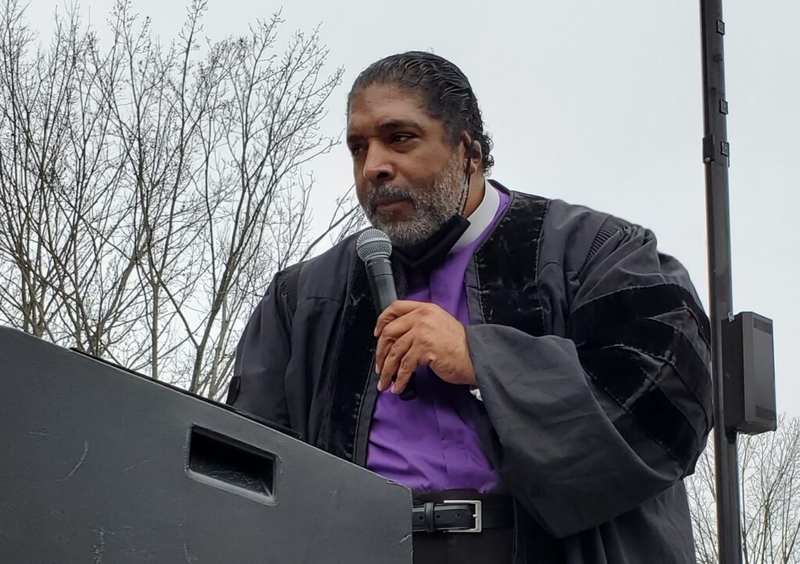
Bishop William Barber, president of Repairers of the Breach and founder of the Moral Monday movement (Photo: Clayton Henkel/NC Newsline)
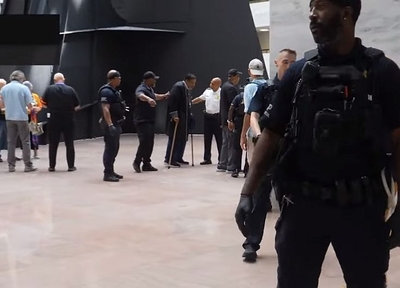
Bishop William Barber and a group of faith leaders were arrested in Washington, D.C., Monday following a demonstration inside the Hart Senate Office Building. Barber and the activists were attempting to meet with Senate Majority Leader John Thune, R-South Dakota, to voice their opposition to voter suppression and the SAVE America Act.
Earlier in the day, Barber, president of Repairers of the Breach and founder of the Moral Monday movement, held a press conference at the steps of the U.S. Supreme Court to explain why faith leaders from across the nation are laser-focused on voting rights.
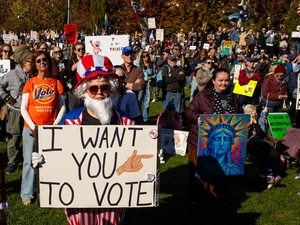
With less than 100 days until the 2026 midterm elections, Barber said Christian, Jewish and Muslim faith leaders will use that time to mobilize 1,000 marches to the polls to encourage early voting and participation in the Nov. 3 elections.
“We will cast a vision for a hundred days of mobilization,” Barber said. “In this moment, we do not need to have a march on Washington. We need a march in the states to change Washington.”
Repairers of the Breach held a series of “public pulpit” events in the nation’s capital this summer, but Barber said faith leaders must now return home to get occasional voters engaged in what is occurring in state legislatures.
“The power is in the states. States can block your living wages. States can make [voter] suppression laws that we’ve already passed over 87 of them, particularly in southern states,” said Barber.
NC Republicans look to add new restrictions
Barber’s focus on the states comes just days after the North Carolina Senate passed a controversial elections bill that will reduce early voting periods during primaries, primary runoffs and special elections from 17 days to 10 days.
House Bill 958 will also require the state auditor to conduct post-election audits of county election systems. The number of audits to be conducted is at the sole discretion of the auditor.
Democrats voiced concerns about another provision in H958 that would use federal databases and information from other states to identify people who have died but remain on the voter rolls. Sen. Mujtaba Mohammed, D-Mecklenburg, argued last week that provision could lead to living voters being wrongfully removed, especially amid confusion over similar names.
As the bill heads back to the state House on Tuesday, Republicans have argued that the legislation improves election administration and further enhances security.
NC Senate approves controversial elections bill along party lines
Gov. Josh Stein criticized the measure, saying the bill erodes trust by injecting more politics into the State Board of Elections.
Awakening disengaged voters
Repairers of the Breach and partner organizations are developing a plan to reach five million infrequent, low-wage voters and one million Black male voters through texting by their peers and knocking on doors in the coming weeks.
“We’re here because the ballot is sacred,” Rev. Dr. Hanna R. Broome told reporters on Monday.
With the U.S. spending an estimated $1.5 billion per day on the war in Iran, Barber said even infrequent voters know that money could be addressing real issues “rather than being poured down a dark hole in the immoral and illegal war.”
Barber said voters must also be made aware of changes to the Supplemental Nutrition Assistance Program, under President Donald Trump’s One Big Beautiful Bill Act.
Nationwide, more than 4.5 million people are no longer receiving SNAP benefits. According to a new report by the Center on Budget and Policy Priorities, SNAP participation in North Carolina has dropped more than 12% between July 2025 and April 2026.
Starting this October, states will be required to pay a portion of the benefits for the first time in program history. That payment is based on the state’s error rate for SNAP payments.
“How damnable is it to say we got money for war, but we don’t have money for children?” Barber said.
Raleigh, NC