Missouri Democrats gain ground in polls, but congressional races remain uphill battles
Oct 19, 2026 | 6:55 am ET
Description
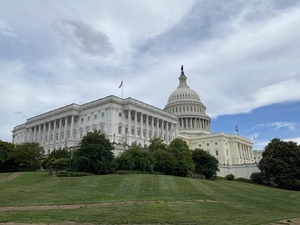
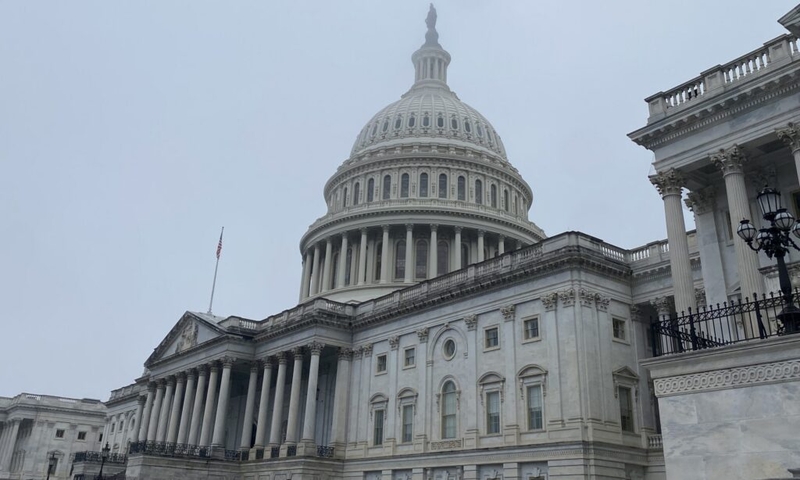
The U.S. Capitol building in Washington, D.C., amid fog on Dec. 10, 2024 (Jennifer Shutt/States Newsroom).
Missouri Republicans’ advantage among voters has narrowed sharply this year, but that shift may do little to change the state’s congressional delegation on Nov. 3.
An August St. Louis University/YouGov survey showed Missourians were just about evenly split between Republicans and Democrats on a generic congressional ballot, a major gain for Democrats from a poll in February.
But Democratic voters are mainly concentrated in the 1st and 5th districts. Republicans won the other six by comfortable margins in 2024 and there’s only one race that has attracted significant broadcast advertising: The 2nd District in eastern Missouri.
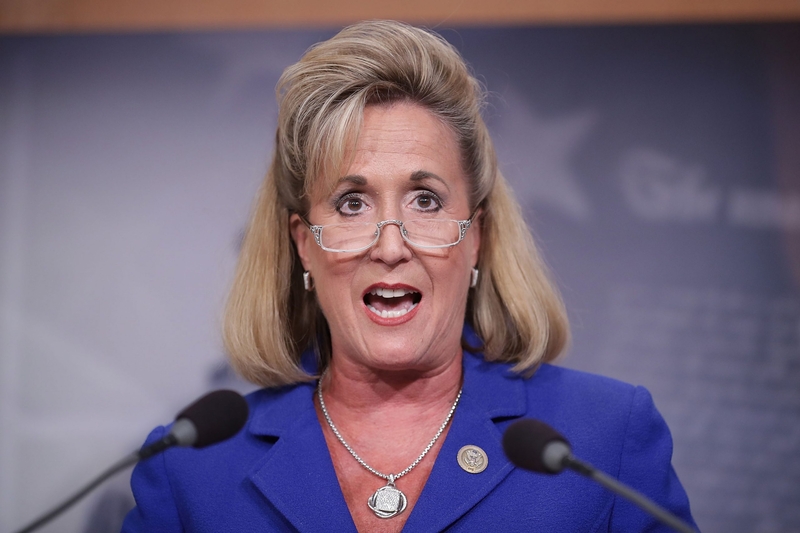
Incumbent U.S. Rep. Ann Wagner raised $562,000 from mid-July through Sept. 30 and spent $2.4 million in that period defending her seat. She has spent $1.2 million on broadcast ads so far, according to tracking by The Independent. Her Democratic opponent, Fred Wellman, outraised Wagner in the period by more than $200,000 but was outspent by an almost 6-to-1 margin.
Wellman has spent only $271,000 on broadcast advertising.
Wagner, a longtime figure in Missouri Republican politics, is seeking her eighth term. Wellman, a retired military officer, is making his first bid for office.
Interviews with voters in the district revealed sharply different views of national politics. Kay Wiese of Ballwin told The Independent she believes suburban swing voters are souring on Republicans.
“There’s not a lot of thoughtful input from a lot of the folks that we have on the Republican side,” she said. “I feel like they are mostly puppets in that party. It’s just like they are not standing up for the middle class, the more common people.”
But Pat Compton of Winchester said she sees no reason to change her support for Republicans. While many voters are angry over high gas prices, she is not.
“I’m for the war in Iran,” Compton said. “Once that gets settled, the prices will change.”
The 2nd District is the most competitive congressional race in Missouri, according to Cook Political Report. It is rated as “Likely Republican” while the other seven districts are rated as “solid” for the incumbent party.
On the west side of Missouri, intense battles for seats in Congress are playing out on television — but the ads are for races in Kansas.
Republicans did try to make another Missouri congressional district competitive this year, but not through campaign advertising.
Last year, Republican lawmakers redrew six of Missouri’s eight congressional districts in an effort to flip the Democratic-held 5th District in Kansas City. But a referendum campaign put the 2025 map on the Nov. 3 ballot, and the courts blocked its use in this year’s election.
It took a ruling from the Missouri Supreme Court on Sept. 3, affirmed three times by the U.S. Supreme Court, to end the GOP’s effort to use the 2025 map in November alongside the referendum.
The Republican nominee in the district — state Sen. Rick Brattin — struggled to raise money in September, when the redistricting plan was in dispute in state and federal courts.
A campaign disclosure report filed this week shows Brattin raised only $900 in the five days after the U.S. Supreme Court’s Sept. 25 decision. His last significant promotional expense was $2,855 for yard signs on the day of the Missouri Supreme Court ruling.
Uncertain congressional map hangs over Missouri’s crowded 5th District GOP primary
The court decisions severely diminished the value of the Republican nomination.
If the 2025 boundaries had been used in November, the district would have been rated as solidly Republican. President Donald Trump won the votes in those boundaries by 18%, according to Cook Political Report. The incumbent, Democratic U.S. Rep. Emanuel Cleaver, won his 2024 re-election in the boundaries that will be used in November with 60% of the vote.
In the aftermath, Brattin lashed out.
“The responsibility for this chaos rests first and foremost with the Missouri Supreme Court,” Brattin wrote on social media.
Cleaver, as expected, praised the courts.
“For more than a year, state officials have spent precious time, energy, and resources on an effort to silence the voices of Missouri voters and steal a congressional seat,” Cleaver said on social media.
Instead of a potentially competitive, multimillion-dollar campaign, Brattin now finds himself in the same position as most challengers to Missouri incumbents this year: short on money and facing long odds.
He reported having $17,503 on hand on Sept. 30.
There is little in the way of campaign activity in any other district that would suggest Missouri will not return incumbents — or the incumbent party nominee — to Washington. Incumbents and nominees of the incumbent party have raised 89% of the money for this year’s contests and had 94% of the funds available on Oct. 1.
The ballot lineups in Missouri’s six remaining congressional races are:
- 1st District, St. Louis and St. Louis County: U.S. Rep. Wesley Bell won renomination for a second term in a primary rematch with former U.S. Rep. Cori Bush, whom he unseated in 2024. Paul Berry III is on the Republican ticket and has not formed a campaign committee.
- 3rd District, Central Missouri to St. Charles and Jefferson counties: U.S. Rep. Bob Onder of Lake Saint Louis, a Republican seeking his second term against Democratic nominee Bethany Mann. Onder had $568,000 on hand and Mann had about $10,000 on hand in the most recent reports.
- 4th District, Central Missouri to the Kansas border, including Whiteman Air Force Base and Fort Leonard Wood. U.S. Rep. Mark Alford is a Republican seeking his third term, with Democratic nominee Jordan Herrera and Libertarian Thomas Holbrook on the ballot. Alford had $773,000 on hand and Holbrook had $3,125 at the most recent report.
- 6th District, north Missouri from St. Joseph to Hannibal. Chris Stigall won the Republican nomination to replace U.S. Rep. Sam Graves. His Democratic opponent, Josh Smead, is doing better than some rural district Democrats in fundraising — he made a small broadcast ad buy — but Stigall had $212,000 on hand at the last report compared to $32,156 for Smead.
- 7th District, southwest Missouri including Springfield, Joplin and Branson. U.S. Rep. Eric Burlison is seeking his third term in office in the district that has been Republican the longest in Missouri. His Democratic opponent, Missi Hesketh, had $33,543 on hand at the latest report while Burlison reported $961,193. Libertarian Kevin Craig has not reported raising any money.
- 8th District, southeast Missouri from Rolla and Jefferson County to the Bootheel. U.S. Rep. Jason Smith, chairman of the House Ways and Means Committee, is seeking his sixth full term. The Republican won a special election in 2013. He had almost $5.5 million on hand on Sept. 30, while Democratic challenger Chris Reichard had $12,563. Libertarian Rebecca Sharpe Lombard has not formed a campaign committee.
Democrats are hoping to link Republicans to unpopular state policies and the SLU/YouGov poll offered a potential sign of weakness for the GOP in northwest Missouri. Voters in the region favored Democrats 46% to 35% on a generic congressional ballot, though the regional sample of just 52 respondents makes it difficult to draw firm conclusions.
The region, which includes St. Joseph, showed an 11-point preference for Democrats on a generic ballot.
Just to the south, Platte County is a battleground for Missouri House seats. Voter Eric Munch said he backs the redistricting plan and Republicans.
Platte County is in the 6th District and the 2025 map did not change that.
“I don’t have any problem with it,” Munch told The Independent. “The state voted in a Republican Legislature, and if they want to go after redistricting, I say go for it.”
The last Democrat representing a largely rural congressional district, the late U.S. Rep. Ike Skelton of Lexington, lost his office in 2010 after 17 terms. For Democrats to translate their statewide gains into congressional victories, they will have to win back some of the rural voters who abandoned the party over the past two decades.
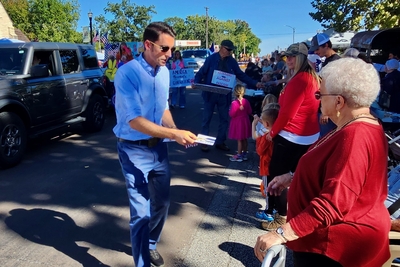
The lack of money doesn’t keep most underdog candidates from working crowds and visiting the events that matter in communities in their district. Smead walked in the Brunswick Pecan Festival Parade in Chariton County on Oct. 3 while Stigall stayed away.
As he waited for the parade, James Ostermann, a Chariton County farmer, blamed high diesel prices on a lack of refining capacity and faulted Democrats’ environmental policies for limiting development.
“I used to be Democrat straight through, but they put so much pressure on the middle class and everybody that they’ve just taken my vote away,” Ostermann said.
That attitude may be softening, said Grace Fortner of Keytesville.
She said she returned to her home county about 10 years ago to raise her family.
“I don’t think that’s true, simply because I’m looking around my county and my district lately, and it’s the first year I feel hope for our district actually,” Fortner said. “This is the best I’ve ever seen Democrats’ signs out and around in the last 10 years, especially the last eight years.”
Jefferson City, MO