Mississippi’s outlier election laws face new scrutiny after tight U.S. Senate race
Nov 24, 2026 | 5:00 am ET

Description
Photo courtesy of Mississippi Today
Democrat Scott Colom’s upset victory in Mississippi’s U.S. Senate race is drawing new scrutiny to the state’s unusual election laws, which make it harder for some voters to cast ballots.
Mississippi law can prevent voters from casting a normal ballot after election officials receive information suggesting they have moved, even if the information hasn’t been verified. That’s led to questions about whether Mississippi may be running afoul of federal election laws meant to prevent voter disenfranchisement.
“I suspect a court will decide this at some time, but on the face of it, it certainly feels like it is absolutely turning people into second-class voters,” said Ben Hovland, a former chairman of the U.S. Election Assistance Commission who was a Democratic member of the bipartisan federal agency from 2019 until earlier this year.
The issues largely stem from Mississippi’s voter roll maintenance law, which is out of step with other states and appears to conflict with Justice Department guidance on how states should comply with federal election law.

After the state Legislature changed the law in 2024 to give election officials broad authority to turn to any source to clean the voter roll as long as it was considered “reliable information,” Republican Secretary of State Michael Watson’s office authorized county election officials statewide to use unverified address data from the credit bureau Experian for voter roll maintenance last year.
His office announced the partnership with Experian would bring “a new level of reliable data” to maintaining the roll, though records show the office signed off on disclaimers that the company could not guarantee the “accuracy or reliability” of the information.
Also, 11 years earlier, Mississippi had sued Experian over “significant inaccuracies” in the company’s credit files. Experian denied Mississippi’s allegations and agreed, along with credit bureaus Equifax and TransUnion, in 2016 to pay the state a $7 million settlement.
Mississippi Today first reported in March 2026 that properly registered voters had discovered they were wrongly inactivated by errors in the data since the state began experimenting with Experian’s information in early 2024. After Mississippi’s close U.S. Senate race earlier this month, Watson responded to criticism by saying it was county election commissioners’ legal responsibility to vet the data.

“Their job is to make sure they verify the information,” Watson said on a talk radio show the week after Election Day. “And I’ve heard people say, ‘Well, you pass the buck.’ What I am doing is explaining how the law works. I cannot make an election commissioner do his or her job.”
But election experts and state lawmakers say Mississippi’s use of credit bureau data is just one part of the problem.
Mississippi’s voter roll maintenance law imposes unusual hurdles
Under state law, Mississippi approaches voter roll maintenance differently from other states that have used Experian’s data to clean the rolls, including West Virginia, Maryland and Montana. There, election officials give voters a chance to confirm their addresses before moving them from active to inactive status, by mailing them a notice and waiting for a response. In West Virginia and Montana, for example, that waiting period is 30 days.
That aligns more closely with guidance from the Justice Department, which states that election officials may mark voters inactive if they don’t respond to the notice by the voter registration deadline for the next election.
But under Mississippi law, there is no waiting period. Election commissioners must inactivate voters upon sending them a notice to confirm their address. By the time voters even get the notice, they’re already inactive.

This automatic process means election officials can inactivate voters based on address information that was never verified.
“There’s zero discretion,” said Amir Badat, a Mississippi voting rights attorney with the advocacy group Fair Fight Action. “If you’re an election commissioner, and the secretary of state is telling you that we have this new, reliable data source to do list maintenance and specifically cites this part of the statute, you shall send a confirmation notice and shall make that person inactive.”
To make matters worse, voters may never even receive the notice. Watson said Wednesday in an interview with a Mississippi Public Broadcasting talk radio show that his office discovered some election officials may have violated state law by failing to mail notices.
“That’s a problem, so they need to do their jobs a little bit better,” Watson said. “I have no idea what they were thinking, number one, to say that.”
Mississippi Today also identified cases in which election officials mailed the notice to incorrect addresses pulled from Experian’s data. As a result, some properly registered voters were inactivated without ever realizing it, until they showed up to vote.

State law prohibits inactive voters from casting regular ballots, and their names are not listed in precinct pollbooks. Instead, they must cast an affidavit ballot, which must be signed by the voter and a poll worker and reviewed by election officials before it can be counted.
“That doesn’t even give a person a chance to be able to vote regularly because the confirmation card is missing,” said Democratic state Rep. Zakiya Summers of Jackson, a former Hinds County election commissioner.
Mississippi’s law is out of step with many other states. For example, in Texas, voters whose addresses have been called into question can verify their residence at the polls, and then can vote a regular ballot.
Watson’s spokesperson, Elizabeth Jonson, defended the state’s voter roll maintenance process, stressing that inactive voters are not immediately purged from registration lists.
“The voter is not removed from the voter roll book simply by being marked ‘inactive,’” Jonson wrote in an email. “The voter has two federal election cycles to cure this designation by voting via affidavit ballot to restore the ‘active’ status.”

But voting rights advocates say Mississippi’s process creates additional barriers and makes it less certain that inactive voters’ ballots will count. Election commissioners say the rollout of Experian’s data led to a surge in the number of inactive voters before this month’s election, causing long voting lines, confusion at polling places and an uptick in affidavit ballots, which officials spent over a week verifying and counting after Election Day.
“Requiring affidavit ballots for inactive voters is bonkers,” said Quinn Raymond, the co-founder of VoteShield, a tool from the nonprofit Protect Democracy that monitors changes to voter registration records.
Amid criticism over the Experian deal, Watson told Mississippi Public Broadcasting that his office has been taking steps to fill gaps in Mississippi’s voter roll maintenance process. He said the online database that election commissioners use to clean the voter roll will now give officials the option to send notices to the new address flagged for a voter who may have moved and to the address that the voter originally used when registering, to ensure the notice actually reaches the voter.
“They could’ve already done that,” Watson said. “There is no restriction on how many of those confirmation cards they send, but we’re going to put it at the touch of their finger to where they can actually do that now on a much easier basis.”
Watson said the change will make it easier for election officials to send multiple notices to a voter when they are unsure whether a flagged address is accurate. He said his office’s switch from Experian to a new commercial data broker, IDI, will also help because the new vendor gives a score conveying how likely it is that a flagged address is accurate.
Raymond said the issue is less about the credit bureau data and more about how Mississippi law directs election officials to clean the voter roll in a way that prevents voters from casting regular ballots, especially when the sources they rely on are unverified.
Outrage over Experian deal renews hopes to change law
As the 2024 law faces new scrutiny and potential legal challenges in the wake of the midterms, Democratic state lawmakers from the legislative Black caucus are looking to bring Mississippi’s voter roll maintenance process in line with the rest of the nation.
Their goal is to work with voting rights advocates, attorneys and Republican legislators to amend the law, known as House Bill 1310, in the next legislative session. They say they hope to prevent the same issues from arising when voters turn out to the polls during Mississippi’s state elections next November, when the Legislature and top state offices will be on the ballot — including Watson’s bid for lieutenant governor.
“Mississippi voters should not have a system where you have to use an affidavit ballot for things that are out of your control,” said Ari Savitzky, a senior staff attorney for the American Civil Liberties Union’s Voting Rights Project. “The Mississippi Legislature is going to be back in session in January, and I hope they take a long, hard look at this and say, ‘We can do better than this.’”

Summers said when the Legislature returns, the “first thing” on her priority list is overhauling the law, which opened the door for Watson’s partnership with Experian.
“Voter roll maintenance should not be utilized to punish voters,” Summers said. “We’ve got to make sure we are protecting them, versus weeding people out.”
Before the Legislature passed HB 1310, Mississippi had for years solely relied on government data, such as U.S. Postal Service address data and death information from the Social Security Administration, to clean the roll of voters who may have moved or died.
But a little-debated clause within the new law broadly allowed election officials to use “reliable information” indicating that a voter had moved from their registered residence as grounds to mark them inactive.
The bill did not specify any standards that the information had to meet to be considered reliable, but the examples it provided were all government sources. The bill made no mention of credit bureau data.

Rep. Cheikh Taylor of Starkville, the chair of the state Democratic Party, said he plans to introduce a bill that gives voters an opportunity to confirm their addresses before they’re inactivated.
Because Republicans have had supermajorities in the House and Senate for over a decade, GOP support would be essential to passing any reforms. In the past, Democratic lawmakers’ efforts to loosen Mississippi’s unusually strict voting laws — including proposals to allow no-excuse early voting and no-excuse absentee voting — have stalled year after year.
But as state lawmakers from Watson’s Republican Party also criticize his deployment of Experian’s data in the wake of the midterms, the Black caucus is hopeful it can build the bipartisan backing needed to change the law.
“My message is very simple to you: We can disagree politically, but we should never disagree about making sure that every eligible Mississippian has a fair opportunity to cast his or her vote,” Democratic Rep. Timaka James-Jones of Belzoni, who represents the southern Delta, said at a Thursday news conference at the Capitol. “When a voter encounters a problem at the polls, our responsibility is not to create another barrier.”
Mississippi’s inactive voter restrictions build on legacy of discrimination at the polls
Mississippi has a historical reputation, stretching back to the Jim Crow era, for creating discriminatory hurdles for voters. Voting rights advocates say the state’s history of erecting barriers to voting for Black residents casts a long shadow over the current debate surrounding the Experian deal.
“Mississippi has such a fraught history of voting,” said Deborah Williams, chair of the DeSoto County Democratic Party. “It was so long when voting was just the right of white voters. And then when you wanted to vote, you had to pay a poll tax and bring all kinds of documentation.”

Decades later, Mississippi still ranked last in the nation in a 2024 academic study measuring the time and effort required to vote in each state.
Watson has defended HB 1310 and stated that it has helped improve “election integrity.”
In response to concerns that Experian’s data fueled an uptick in affidavit ballots during the midterms, Watson wrote in a statement last week that the 21,484 affidavit ballots cast this month was about the same as the 21,321 cast in 2024.
“The process worked exactly as it has in prior elections, and the volume reflects a normal, high-engagement election, not a breakdown in the system,” he wrote.
However, according to data from the University of Florida, Mississippi’s voter turnout in the 2026 election was significantly lower than in 2024, meaning that those 21,000 ballots represented a higher share of the total this year.
In reality, the portion of voters who had to cast affidavit ballots increased from about 1.7% in 2024 to 2.2% in 2026.
Three-quarters of the affidavit ballots this year were accepted after being checked, according to Watson.

In the wake of criticism over the increase, Watson has pointed to Mississippi’s high election integrity rankings. The conservative Heritage Foundation ranks Mississippi as tied for 14th place with Kentucky for “election integrity,” which considers factors, such as voter ID laws and the accuracy of voter lists, that Watson has described as priorities for his office.
“Maintaining accurate voter lists ensures the integrity of our elections and prevents voter fraud,” Watson wrote in a recent assessment of the November election.
But before the midterms, records obtained by Mississippi Today show a coalition of civil and voting rights groups warned him that “a list-maintenance program built on that data raises serious concerns” that it is out of step with federal requirements prohibiting discrimination in voter roll maintenance.
The groups also said state law allows voters to be inactivated “based only on ‘reliable information’” and said the Experian data didn’t meet the standard.
A 2025 study by the Election Assistance Commission of Mississippi and other jurisdictions’ use of Experian’s information to clean their voter rolls found ZIP codes with high numbers of rental housing and certain groups of voters — including Black, Native American, and young and elderly voters — correlated with more new addresses in the credit bureau data.
This has heightened advocates’ concerns that minority and low-income voters were disproportionately affected by Mississippi’s use of Experian’s data.

“Black Mississippians won the right to vote at enormous cost,” the groups, including the NAACP Legal Defense Fund, ACLU of Mississippi and Southern Poverty Law Center, wrote to Watson. “They should not have to win it again at the polling place because a credit bureau guessed wrong about where they live.”
Savitzky, who was arguing a redistricting case in Mississippi last week, said the ACLU is considering whether to challenge the state law that allows election officials to mark voters inactive, preventing them from casting a regular ballot.
Recently, Mississippi has seen among the fewest voting rights lawsuits in the nation. Mississippi ranked 42nd out of 50 states in election-related lawsuits from 2018 through 2024, according to the State Democracy Research Initiative, a nonprofit research program at the University of Wisconsin Law School. That even takes into account a high-profile challenge to the state’s mail-ballot receipt deadline that went to the U.S. Supreme Court this year.
Advocates and state lawmakers say the errors tied to the Experian deal broke voters’ trust in Mississippi’s commitment to protecting the right to vote. Rebuilding that trust, they say, will take changes.
“There’s an ugly history here with regard to voting,” Williams said. “Don’t mind me if I don’t trust your motives now.”
Votebeat editorial director Jessica Huseman contributed reporting.
Madeline Nguyen is an investigative reporting fellow at Mississippi Today and is based in Jackson. Contact Madeline at [email protected].
Dion Nissenbaum is a senior national reporter for Votebeat and is based in Houston. Contact Dion at [email protected].
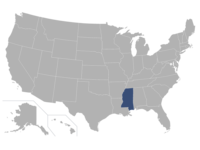
Jackson, MS