Milwaukee further restricts Flock as controversy continues to grow
Sep 02, 2026 | 4:30 am ET
Description
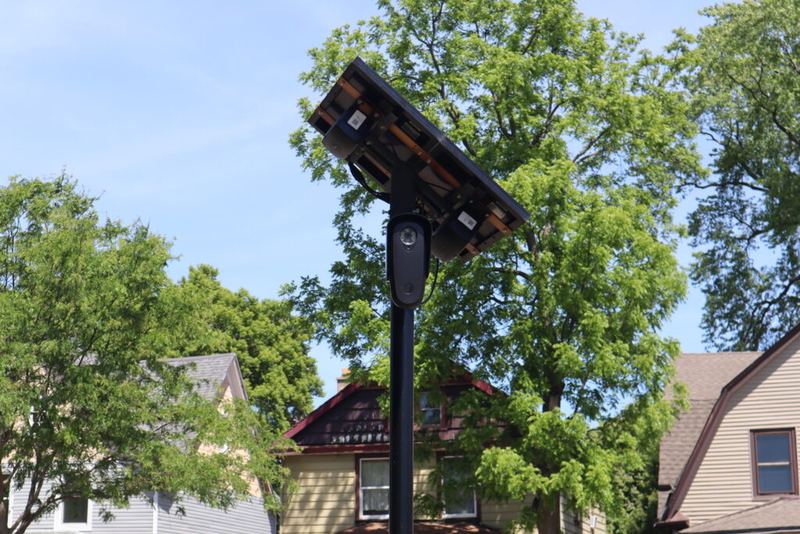
A Flock camera outside of Washington Park in Milwaukee, WI. (Photo by Isiah Holmes/Wisconsin Examiner)
Milwaukee is tightening the leash around Flock automatic license plate reader cameras, with elected leaders calling for more oversight and restrictions as investigations into misuse by officers continue.
Flock cameras utilize AI-powered technology to identify vehicles and license plates that pass within their view on roadways. The data is stored for several weeks or longer, allowing law enforcement officers from anywhere across the country to search for specific vehicles as long as their agency has a contract with Flock.
An analysis by the Wisconsin Examiner found that at least 221 Wisconsin law enforcement agencies searched the Flock network during the first half of 2025, and that officers often used vague search terms to query the system. That same year, the multi-billion dollar Flock Safety company spent $102,000 lobbying the state government for grants to allow law enforcement agencies to acquire license plate reader cameras, though the Republican-backed bills were unsuccessful.

On Tuesday, a directive went out from the office of Milwaukee County Executive David Crowley to county departments and the Milwaukee County Sheriff’s Office to limit Flock-related operations on county property, and to work towards adopting new transparency and accountability standards.
“Public safety partners should have the right tools to keep Milwaukee County safe, but unchecked surveillance isn’t the answer,” said Crowley, who is running against Republican Tom Tiffany to become Wisconsin’s next governor, in a statement. “We have seen what can happen when this technology operates without clear rules, transparency and accountability. Protecting our residents’ privacy and maintaining the public’s trust is a responsibility I take seriously. That is why I am directing all County departments to limit the usage of all Flock camera systems and establish safeguards proactively, before a breach of public trust can occur.”
Crowley is calling on the Office of Corporation Counsel and the Information Management Services Division to evaluate current policies governing the use of any surveillance tech and to develop binding standards for its use. The standards will determine how surveillance technology can be used, how long data is kept, who can access that data and why, and limit when data is shared with an emphasis on prohibiting use for federal immigration enforcement without a judicial warrant, a county press release stated. These standards would also establish independent audits and enforceable consequences when surveillance technology is misused.
Crowley is also calling on other local elected leaders to look closely at their own use of Flock cameras and adopt similar policies. Ultimately, these efforts could result in the adoption of a consistent standard across the county for Flock.
In April Tiffany said he had never heard of Flock cameras, when he was asked about controversy around their use. “I’m going to sound ignorant on this, what are Flock cameras?” Tiffany said during a virtual question-and-answer session.
More recently, Tiffany said that “government should not be building an AI surveillance network that tracks law-abiding Wisconsinites everywhere they drive.” Tiffany said that he would pause state funding for Flock and create a task force to establish stronger protections, penalties for misuse, limits on data sharing, and safeguards against foreign adversaries. Tiffany criticized Crowley for “repeatedly” seeking to install “more red-light cameras, speed cameras, and massive funding increases for automated license plate readers.”

Police departments often acquire Flock cameras through non-competitive sole source contracts which bypass a public bidding process, keeping local councils and residents from even knowing that the technology has been acquired.
The changes in Milwaukee County come after the Milwaukee Police Department announced on Monday that it will be further restricting its Flock network. In a Monday press release the department said that it “supports the use of technology to assist in solving crimes that cause harm to our community,” and that new technology can help solve cases more quickly than traditional methods for investigations.
“With that, we recognize that the use of such technology, like Flock technology, comes with great responsibility,” the department said in the press release. “These tools must always be used to prevent and reduce harm, not create more.” The department acknowledged the growing discontent and angst over Flock technology in the community, saying that “we do not dismiss these opinions.” The department went on to say that it “acknowledges the harm that former department members have caused that has damaged the trust we work so hard to build” and that it “acknowledges the human error that comes with the use of technology” and that the department is “working tirelessly to reduce error as much as we can.”
The Milwaukee police announced that access to Flock has been restricted to supervisors only, and that the department will no longer share its Flock data with neighboring jurisdictions. Furthermore, the cameras may only be used for “Part I crimes” such as homicide, rape, robbery, aggravated assault including non-fatal shootings, burglary, larceny, motor vehicle theft, arson, human trafficking, as well as for critically missing people and investigating drug trafficking organizations.
Earlier this year, the department began revamping its auditing procedures and limited the number of officers with access to Flock cameras to an “as needed basis,” risk manager James Lewis told the Examiner in June.
“MPD will continue to robustly audit its Flock systems,” the department’s Monday press release reads. “We are better together!”
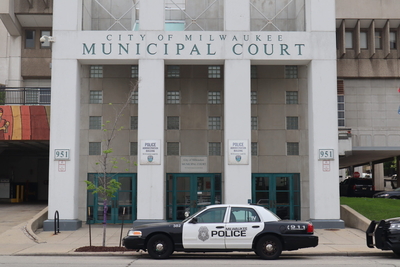
The changes were followed on Tuesday by a statement from Mayor Cavalier Johnson that while technology can help law enforcement, “it is essential that we recognize the limitations and dangers associated with these tools.” Johnson added that “I recognize the benefits of the Flock cameras system.” He said that “on multiple occasions this tool has located critical missing persons and helped apprehend violent criminals in Milwaukee. The technology has also been misused in several notable instances, both locally and nationally, compromising the rights of individuals.”
Several of those cases played out in Milwaukee and elsewhere in Wisconsin. Josue Ayala of Milwaukee, Cristian Morales of Menasha, and Frank McGrath of Kenosha County were all charged with either misdemeanor or felony misconduct in public office after using Flock to surveil their current or former romantic partners. Ayala was given a year of probation and avoided incarceration, whereas Morales was sentenced to six months in jail and three years of probation while avoiding prison time. McGrath’s case is still ongoing.
In July, Tehrangi Chapman, a Milwaukee police internal affairs detective who was involved in investigating Ayala’s misuse of Flock, was also charged with using the cameras and car-mounted GPS devices to keep tabs on someone who he’d surveilled since 2019, before Flock even arrived in Milwaukee. Chapman has been charged with felonies, and his case is still ongoing. On Aug. 26, Chapman pled not guilty, and is expected back in court for a scheduling conference on Oct. 7, according to online court records.
Each of the officers who’ve been found to have abused their access to Flock used terms like “suspicious” or “investigation” to search the Flock network, which were common terms found in the Examiner’s 2025 analysis. Other cases have also emerged, such as that of a man who is now suing the Waukesha County Sheriff’s Department after a deputy searched him in Flock following a traffic stop, for which the man sought to file a complaint against the deputy.
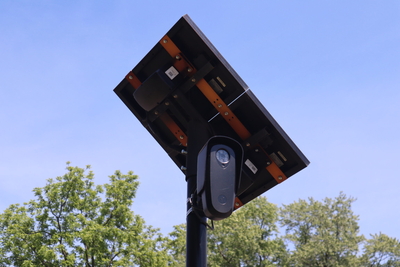
As misconduct cases have emerged, communities across the state have opted to drop their Flock cameras including Kaukauna, Sturgeon Bay, Verona, Appleton, Oshkosh, Dane County and Stoughton.
In Oshkosh, the request to cancel the Flock contract actually came from the police chief, who told local elected officials that representatives of the multi-billion dollar Flock Safety company had misled him on whether the cameras were able to develop heatmaps depicting a vehicle’s movement patterns.
Elsewhere, community members have packed public meetings to tell local officials that they don’t want to be placed under perpetual surveillance, expressing fears about how the cameras could be misused by both local and federal law enforcement. Police leaders have had mixed responses to the concerns from residents. The police chief in Green Bay has opted to keep the cameras, citing their usefulness in solving violent crime while also acknowledging that steps need to be taken to protect people’s privacy, while a chief in the small city of Chetek threatened to do background checks on residents who spoke against the cameras in a public meeting.
Exactly how to handle the cameras is still a question local and national leaders are trying to answer. In August, President Donald Trump said that the cameras have “pros and cons” and that “it’s being studied right now, we’ll have an answer soon as to our views on it.” When asked whether he’d consider banning Flock cameras statewide, Democratic Gov. Tony Evers said, “I don’t know what the solution is, but I think there’s people all across our country that’s talking about it.” Evers said he recently talked with Minnesota Gov. Tim Walz about Flock cameras. “Whether that [banning the cameras] is the answer, all’s I know is that we need to have an answer.”
Madison, WI