Michigan Supreme Court denies appeal on clean energy zoning rules, agrees to hear another
Nov 20, 2026 | 5:38 pm ET
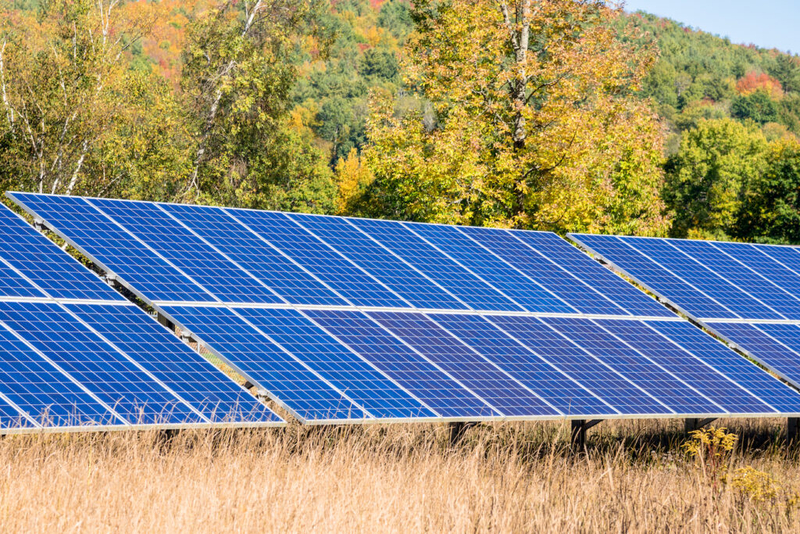
Description
Stock photo/Getty Images
The Michigan Supreme Court Friday issued a major decision involving the state’s 2023 clean energy zoning law, declining to hear an appeal from nearly 80 localities who argued that state energy regulators had acted outside their authority in their efforts to implement the new policy.
In November 2024, 72 townships and seven counties filed a challenge against the Michigan Public Service Commission, arguing the regulatory body had violated the state’s rulesmaking procedures by “unlawfully and unreasonably” redefining key terms and and creating processes and procedures “that violate the Legislature’s express and unambiguous intent.”
The appeal came nearly a year after Gov. Gretchen Whitmer signed the Clean Energy and Jobs Act, Public Act 233 and 234, into law. As part of a package of clean energy bills passed by the Democratic-led Legislature, the laws gave the Michigan Public Service Commission authority over permitting renewable energy and battery storage projects above a certain size.
Public Act 233 requires energy companies and power producers to engage with localities whose clean energy permitting process matches the one put in place by the state, those companies can apply for permitting through the commission if a community fails to approve or deny the local application in a timely manner, if the local zoning process is stricter than what state law prescribes, or if a project meets the requirements laid out by the permitting law, but is denied.
The Michigan Court of Appeals agreed with the localities on two points, finding that the commission had erred by only including units of government with zoning authority in its definition of an “affected local unit.” It also determined that the commission’s timeline for an affected local unit to notify a developer that they have a “compatible renewable energy ordinance” did not match the definition laid out in state law. Beyond those terms, the court largely upheld the Michigan Public Service Commission’s order implementing the law.
In their appeal to the Michigan Supreme Court, the localities presented a single question: Did the Public Service Commission unlawfully and unreasonably exceed its authority in issuing all or parts of the Oct. 10 order implementing the permitting law?
How Ann Arbor, Michigan, is creating its own clean energy utility
While the localities argued it had, the high court denied the application for leave to appeal, “because we are not persuaded that the question presented should be reviewed by this Court.”
However, the Supreme Court’s Friday order moves forward on some questions raised in a cross-appeal filed by the Michigan Public Service Commission and a collective of clean energy industry and advocacy groups. Those questions concern the Court of Appeals decision on the notification timeline and a company’s ability to move forward with a project if local elected officials do not respond to their offer to meet within 30 days, or if a meeting is never held.
While the court declined to consider other questions raised by the commission and the intervenors, it instructed the Clerk of the Court to schedule oral arguments on the approved questions for January 2027.
In a statement, Advanced Energy United, Clean Grid Alliance and the Michigan Energy Innovation Business Council, which intervened in the case, applauded the court’s decision to deny the local governments’ appeal, allowing the commission to move forward in implementing the permitting law.
“Michigan needs to generate more energy to keep energy costs down as demand continues to surge. The Clean Energy and Jobs Act ensures business leaders have certainty to invest in Michigan, building the projects that power the state’s grid and create jobs,” Trish Demeter, senior managing director at Advanced Energy United, said in a statement. “We look forward to the Michigan Supreme Court ensuring there remains a clear, transparent statewide process that everyone can follow so we can generate the energy needed to affordably meet demand.”
In a news release, Foster Swift Collins and Smith, PC, the law firm representing the local governments, noted their disappointment in the court’s decision not to hear their appeal. However, the firm also cheered its decision to uphold the Court of Appeals ruling around the definition of an “affected local unit.”
“This is an important win for counties and other local governments that may not exercise zoning authority over a project site but will nevertheless experience the project’s impacts,” Michael D. Homier, the leader of Foster Swift’s municipal practice group said in a statement. “The decision confirms that those communities cannot be excluded from the rights and protections the Legislature provided under PA 233 simply because another local government exercises zoning jurisdiction.”
In a statement, the Michigan Public Service Commission offered appreciation to the Supreme Court for “providing clarity on what it will review in this matter.”
“We look forward to making our case,” the commission stated.
Lansing, MI