Michigan Supreme Court declines to hear GOP appeal in case challenging mail-in voting guidance
Oct 29, 2026 | 5:24 pm ET
Description
Photo by Simone Hogan/Getty Images
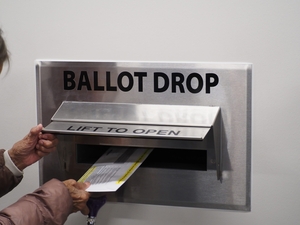
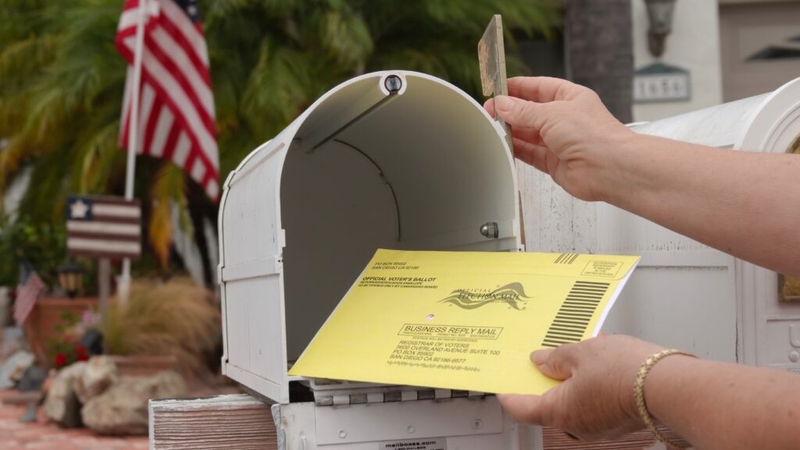
The Michigan Supreme Court issued an order Thursday declining to hear an appeal by the Republican National Convention, the Michigan Republican Party and Chesterfield Township Clerk Cindy Berry in their lawsuit challenging election guidance from Secretary of State Jocelyn Benson on how to handle mail-in ballots with mismatched numbers.
The order did not come with a written opinion or statement from the justices in the majority, but noted that the appeal was denied because they were “not persuaded that the questions presented should be reviewed by this Court.”
However, Justice Brian K. Zahra, the high court’s sole Republican, wrote a dissent on the order, concluding that a decision not to hear the case “cheapens the role of this Court and fails to recognize the importance of the right to vote in our state.”
Zahra added that the case has particular prominence because of Michigan’s role as a swing state with competitive local and statewide elections.
“As Michigan’s court of last resort we owe it to the people of Michigan to explain why ballots with mismatched or missing ballot numbers are tabulated when our Legislature has plainly stated that ‘[i]f the ballot numbers match, the board of election inspectors shall . . . prepare the ballot for tabulation’,” Zahra continued.
Justice Richard H. Bernstein also indicated that he would grant leave to appeal, but did not include a further dissent.
Benson’s guidance had said that ballots returned with mismatched numbers between the ballot stub and the envelope should be counted as a “challenged ballot,” something that Berry and the national and state Republican Party organizations had challenged.
Court of Claims Judge Brock A. Swartzle ruled in December 2025 that if the numbers do not match, the vote cannot be counted, but a panel of judges on the Court of Appeals overturned that decision in June 2026, ruling that because Michigan law, “does not prohibit the tabulation of those ballots and because the Court of Claims granted permanent mandatory injunctive relief without making the required findings, we reverse and vacate the final order and judgment.”
While in the Court of Claims, Benson’s lawyers had argued that because there was no specific instruction in the law about what to do with a ballot if it was returned with mismatching numbers, it fell within her realm to make a decision on.
Swartzle disagreed with that argument, writing that though there is no specific guidance on what to do in that situation, the law is clear that such a ballot should not count, and issued a permanent injunction on the matter.
But in a Court of Appeals opinion authored by Judge Michelle Rick and joined by Judges Mariam Bazzi and Alli Maldonado, they argue that the state law in question “does not prohibit election inspectors from tabulating absent-voter ballots with missing or mismatched stubs as challenged ballots under the Secretary’s guidance. The Court of Claims erred by declaring that such ballots cannot be tabulated.”
Rick added that the Court of Claims “abused its discretion by imposing plaintiffs’ 10-step cure procedure” as a permanent injunction, writing that such an injunction is an “extraordinary remedy.”
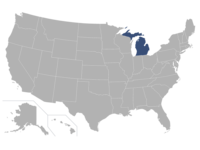
Lansing, MI