Medicaid work requirements, redeterminations will cause up to 75K to lose their health care in WV
Apr 01, 2026 | 6:00 am ET
Description
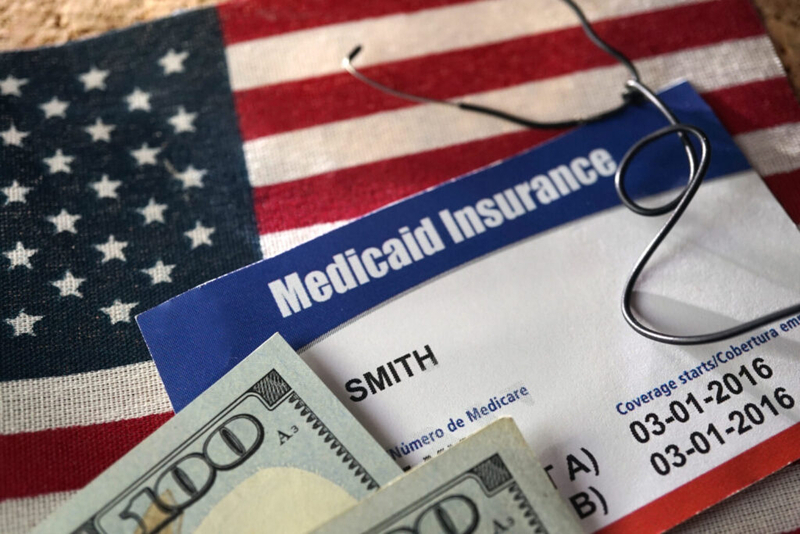
According to a study released last week, tens of thousands of West Virginians will lose their Medicaid coverage in 2028 under new work requirements and more frequent eligibility checks. (Photo via Getty Images)
Between 40,000 and 75,000 West Virginians will lose their Medicaid coverage in 2028 under new work requirements and more frequent eligibility checks going into effect beginning next year, according to a study released last week.
State policies will help determine whether the decline turns out to be closer to the low estimate, the high estimate, or somewhere in the middle, the study says.
The Urban Institute did the analysis with support from the Robert Wood Johnson Foundation. According to the study, between 4.9 million and 10 million people across the country will lose their health coverage after the new work requirements and six-month redeterminations go into effect.
“The range there is because the extent of coverage losses will heavily depend on state policies and how states implement the policies,” said Jennifer Haley, principal research associate for the Urban Institute.
Beginning Jan. 1, 2027, those people age 19 through 64 who are part of the Medicaid expansion population will have to work or train for 80 hours a month in order to qualify for the program. Expanded Medicaid includes those who qualify for the program because they make up to 138% of the federal poverty line, or about $45,540 for a family of four.
Currently, 161,184 state residents are part of the Medicaid expansion population, a spokeswoman for the state Department of Human Services said Monday.
States are currently required to determine a person’s eligibility once a year, but that will increase to twice a year.
The policy changes are part of the One Big Beautiful Bill Act that President Donald Trump signed into law last year. West Virginia’s entire congressional delegation — all Republicans — voted for the One Big Beautiful Bill Act, which the Congressional Budget Office estimates will cut federal spending on health care by $1 trillion over 10 years and lead to 10 million people losing health coverage.
State Medicaid officials told lawmakers last year the work requirements would lead to enrollment declines, but they didn’t say by how much. The state enlisted West Virginia University Health Affairs to help with project management and systems requirements for the work requirements, officials said. At the time, officials said the work requirements may require the state to upgrade systems and hire more staff members.
If West Virginia implements a “high mitigation” strategy designed to help people stay on Medicaid, enrollment will decline by as little as 40,000, but if officials pick a “low mitigation” plan, the number could be 75,000, according to the study. With what researchers call a “medium mitigation scenario” the state Medicaid enrollment would drop by about 61,000 people.
Haley said states have some flexibility in implementing the work requirements, including requiring that people meet the work requirements for one month prior before being eligible or meet them for three months.
“A lot of low income people have work experiences that vary over time,” Haley said. “Wages may go up a little bit or down a little bit in a certain month based on the number of hours they are scheduled to work, for instance. So that income volatility is part of the reason that people might not be found to be compliant if states are checking eligibility more frequently.”
States can also use automatic, or ex parte, renewals using records from taxes or other public assistance programs, rather than requiring people to submit paperwork to better mitigate enrollment declines.
“That’ll be really important for reducing the coverage losses at those more frequent redeterminations,” Haley said.
She added that it’s important for Medicaid enrollees to update their address if needed so that the state agency can contact them if they do need more information.
Some people will be exempt from the work requirements, including students, those who are pregnant, parents of children 13 and younger, and for those the state deems “medically frail.”
Haley said states have the option of broadly defining medical frailty and expanding the timeframe it looks for claims to prove medical frailty.
“If you look at medical claims from a single month, for instance, that wouldn’t capture all of the people with health conditions, because probably not all of them saw a provider in a single month,” Haley said. “But if you go back a whole year, or two years of looking at claims to identify diagnoses that could Medicaid indicate medical frailty, that would probably result in more people being identified as medically frail.”
In a statement to West Virginia Watch, Angelica Hightower, communications specialist for the state Department of Human Services, said the agency is focused on ensuring compliance with the federal requirements while continuing to support West Virginians who rely on Medicaid.
“DoHS is diligently working toward meeting the Jan. 1, 2027, deadlines associated with new federal requirements, including work requirements and eligibility redeterminations,” she said.
Charleston, WV