MEA looks to Benson, new Democratic majority for help addressing student behavior
Nov 16, 2026 | 2:22 pm ET
Description
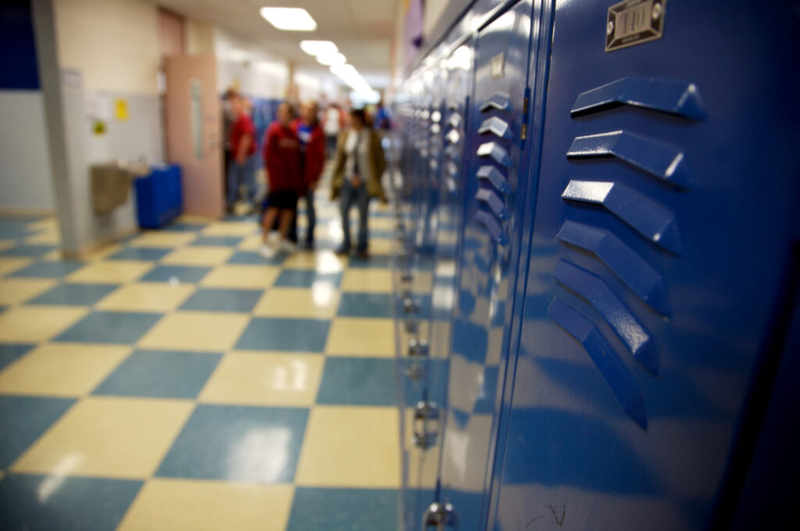
(Stock photo/Getty Images)
Michigan’s largest teachers’ union will be looking to the incoming Democratic legislative majority and the state’s new governor to help educators find solutions to poor student behavior in the classroom, which the Michigan Education Association said could be addressed through a potential mix of pilot programs, appropriations and other solutions identified during a recent news conference.
Last week, the MEA presented new data from a survey of more than 4,000 members involved in preK-12 education, conducted Aug. 12-21, 2026. The MEA found that members continue to face challenges with student behavior and that almost all of the respondents surveyed reported at least one negative student behavior experience within the last year. The share of members concerned about student violence toward other students or employees has also risen, the data notes.
Of the key findings, almost half of members surveyed experienced aggressive physical contact with a student. Chronic absenteeism, verbal outbursts, the destruction of teacher or school property, and aggressive threats made by students all weighed in as predominant negative student behavior issues. Between 50% and 83% of those surveyed noted those issues as the most experienced concerns.
Although less frequently reported, more than 32% of respondents said they had experienced aggressive physical contact with a student, evacuations because of unsafe behavior or serious concerns about being physically injured by a student.
Erik Edoff, the MEA’s senior executive director, told reporters during a virtual press call that every student deserves a safe place to learn and that rang true of teachers and educators who spend a great deal of time each day with students.
“Michigan educators are increasingly concerned about disruptive and sometimes dangerous behaviors among some of our students, these behaviors threaten both those students’ success and the success of their classmates, as well,” Edoff said. “They’re also forcing too many great educators out of a profession they love, at a time when we need to attract and retain the best and brightest to work in our neighborhood schools and keep our kids successful.”
Edoff added that teachers and school support staff are seeing disruptions among students of all ages and in all kinds of school settings from school buses and classrooms to front offices and school sporting events.
MEA has also said that the contributing factors to newly concerning student behavior issues included mental health challenges, constant access to smartphones and technology and overexposure to social media. Factor in cuts to recreational and recess time, along with a lack of support from communities and families, and the problem becomes more pronounced.
Edoff said MEA is committed to working with its members to address the issue, but he noted that it would also take some serious conversations and work with policymakers to assist them.
“It’s clear from both the surveys and the stories we’ve heard that educators need more resources from policymakers and support from administrators and families,” Edoff said. “Our public schools continue to struggle with inadequate and inequitable funding that leaves classrooms overcrowded and without enough trained quality educators to meet students’ very individualized needs. We must properly fund our neighborhood schools, so we have enough quality educators to help each and every student.”
The Michigan Legislature, through the past two years of divided government and in the previous legislative trifecta years of 2023-24 — when both the state House and Senate and the governor’s office were under Democratic control — has prioritized preK-12 education and made investments in things like school lunches and expanded mental health programs.
MEA will have a new set of leaders to help them chart a path forward on student behavior in January. The Democrats expanded their majority in the state Senate while also flipping the House after it was in Republican control over the past two years. Gov.-elect Jocelyn Benson is set to hit the ground running after her inauguration early next year. Democrats have by and large made expanding education funding, and more specifically giving it an equitable funding model, during the past few budget cycles.
Michigan Advance asked Edoff if the MEA had a specific appropriation request in mind, and possibly a specific percentage increase over the last few budget years that might help them in their efforts to curb poor behavior.
Edoff said that although it was true that the Legislature had improved on preK-12 funding year over year, money that has helped with the situation, funding over the long road has not kept up with inflation and has not kept up with how schools were funded in the past.
“A large percentage of the funding that we have received is taken up by additional categoricals that go to programs and other things that not all districts benefit from, and healthcare costs,” Edoff said. “Healthcare costs for employees of districts, both our members and other types of jobs, have gone up so dramatically and have eaten into many of the costs or many of the dollars that have flowed in in recent years.”
Doug Pratt, MEA’s director of public affairs, also said that the state must remain conscious that every district is in a different financial situation in terms of what has been invested. State funding becomes strained when you look at different district staffing levels and their ability to recruit through shortages.
“From a global standpoint, we don’t really break this out into a, ‘We need X million dollars to do this,’” Pratt said. “It is a district by district situation. We do need to make sure, overall, that we’re better and more equitably funding public education to catch back up to where we were even 25 years ago, when you adjust for inflation.”
Deb Lotan, executive director of the Avondale/Rochester Education Association, added that intermediate school districts used to have center-based programs, and she said that those no longer exist for the most part in Michigan. Those programs — which gave structured specialized support to students outside the traditional education setting — were situated in students’ home schools, and required more support and additional funding.
“I can’t say that there’s a magic number when it comes to that, but talking to colleagues, there are districts in the state of Michigan that do not have dedicated social workers, like not even a social worker for a district,” Lotan said. “So they have to rely on support from the ISD or outside entities, and that’s important because, as I said at the beginning, social workers don’t have a caseload number. And if you have a district that doesn’t have the financial means to be able to provide a social worker in their district, it costs money.”
Lansing, MI