Maryland rolls out new grant program for solar, battery projects
Oct 26, 2026 | 1:52 pm ET
Description
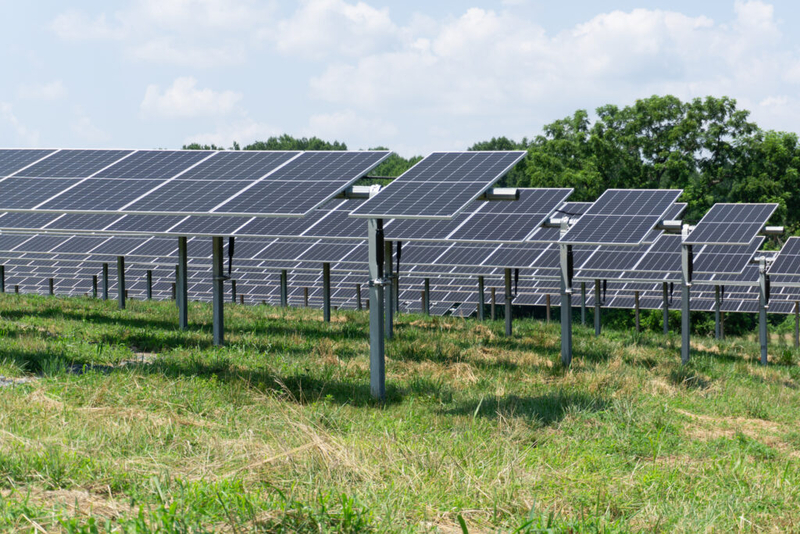
The Lime Kiln community solar project in Howard County, a 3.2-megawatt project pictured after a ribbon cutting ceremony on July 8, 2025. (Photo by Christine Condon/Maryland Matters)
Maryland is beginning to accept applications for a program to bolster solar, wind and battery storage developers with state grant funding.
The program, christened Megawatts for Maryland, was established earlier this year by the General Assembly, using $200 million from an existing state fund.
The grant money is meant for projects that have already completed some initial development steps, including acquiring property, and applying to regulators at the Maryland Public Service Commission or the regional electric grid.
“We want to make sure that these are real projects,” said Kelly Speakes-Backman, director of the Maryland Energy Administration.

Officials at the administration will dole out the funds through a competitive auction, selecting the projects that deliver the most megawatt-hours of electricity per dollar.
Maryland policymakers hope that the projects, which must come online within seven years of receiving the grant money, will eventually help reduce electricity prices for customers by bolstering supply.
“This program is an investment in energy affordability for Maryland in the medium to long-term,” Speakes-Backman said. “This is not going to be something that impacts our bill tomorrow.”
Collectively, the projects are expected to deliver “several hundred megawatts,” enough to power about 150,000 homes per year, Speakes-Backman said.
The $100 million per year in funding comes from a trove of “alternative compliance payments” that electricity suppliers make in lieu of complying with the state’s rules governing the percentage of their energy portfolio that must be renewable.
The payments have burgeoned in recent years in part because suppliers are required to devote an increasing amount of their portfolios to solar, and projects haven’t kept pace. Democratic lawmakers have used the extra dollars, which flow into the Strategic Energy Investment Fund, both to balance the state budget — stirring opposition from the right and from climate groups — and to set up additional climate and energy programs, such as the auction.
“We’re using every tool at our disposal to bring Marylanders relief as energy costs skyrocket in our region and across the country,” Moore said in a news release Monday. “This program will tackle rising electricity demand with cleaner, cheaper, in-state energy generation that will drive down costs for the long-term.”
State leaders also hope that the grant funding will help make up for investment tax credits for renewable energy projects that were canceled by President Donald Trump’s administration, which came from the federal Inflation Reduction Act.
“It’s not going to necessarily fully replace the ITC [investment tax credit],” Speakes-Backman said. “But I don’t think it’s just like a drop in the bucket, either. This is a really big deal: $200 million toward in-state generation through a grant process.”
Initial applications for Megawatts for Maryland are due from developers by Nov. 30. After that, state officials will confirm that the developers meet eligibility requirements, and qualified developers will have until Jan. 22 to submit an actual bid.
Throughout the state, renewable energy projects, including solar farms and battery storage facilities, have at times provoked strong pushback from communities.
In the application due in November, developers will need to show that they notified a local elected official about their project. In January, developers will need to provide plans for community engagement and community benefits.
But ultimately, the law requires that the winning projects be chosen purely based on the megawatts they can deliver for each dollar spent, Speakes-Backman said.
Lawmakers, who passed the program in this year’s Utility RELIEF Act, hope their constituents will see the program as a boon for their bills.
“Lowering costs for Maryland families remains our top priority,” Senate President Bill Ferguson (D-Baltimore City) said in a statement. “That’s why we passed Megawatts for Maryland last session — to bring more clean, renewable energy onto our grid, increase supply, and help lower utility bills.”
Annapolis, MD