Looks Like OHA Has A New CEO
Oct 21, 2026 | 9:19 pm ET
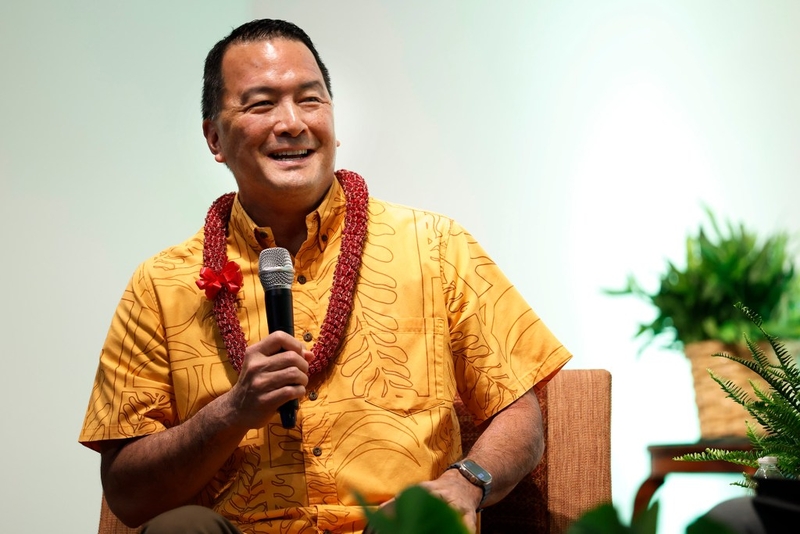
Description
Photo courtesy of Honolulu Civil Beat
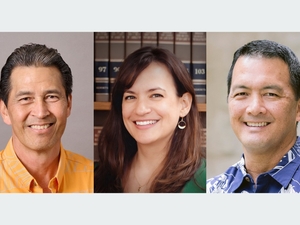
Todd Apo is the top pick to be the next chief executive for the Office of Hawaiian Affairs following a 5-to-4 vote by the office’s Board of Trustees on Wednesday afternoon.
The decision came after interim CEO Summer Sylva failed to get the five votes necessary to become the permanent administrator for the office. Hawaiian Homelands Director Kaulana Park was the third finalist.
While the board sets policy decisions and has ultimate authority over the office’s $900 million in trust assets, the chief executive is in charge of OHA’s staff and putting those policy decisions into action.
The trustees also set the next CEO’s salary at $260,000 annually for up to five years with the possibility of performance-based increases that could eventually increase the salary to $316,031. The board is set to make a formal decision on Apo's appointment on Thursday.
Earlier this year, the Board of Trustees were split over the handling of a lawsuit from former CEO Stacy Ferreira, who was removed from her post last September. Her suit alleges her removal was a retaliatory move by the office and its trustees for reporting board Chairman Kai Kahele to state authorities over his handling of the office’s budget.
OHA lawyers have said that Ferreira was trying to head off a potentially negative job review. Her contract expires Oct. 31.
That division over the lawsuit arose again on Wednesday, with a faction led by Kahele voting in favor of Sylva. Trustee John Waiheʻe IV joined four dissenting trustees in opposing her nomination, and sided with that group in supporting Apo instead.
Kahele, Vice Chair Keoni Souza and Trustees Brickwood Galuteria and Dan Ahuna supported Sylva.
Trustees Carmen Hulu Lindsey, Luana Alapa, Kalei Akaka, Keliʻi Akina and Waiheʻe supported Apo.
Reached by phone after the vote, Apo said he didn't want to talk until after final approval tomorrow.
Apo spent six years as a Honolulu City Council member representing the Westside before taking on roles at Disney and Ward Village.
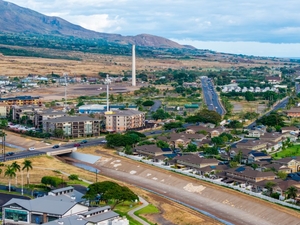
One area in which he stood out from the other finalists for the CEO position was Kakaʻako Makai, where OHA owns about 30 acres of land but has been unable to build residential towers because of a ban on such developments imposed by the Legislature.
Apo, who worked for Ward Village as it developed luxury condos just across the street, said that OHA should look at building what it can within current zoning rules. He is also open to considering a land swap with the state for land that may be easier to develop.
That view could put him at odds with the current trustees, who want to develop at least one residential tower in conjunction with the Hawaiian homelands agency.
But it's his experience with developers in Kakaʻako that won the support of Lindsey, who nominated Apo.
"We have a problem in Kakaʻako," Lindsey said in a phone interview. "I'm hoping he can move us forward."
Lindsey said she was torn between Park and Apo but felt Apo had a stronger demeanor "considering he has to work with Kai Kahele" — another strong personality who ousted Lindsey as board chair two years ago.

Kahele spoke in favor of Sylva's nomination during the board meeting. He said Sylva's leadership is necessary at a pivotal moment for OHA. He likened her to a navigator on a voyaging canoe and characterized the legal threats facing Native Hawaiians as a devastating storm creeping over the horizon.
"A great navigator does not wait until a storm is upon the waʻa to prepare," he said. "A skilled navigator reads the signs, studies the winds, watches the changing seas, and prepares the vessel and crew for what lies ahead."
De Mont Manaole, a criminal justice advocate who also testified in support of Sylva on Wednesday, said he was surprised by the board’s decision.
“It appears that beneficiaries' voice no matter,” he said.
He felt Sylva and Park were stronger candidates for their work in advocating for Native Hawaiians. Sylva, he said, was willing to stand up to Gov. Josh Green and insist that Native Hawaiians play a much larger role in negotiating with the military over land leases. And Park previously led the Hawaiian homelands department.
Apo, he said, was a “Bishop Street kind of guy” whose past work Manaole didn’t see as directly advocating for Native Hawaiians.
That the board was split sends the wrong message to the public, he said, and gives the appearance of "schoolhouse politics."
As new CEO, Apo also would take office at a time when legal threats to Native Hawaiian programs continue to increase. And he will face decisions about how to address a push for “ea” – sovereignty, self-governance or self-determination – which was removed as an objective in the office’s strategic plan several years ago but recently reintroduced by trustees.
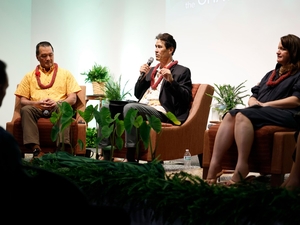
He has said that his first priority would be to build trust with the trustees and with OHA staff. At a forum last Thursday, he said he sees his role as insulating OHA’s employees from “external noise.”
He also described himself as a collaborative leader who takes time to listen to people before taking action. To help internal communications at OHA, he suggested creating a “one-source-of-truth” document that staff and managers can use to understand what is happening in the organization and learn about new initiatives.
Paraphrasing a line from the movie "Lilo & Stitch," he described teams he's worked with as an ʻohana.
"No one gets left behind," he said.
Honolulu, HI