Legislative sports betting gridlock costing Oklahoma millions in revenue
Oct 23, 2025 | 4:31 pm ET
Description
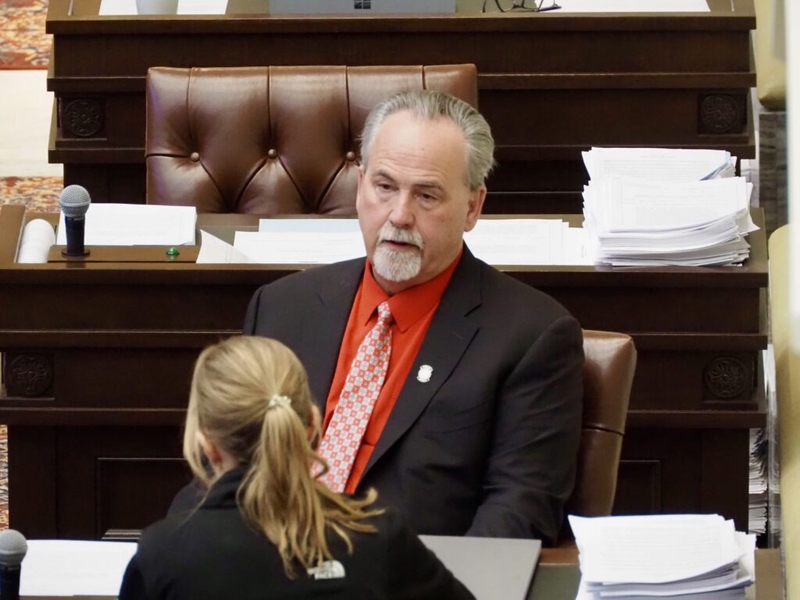
Sen. Bill Coleman, R-Ponca City, sits at his desk on the Senate floor on May 21, 2025 ahead of the swearing in ceremony for a newly elected senator. (Photo by Emma Murphy/Oklahoma Voice)
OKLAHOMA CITY – Oklahoma is losing out on millions in sports betting revenue to other states and illegal operators, a Senate panel was told Thursday.
Sports betting is legal in 39 states, creates about 2 million jobs and has about a $325 billion dollar impact, said Frank Sizemore, who is with the Sports Betting Alliance, which is made up of five companies.
His comments were made during a Senate interim study by Sen. Bill Coleman, R-Ponca City, that brought many of the key players together, including an executive with the Oklahoma City Thunder NBA team. Lawmakers often use those studies to help craft legislation.
“Sports betting is happening now in the state,” Sizemore said. “It is just on illegal platforms and with bookies down the street.”
Illegal markets have no taxes, accountability or regulation, Sizemore said.
“Weakening the illegal market strengthens the legal one,” he said.
States that allow sports betting tax it at an average of about 16%, Sizemore said.
When states have high taxes, those who bet stay in the illegal market, he said.
For years, Oklahoma lawmakers have unsuccessfully sought to legalize sports betting, but faced obstacles, such as setting up a system that complies with gaming compacts that give tribes exclusive rights in exchange for fees.
The tribes pay the state between 4% and 10% of adjusted gross revenue, said Matthew Morgan, Oklahoma Indian Gaming Association chairman. The organization represents 25 of the 35 tribal governments that offer gaming.
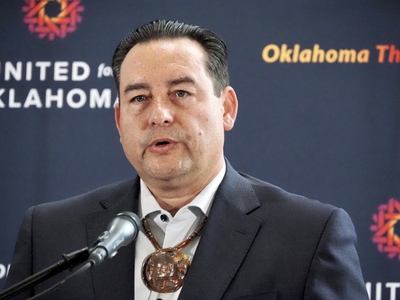
The 35 tribal nations operate more than 130 gaming facilities, according to the association.
In fiscal year 2025, Oklahoma collected over $221 million in tribal exclusivity fees, a 5% increase over the prior year, according to the Oklahoma Gaming Compliance Unit Annual Report.
“The state made a promise,” Morgan said, adding that it agreed to protect the tribes’ substantial exclusivity to operate gaming in exchange for fees. He said that over the life of the compacts, tribes have paid over $2.2 billion to the state.
Failure to comply with the compacts could result in monetary damages against the state, Morgan said.
Morgan said only the Oklahoma Lottery and tribes are authorized to conduct gaming in the state.
Joe Lucas, former chairman of the Oklahoma Horse Racing Commission, said after the meeting that Remington Park and Will Rogers Downs also offer gaming.
“Any breakdown in the gaming compacts would create major uncertainty for both the casino industry in Oklahoma, a major economic driver for both the tribes and the state, leading to legal challenges, legal costs that threaten the operational stability of the casinos,” said Rep. Ken Luttrell, R-Ponca City.
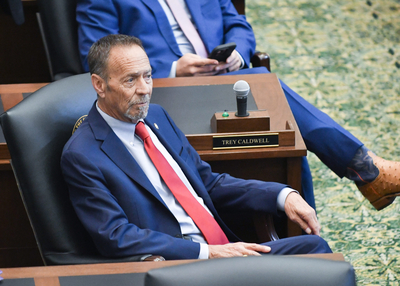
Luttrell and Coleman have both worked to legalize sports betting.
Will Syring, Oklahoma City Thunder vice president of corporate partnerships, said legislative efforts to legalize sport betting would have to be done within the boundaries of the gaming compacts.
Syring said the Oklahoma City Thunder is seeking 0.25% of total bets.
“Because in other markets, teams are getting a direct license,” he said. “If they’re getting licenses, they’re getting paid off those bets. The league also only allows you to take a percentage off of the top.”
Diversification of revenue streams allow the NBA organization to be competitive, he said.
“It’s not just hot dogs and foam fingers and tickets and sponsorships,” he said.
Sports betting would elevate fan engagement, he said.
“We have 20 million social media followers, so when we do something, people listen,” Syring said. “When we announce a new product or a player move, people hear about it because they are following our feeds.”
When sports betting is legalized, the organization can use its “megaphone” to tell followers how to legally and safely bet through the existing compacting process, he said.
Editor’s note: This story was updated at 8:11 p.m. Thursday to include a statement from Joe Lucas, former chairman of the Oklahoma Horse Racing Commission.
Oklahoma City, OK