Lawmakers urge DCFS to revive expired psychiatric care contract for foster kids
Oct 28, 2026 | 3:27 pm ET
Description
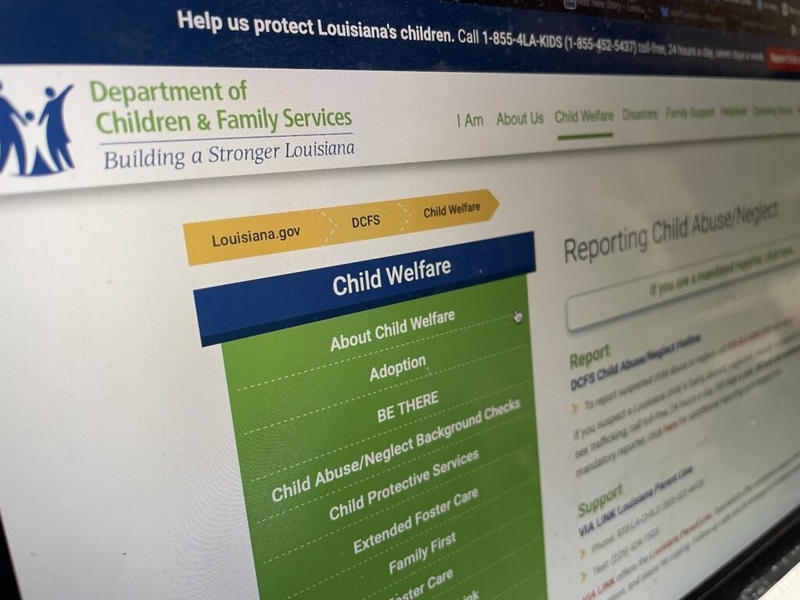
State lawmakers are urging the Louisiana Department of Children and Family Services to reach terms with the Tulane Institute of Infant and Early Childhood Mental Health to resume its services for the state's foster care program. (Photo by Greg LaRose/Louisiana Illuminator)
Mental healthcare for Louisiana’s foster children in crisis faces an uncertain future after the state’s child welfare agency could not reach terms to renew a contract that’s been in place for more than 30 years. In response, state lawmakers have pleaded with the leader of the Department of Children and Family Services to work through the impasse.
Psychiatrists with Tulane University’s medical school have provided services to children in the state’s foster care system and their families since 1994, with a focus on complex cases. Its Institute of Infant and Early Childhood Mental Health has been recognized nationally and internationally by practitioners and scholars for its groundbreaking work with very young children who’ve been through abuse, trauma and neglect.
The state’s contract with Tulane lapsed at the end of September after more than a year of negotiations, DCFS Secretary Rebecca Harris told the state Senate Health and Welfare Committee at its Oct. 12 meeting.
At the heart of the dispute is Tulane’s refusal to get approval from the state before providing services. Harris said this process would ensure the state doesn’t have to pay for care that qualifies for federal Medicaid coverage.
But Dr. Charles Zeanah, the psychiatrist who co-founded and leads Tulane’s Infant Institute, told lawmakers that requiring DCFS pre-clearance doesn’t take into account the real-time needs of his team.
“Either we can be trusted by DCFS to make good clinical decisions on the fly, or they should not contract with us,” Zeanah said.
The state relies on the institute staff to assess the mental health of children who experience abuse and provide them with needed care. Tulane also provides special support for drug- and alcohol-affected infants, and they assist foster families and caregiver relatives when children have to be housed away from their biological parents.
A copy of Tulane’s DCFS contract, obtained through a public records request, shows it was paid more than $400,000 for its services in the fiscal year that ended June 30. It was given a three-month extension worth nearly $134,000 to provide care through September.
Contract documents show the money goes toward Zeanah’s salary as well as seven psychologists who all allocate 100% of their time to the program. Language in Tulane’s contract says the state justifiably pays for these outside services because “DCFS staff [is] unable to fulfill this work responsibility. DCFS does not have programmatic capacity to service this client population.”
The money paid to Tulane comes from a federal grant, specifically the $7 million provided in 2024 from the MaryLee Allen Promoting Safe and Stable Families program under the U.S. Department of Health and Human Services.
Tulane also puts up 25% in matching funds required for such federal grants, Zeanah said.
It’s not evident how many foster children or families receive psychiatric care annually through Tulane’s team, but Zeanah told the Senate committee his staff will continue to serve the 15 families who are currently under their care. They won’t take any new cases unless the contract dispute is resolved.
Zeanah declined an interview after the hearing through a Tulane spokesman, and DCFS has not provided an update when asked whether contract negotiations have resumed with Tulane.
At the hearing, Harris said if Tulane continues to bill DCFS directly for its service, it could negatively impact the calculations Medicaid uses to determine its reimbursement rates for care providers.
She also cited a Legislative Auditor’s report that found DCFS spent more than $20 million to provide services that Medicaid would have been covered, though the report from April states “it is unclear” whether some of the services should have been paid through the federal program.
Harris also pushed back against suggestions that her stance on the Tulane contract is financially motivated.
“We have been having conversations for over a year, and where the conversations started had nothing to do with efficiency but more to do with what is right,” Harris said.
Harris has implemented an overhaul of the DCFS child welfare division since Gov. Jeff Landry put her in charge of the agency in August 2025. It has included the reassignment of office-based supervisors to casework in the field and replacing a remote-staffed abuse hotline staff with an in-house call center. Both moves prompted dozens of retirements and resignations.
Harris and her predecessors have been faced with persistently high levels of child abuse and neglect, including child fatalaties involving households who have had prior contact with DCFS.
Bipartisan frustration with the agency from lawmakers reached a peak in the spring when two measures were proposed to dismantle DCFS and hand off its responsibilities to other state departments. The governor stepped in to sideline those plans.
Some of that discontent remained evident at the Senate committee hearing, where lawmakers took turns pressing Harris for an explanation on why the Tulane contract was allowed to expire.
“As hard as it’s been to climb the hill, this knocks us back because we’re spending a lot of time and energy on something that’s been so positive for over 30 years,” Sen. Gerald Boudreaux, D-Lafayette, told her.
State Rep. Kim Carver, R-Mandeville, who joined senators for the hearing, also recommended Harris work to revive the Tulane contract. He acknowledged the DCFS child welfare staff holds perhaps the most difficult jobs in state government but said the decision to let the contract end will make things worse.
“I feel like I’m in an alternate universe,” Carver said.
Baton Rouge, LA