Lawmakers debate school dress codes, nitrous oxide, Iowa City research center
Feb 11, 2026 | 11:39 pm ET
Description
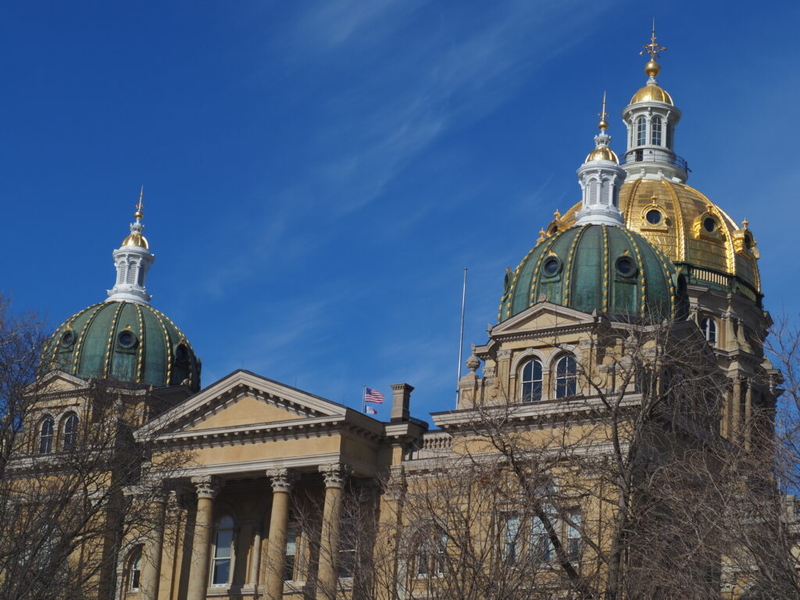
The Iowa State Capitol as seen Feb. 11, 2026. (Photo by Robin Opsahl/Iowa Capital Dispatch)
With the first committee deadline of the 2026 legislatives session fast approaching, lawmakers moved on more than 100 bills through subcommittee and committee processes Wednesday.
By the time lawmakers end “funnel” week at the Capitol on Feb. 20, bills must be approved by a committee in at least one chamber in order to remain eligible for consideration — with several exceptions. Lawmakers have been holding numerous meetings to have their bills stay in the running under this deadline, and on Wednesday, they held 15 committee meetings across both chambers and 64 subcommittee meetings to discuss legislation.
There were 41 bills on the agenda at Senate committee meetings and 49 were scheduled for consideration by House committees — though some measures were not ultimately discussed. The measures approved by committees are considered “alive” for the session, at least until the second funnel deadline, March 20, when most bills must be passed by one chamber and approved by committee in the other chamber to stay eligible.
While measures approved by committees Wednesday are safe from the “funnel,” many more bills will go through the Legislature’s subcommittee and committee processes in the days leading up to Feb. 20.
Here are some of the bills discussed at the Capitol Wednesday:
Public school dress codes
House Study Bill 681 would establish dress code standards for public and charter K-12 schools. School boards would have to adopt policies requiring students’ clothing to be appropriate for an educational setting and “presentable, promoting personal hygiene, neatness and modesty.”
Minimum standards would require clean clothes in good repair and ban clothes that have language, symbols or images promoting illegal activities, or that expose “undergarments or midriffs.” Public and charter schools would be allowed to adopt further dress code restrictions, including school uniform policies, under the policy.
School boards would be required to adopt procedures for enforcing dress codes, including “clear consequences for violations.”
Rep. Angel Ramirez, D-Cedar Rapids, said she believes the bill would “negatively and disproportionately impact low-income students.”
Ramirez and other Democrats said the bill would penalize students for being in a household that lacks access to clean clothes and laundry facilities. Ramirez and Rep. Tracy Ehlert, D-Cedar Rapids, both of whom work in schools with low-income children, said they have regular interactions with students who are homeless or have parents who cannot provide access to clean clothes.
“I know these parents would love to have their kids in some nice, clean clothes,” Ehlert said. “It’s just not an option for our families, and I feel like this is shaming them for not having the financial means to do better — because if they could, they would.”
But Republicans said the bill was not intended to punish students in these situations. Rep. Wendy Larson, R-Odebolt, said the dress code was meant to “instill a sense of pride and respectfulness” in students by maintaining their appearances, while adding that schools could work with community groups and churches to help families in need get access to clothes to meet these standards.
“It’s the attitude of putting your best foot forward with what you have, and doing the best with what you have,” Larson said.
Ramirez said school staff and community groups are already working to provide students in need with clothes and other necessities.
“What you are all describing, those who are in favor of this bill, of looking to fill gaps, that is not what this bill does,” Ramirez said. “In fact, it does the opposite by enforcing clear consequences for violations. Even that language alone, we are not approaching this in an empathetic way for children and their families.”
The bill was approved 14-9.
Antisemitism reports
The committee also passed House Study Bill 646, legislation requiring the state Board of Education publish an annual antisemitism report on regents universities, community colleges and public school districts. The report would identify “each complaint or incident of antisemitism” reported at these educational entities, as well as the outcomes and findings from investigations into each reported case.
Ramirez introduced two amendments that were not approved, which would have required charter and nonpublic schools to also compile these reports, as well as a provision removing a reference to the definition of antisemitism currently in Iowa Code, which references “contemporary examples of antisemitism identified by the International Holocaust Remembrance Alliance.”
Ramirez said the IHRA working definition of antisemitism can be misconstrued or used to state that students criticizing the state of Israel or Prime Minister Benjamin Netanyahu are antisemitic. She called for lawmakers to combat antisemitism, which she said was “hateful, disgusting and has no place in our state,” while preserving the free speech rights of students, including those of Jewish students critical of the state of Israel.
The bill moved forward with a 17-6 vote.
Student free speech
Senate File 2062, approved Wednesday by the Senate Education Committee, is a companion bill to one approved by the House committee earlier in February banning schools from discriminating or penalizing students for engaging in religious, political or ideological speech. The measure says students must be allowed to express certain viewpoints on issues that differ from other “similarly situated students.”
Rep. Sandy Salmon, R-Janesville, brought up the measure saying it will provide needed constitutional protections for students.
“Schools have been increasingly inconsistent in applying First Amendment standards, this bill creates uniform statewide protections so that every student, no matter what district they’re in, has the same rights, and all are protected,” Salmon said.
Democrats stated free speech protections are already guaranteed for students under the U.S. Constitution. Sen. Molly Donahue, D-Marion, said while she supported the bill moving forward, she said she was concerned about the “exorbitant penalties for the schools” found in the violation of these free speech protections under the bill.
Loud commercials
Senate Study Bill 3012, a bill limiting the volume of commercials on streaming services moved out of the Senate Technology Committee with unanimous consent.
The measure states commercial advertisements played on video streaming services to Iowa consumers cannot be transmitted “at an audio volume louder than the audio volume of the video programming or video content the advertisement accompanies.”
This is a regulation is already in place at the federal level for traditional broadcasting services like TV stations and cable providers — but the 2012 Commercial Advertisement Loudness Mitigation Act does not apply to streaming platforms.
Sen. Annette Sweeney, R-Iowa Falls, said there was an amendment to the bill, approved by the committee, that ensures the Iowa Utilities Commission can enforce the measure, if approved.
Sen. Liz Bennett, D-Cedar Rapids, praised the bill as “another piece of good bipartisan legislation.”
“I think consumers have the right to determine inside their homes what the volume of the things they’re listening to will be,” Bennett said. “And if you’ve ever had a sleeping baby that somebody woke up, or if you’ve been around somebody who is sensitive to loud noises, like a veteran with PTSD, I think you’ll certainly appreciate this legislation.”
Age verification for online porn
House File 864, a bill requiring websites containing obscene material to implement age verification, was also approved by the committee. This measure, passed by the House in 2025, requires websites and online platforms containing obscene materials to verify the age of users through checking government-issued identification, financial documents or other “reasonable” methods. Commercial entities would be held civilly liable for not restricting minors’ access to this material.
Bennett said though “we all agree that minors should not access hardcore pornography on the internet,” that the bill “does not represent the best way to protect minors on the internet.” She said these restrictions can be avoided by using VPN services, and that there are many concerns about the security of entrusting companies with users’ data.
“There have been many well-documented breaches of sensitive personal data recently from sites using … supposedly secure age verification methods such as Tea and Discord,” Bennett said.
She also criticized the bill for not specifying how much of a website’s or platform’s content must be “obscene” in order to require age verification — something specified in similar laws passed in other states.
This specification was included in House File 2274, which requires a 33% or more of the total data available on an internet site or platform qualify as “obscene” in order to be included in age verification requirements.
Rep. Bill Gustoff, R-Des Moines, said he had heard from some parties that they would like a bill allowing for no pornographic material to be accessible without age verification, but said the new proposal presents “another track we can be running, at least, and it’s a track based on what survived in the Supreme Court already.”
Nitrous oxide restrictions
House File 2140 was passed unanimously by the House State Government Committee. It bans the distribution of nitrous oxide without a permit from the Iowa Department of Inspections, Appeals and Licensing, and requires permitholders maintain a log of nitrous oxide sales.
The measure comes as sales have grown nationwide for canisters of nitrous oxide, used primarily as a recreational, intoxicating substance — despite these products often being advertised with intended culinary uses. The U.S. Food and Drug Administration warns that “intentional misuse or inhalation of contents can lead to serious adverse health events, including death.”
The bill was amended with Rep. Megan Jones, R-Sioux Rapids saying the measure establishes a rebuttable presumption that vape stores selling nitrous oxide containers, or even foods like whipped cream, are “selling such with nefarious purposes.” Rep. Megan Srinivas, D-Des Moines, joked she appreciated learning about the “dangerous use of whipped cream happening in our state,” while supporting the bill advancing.
Iowa City research center
Senate Study Bill 3033, allowing the Iowa Department of Administrative Services to close the State Historical Society of Iowa Research Center, passed the Senate State Government committee in a 12-4 vote.
The legislation, which eliminates the department’s requirement to maintain a historical resource research center in Iowa City, came after DAS had already announced the planned 2026 closure of the Iowa City center. This decision was challenged by a lawsuit from a group of historians, professors, archivists and donors, who pointed to the existing state law requiring the Iowa City facility’s maintenance. This language would be changed by the bill.
The measure was amended by the committee to state the measure is “effective upon enactment.”
Sen. Art Staed, D-Cedar Rapids, called for lawmakers to oppose the bill, both because typically the Legislature does not “interfere with situations where there’s a lawsuit,” and because of the significant public outcry against the decision to close the building. He pointed both to the comments made in the subcommittee meeting and an online petition opposing the measure.
“They’re concerned about the loss of the documents themselves, the way they’re being handled, and it’s a tragedy that this resource that we have in the community is being changed,” Staed said. “They’ll never have access to that again. They’re not gonna come from the University of Iowa, Iowa City area in the eastern part of the state, to Des Moines to do the historical research.”
Sen. Carrie Koelker, R-Dyersville, said the Iowa City facility was in need of repair, unorganized and being used as a “a free storage shed, in my opinion” by churches, labor organizations and other groups donating historical materials.
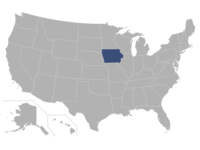
Des Moines, IA