Keep your kids away from the PCB-contaminated dirt behind Brier Creek Shopping Center
May 01, 2017 | 2:09 pm ET

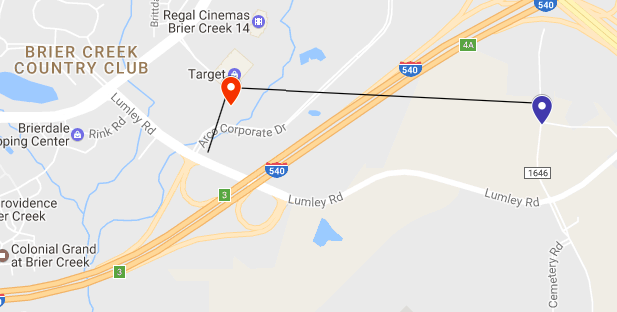
The area, known to state and federal officials as Reach B, is three-tenths of a mile long and stops at Lumley Road. The PCBs have traveled from their origin, Ward Transformer, a Superfund site just across I-540, through a stream beneath the highway and wound up near one of the busiest shopping centers in Wake County.
State and federal health officials recently prepared a health risk assessment for the soil in and near the waterways downstream of Ward Transformer. The public can comment on the findings through May 31 by emailing the state health department at [email protected] .
PCBs, which are known to cause cancer, depress the immune system and harm the developing brain, were detected in 20 of the 22 floodplain soil samples collected in Reach B. According to the report, 18 of the samples exceeded the Cancer Risk Evaluation Guide of 0.19 parts per million. (For comparison, that would be equivalent to 1 teaspoon of PCBs in a 1,300-gallon home swim spa.)
Levels of PCBs in the floodplain soil registered as high 153 parts per million, which is approaching the threshold of immune system effects. Children under 2 are especially vulnerable because they tend to play in the dirt and then put their hands in their mouths. At these levels, a low increased risk of cancer has been calculated for adults and children, but only after decades of exposure, which might not be occurring at this site, the report said.
Anyone who spends time in Reach B should thoroughly wash with soap and water hands, feet, skin and clothing that comes in contact with the sediment or soil. In addition to annual monitoring, the report suggests the EPA direct a clean up of Reach B, the cost of which would likely be paid for by the 170-plus companies responsible for the PCB contamination at Ward.
Two other sections of the stream and its floodplain, Reach C (between the Brierdale Shopping Center and I-540) and Reach D (west of the airport runways), also tested positive for PCBs. Although levels were higher than cancer guidelines, recreational users of these areas are unlikely to suffer harmful health effects, according to the report.
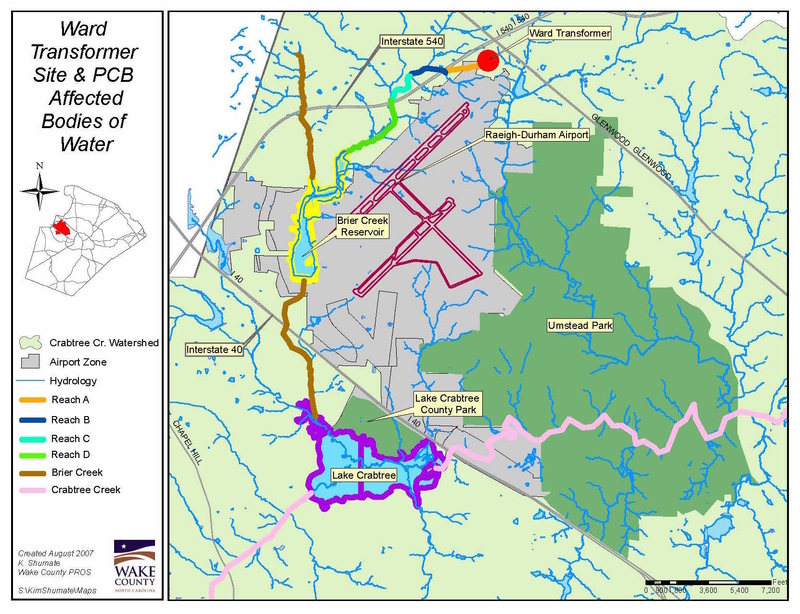
There is already a fish consumption advisory for areas downstream of Ward Transformer. No fish should be eaten from Brier Creek and Little Brier Creek. In Lake Crabtree, carp and catfish are off-limits; any other fish should be eaten no more than one meal per month.
Raleigh, NC