As Kansans lose SNAP benefits, state lawmakers examine system hurdles
Oct 01, 2026 | 6:00 pm ET
Description
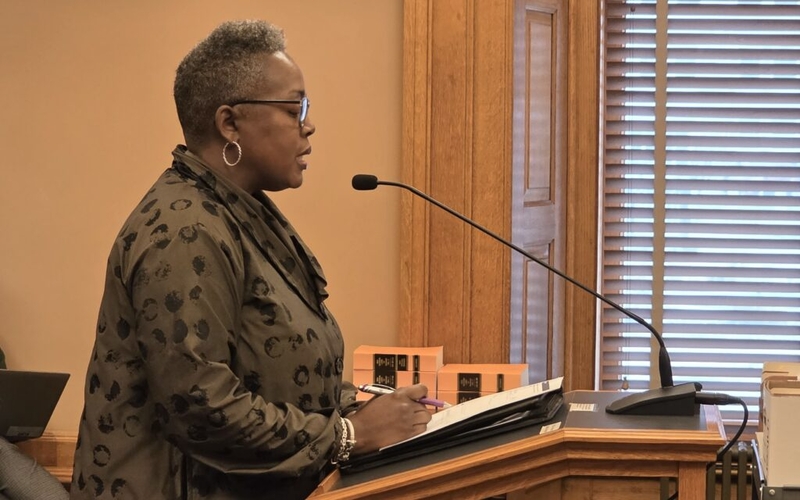
Carla Whiteside-Hicks, director of economic and employment services for the Kansas Department for Children and Families, testifies in January 2026 about food assistance program error rates and waivers. (Photo by Morgan Chilson/Kansas Reflector)
TOPEKA — More than 30,000 fewer Kansans are receiving federal food assistance benefits, including more than 13,500 children, after the passage of federal cuts in 2025, and current beneficiaries must navigate a system riddled with delays.
State lawmakers considered Wednesday streamlining the application process for federal benefits so people who qualify for cash assistance and food assistance can receive both through one application.
Lou Ann Kibbee, systems advocate and policy analyst for Southeast Kansas Independent Living Resource Center, said in written testimony that “there are seniors, people with all types of disabilities, children, and pregnant women in our communities who rely on these services for survival.”
Kansans applying for public benefits have seen weekslong application delays and eliminated eligibility because of state and federal changes. Social service workers have described ineffective communications and persistent hurdles to accessing benefits.
Many on the bipartisan committee of lawmakers appeared to support changing state law to allow households who qualify for the federal cash assistance program, Temporary Assistance for Needy Families, to automatically be enrolled in the federal food assistance program, the Supplemental Nutrition Assistance Program.
Sen. Virgil Peck, a Havana Republican, said he would support reducing paperwork if someone qualifies for both TANF and SNAP.
Rep. Heather Meyer, an Overland Park Democrat and social worker, said Wednesday that much of the paperwork can be burdensome — not just for the individual applying but for staff processing applications. She said a change to the application processes would be a “simple fix,” “allowing us to be able to say, ‘Yes we can do this if we deem it responsible for Kansas to do so.’”
“This would make it so much easier for all of us,” Meyer said.
From September 2025 through July 2026, a total of 31,000 fewer Kansans have access to the federal Supplemental Nutrition Assistance Program, known as SNAP, and 13,600 of them are children, said Carla Whiteside-Hicks, the director of economic and employment services for the Kansas Department for Children and Families, on Tuesday.
There has been a significant drop in caseloads in Kansas since Congress passed the “big, beautiful bill,” President Donald Trump’s signature tax and spending package, Whiteside-Hicks said.
In 2024, 6% of the state population received SNAP benefits totaling $408 million, according to the Center on Budget and Policy Priorities. As of June, roughly 162,000 Kansans participated in SNAP, according to data from the U.S. Department of Agriculture, which administers SNAP.
“Without SNAP benefits, many people do not get the nutrition needed every day to fight off health issues and survive. Any reductions in SNAP benefits or barriers to SNAP benefits can be life threatening to many people,” Kibbee said.
Raul Saenz Escarcega, a community health worker for Lawrence-Douglas County Public Health, said quick deadlines and ineffective communication pose the most significant barriers for enrollees.
“Several times, the people I am helping have received communications indicating a deadline for submitting materials which has passed before the message was received or is too close to the deadline to allow for the time required to compile and submit documentation. Missing a deadline requires that applicants re-start the application process,” he said in testimony.
Oct. 1 marks the beginning of stricter eligibility requirements for SNAP applicants and inflation adjustments for current enrollees. Starting Thursday, states must pay for a larger share of the program’s administrative costs while the federal government takes on less. States must now cover 75% of the costs to administer their SNAP programs, which is a 25% increase.
Topeka, KS