Judge: Wilmington council can’t remove Spadola for party switch
Sep 18, 2026 | 1:25 pm ET

Description
Photo courtesy of Spotlight Delaware
Why Should Delaware Care?
After a Wilmington City Councilman switched his political affiliation from Republican to Democrat, the council debated whether that disenfranchised 15,000 voters. They took the question to court, where a judge ruled that there was no prohibition against the move.
Wilmington City Councilman James Spadola will remain in office after a Chancery Court judge ruled Thursday that his city council colleagues lack the authority to remove him over his party switch.
The ruling is the latest chapter in a months-long feud between Spadola and his colleagues that began last fall, when Spadola changed his party registration from Republican to Democrat. All 13 members of the council are now Democrats.
The premise for his colleague’s backlash stems from language in the city charter, which currently prohibits a majority party – currently Democrats – from nominating more than three candidates for the city’s four at-large seats on the council. In practice, the rule guarantees that at least one seat goes to a member of the minority party.
The charter, however, says nothing about what happens if that member switches parties while in office.
Several members of the now all-Democratic body have accused Spadola of exploiting a “loophole” in the charter and disenfranchising the voters who elected him as a Republican.
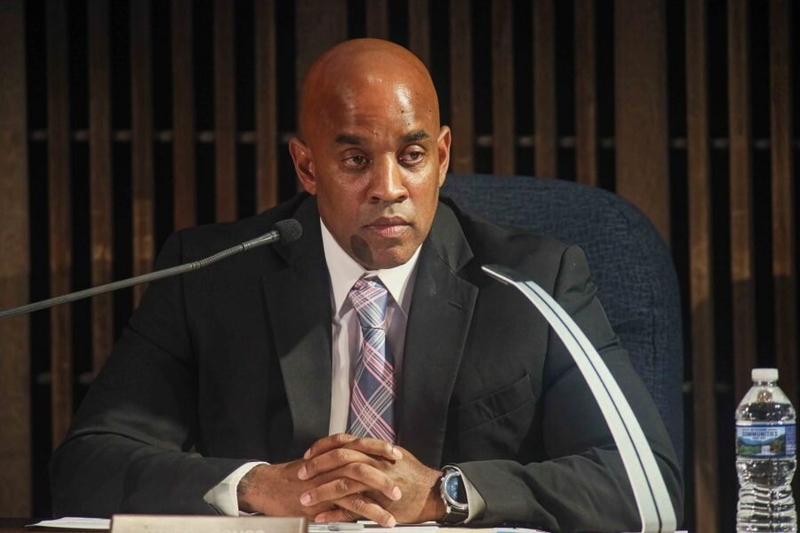
Council President Ernest “Trippi” Congo sponsored a resolution in May declaring Spadola’s seat vacant, and Spadola sued that same month to block it, arguing the council had no legal power to remove him.
Spadola’s attorney has argued that the charter was being misinterpreted and that removing Spadola would infringe upon his constitutional rights.
Congo’s attorney countered that the charter’s intent was to keep a minority-party member on the council throughout their term, arguing it made no sense for lawmakers to write that language into the code if it stopped applying the moment an official took office.
But in her Sep. 17 ruling, Chancellor Kathaleen McCormick, said that the city charter did not “expressly impose” any restrictions on post-election party switching, and that her “decision will not imply one.”
She noted that the writers of the city code only chose to address concerns over minority representation through elections, but they did not cover continuing qualifications.
“The resolution is a clear misuse of Council authority, it is invalid, and this decision grants Spadola’s motion on that basis alone,” McCormick wrote.
Her decision to rule in favor of Spadola permanently blocks city council from putting the resolution to remove Spadola into effect.
On Friday, Spadola took to Facebook to post pictures of quotes from the ruling, and in his caption saying “Vindicated!”
In an interview with Spotlight Delaware, Spadola said the chancellor’s verdict speaks to what to him was “clear cut” regarding the city charter. Spadola said he has not heard anything regarding a potential appeal from Congo’s attorney, but that if Congo were to pursue one, he thinks it would be “a waste of resources”
“If they want to keep boosting my profile at city expense, that’s unfortunate. But it is what it is,” Spadola said.
Congo’s attorney Jane Brady, said her team has 30 days to appeal Thursday’s ruling but that she and Congo have not yet decided whether they will.
“I’m gonna review it, look at the reasoning, and then have a conversation with my client next week about that”, she added.
Congo did not immediately respond to Spotlight’s request for comment.
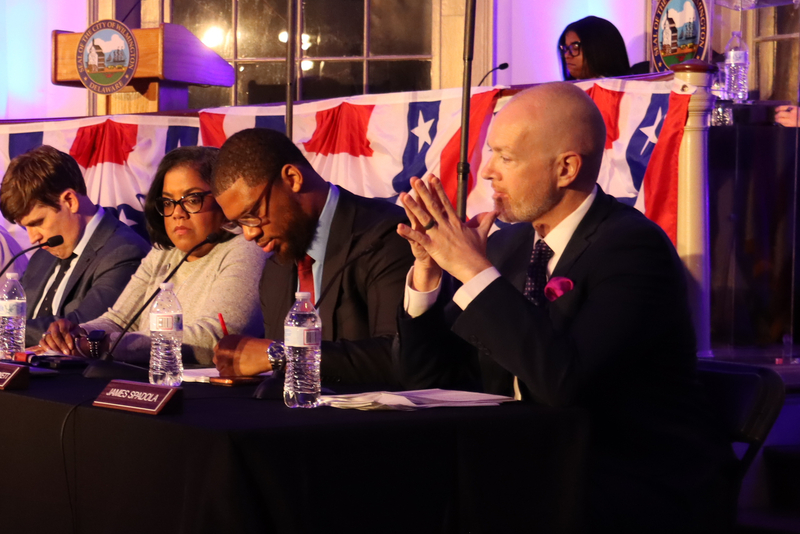
How did we get here?
Spadola was re-elected in November 2024 as Wilmington’s lone Republican at-large council member, and changed his party less than a year later, announcing it publicly to Facebook in October 2025.
Last fall, Spadola told Spotlight Delaware that he had considered making the move for the previous five years and finally did so because of his disagreement with several policies associated with President Donald Trump, including tariffs, immigration enforcement, and federal troop deployments into U.S. cities.
His decision sparked months of controversy inside the city council.
In February, Congo sent Spadola a letter urging him to switch back to the Republican Party, warning that he could lose his seat if he did not. Spadola responded publicly on his Facebook, accusing council members of trying to replace him with an “unelected, handpicked successor.”
Many community members attended past council meetings both in favor and against removing Spadola from his seat, including members of the Delaware Republican Party and Wilmington Democratic Committee.
While some residents said they felt disenfranchised by Spadola’s decision, others argued he should have the right to change his party affiliation and that voters supported him for his leadership, not his political party.
The dispute then escalated in April when Councilman Alexander Hackett introduced the resolution seeking intervention by state lawmakers. The measure, which overwhelmingly passed council, asked the legislature to bar future minority-party members from switching their political affiliation during the middle of a term.
Then, in May, the council voted 8-1 on Congo’s resolution to declare Spadola’s seat vacant, arguing Spadola “made the choice to disenfranchise the approximately 15% of non-majority voters” in the city.
Congo has previously noted that the city council sought legal advice from the city’s law department on the matter, but said they were misled.
Last fall, City Council Chief of Staff Elijah Simmons said Spadola would be able to finish his term, which ends in 2028.
He stated the city’s charter contained “no written prohibitions against party affiliation changes while in office.”
Spadola cast the lone vote against the resolution, which prompted him to file the lawsuit now before the Court of Chancery.
If Spadola’s seat is vacated, a new at-large council member would be elected through a process that would allow individuals to send in applications and be interviewed by council who would choose Spadola’s successor. Congo said that the council takes public feedback into account when choosing.

Dover