Judge orders Utahn charged with shooting, killing Charlie Kirk to stand trial
Sep 01, 2026 | 10:33 pm ET
Description
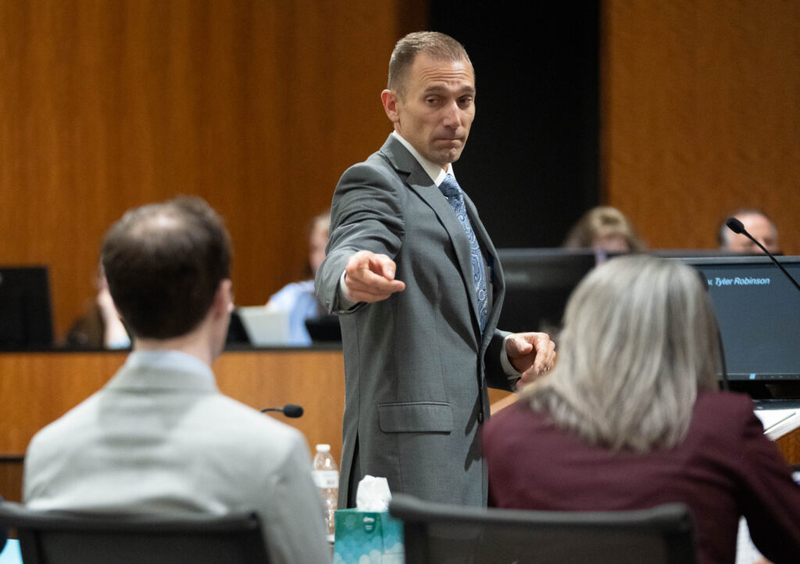
Deputy Utah County Attorney Ryan McBride points to Tyler Robinson as he begins his closing arguments in the preliminary hearing for Robinson, the man accused of fatally shooting Charlie Kirk, at the 4th District Court in Provo on Tuesday, Sept. 1, 2026. (Pool photo by Francisco Kjolseth/The Salt Lake Tribune)
A judge has ordered the 23-year-old Utah man charged with shooting and killing conservative political activist Charlie Kirk to stand trial for aggravated murder.
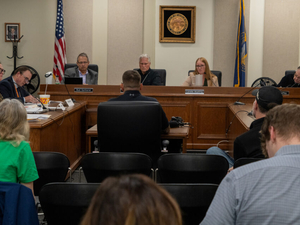
Judge Tony Graf read his ruling from the bench Tuesday at the conclusion of a dayslong preliminary hearing in Provo’s 4th District Court. Attendees have included Kirk’s parents; his widow, Erika Kirk; and Donald Trump Jr.
Tyler Robinson’s defense team entered pleas of not guilty on his behalf to the murder charge and six other counts, including witness tampering and obstruction of justice. Prosecutors have said they’ll seek the death penalty if Robinson is convicted.

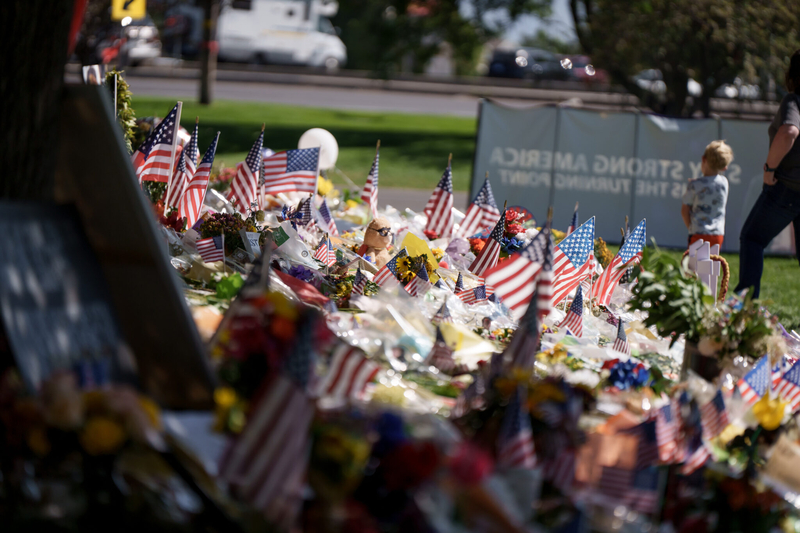
Kirk, a close ally of President Donald Trump and a founder of the student organization Turning Point USA, was killed Sept. 10, 2025 while answering a question during an outdoor speaking event at Utah Valley University in Orem. The sound of a single shot sent his audience running for cover as he collapsed onstage. It also set off a 33-hour manhunt that came to an end when Robinson turned himself in, authorities said.

Graf’s decision Tuesday is not a finding of guilt or innocence. Rather, he determined there’s probable cause, or a reasonable belief, to support the charges. The standard for a conviction at trial is much higher — proof beyond a reasonable doubt.
Tuesday was the culmination of a hearing spanning six days that began in July with prosecutors laying out evidence in painstaking detail. Defense attorneys countered that videos and testimony weren’t reliable and attacked the credibility of DNA evidence. They also called attention to steps not taken early in the law enforcement investigation.
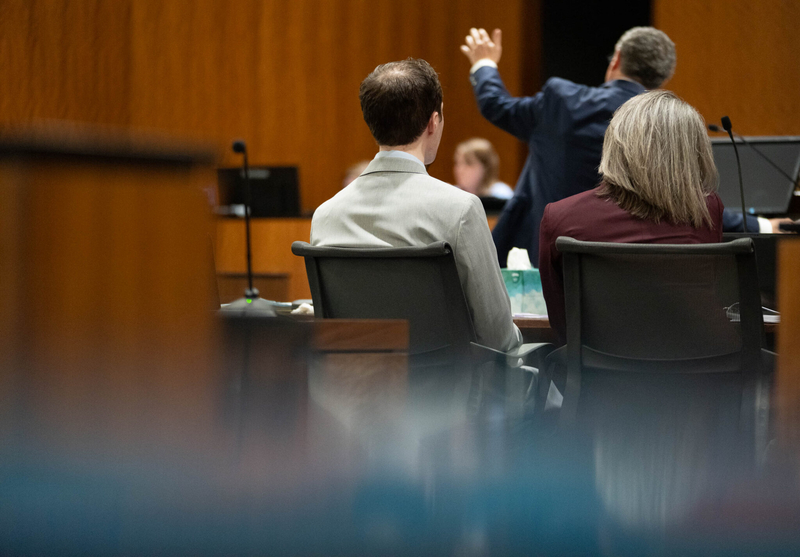
Prosecutors argued Tuesday the evidence against Robinson, who is accused of using his grandfather’s rifle to shoot and kill Kirk from a rooftop perch, is overwhelming. Deputy Utah County Attorney Ryan McBride alleged Robinson had a motivation that was “political and sexual.”
McBride described Robinson’s then-romantic partner and roommate as transgender and transitioning at the time of the shooting and said Kirk was an outspoken critic of gay and transgender people.
Robinson “shot and killed Charlie Kirk because he disagreed with him,” McBride said.
He also pointed to messages Robinson is alleged to have sent to his romantic partner after the shooting, saying “I wish I could have stayed for you and lived our lives together” and “some hate can’t be negotiated out.”
That’s on top of surveillance video, DNA recovered from a rifle and other messages Robinson sent to friends that “claimed credit” for Kirk’s death, McBride argued.
Prosecutors argued Robinson put those at the event — including members of Kirk’s security team and an audience member asking him a question at the time he was shot — at “great risk of death,” an aggravating factor to the murder charge.
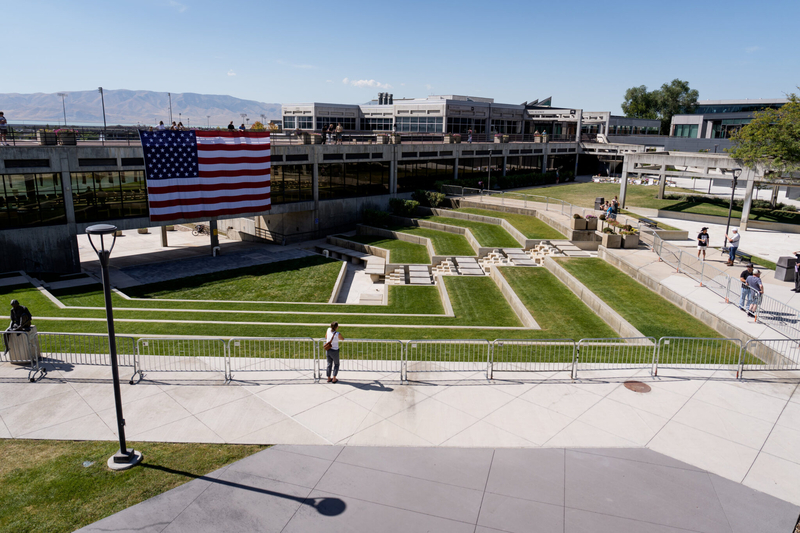
Graf said whether the state can prove that beyond a reasonable doubt is a matter for a trial, but ruled prosecutors provided enough evidence to support the allegations at this stage in the case.
Robinson’s defense team argued the state has overblown the strength of DNA and ballistic evidence. They emphasized there’s no proof anyone aside from Kirk was targeted that day.
“There is one act. There is one shot. There is one bullet. There is one victim,” said defense attorney Staci Visser.
The defense team pointed out that Robinson’s romantic partner had testified that Robinson hadn’t talked about Charlie Kirk before his death. Defense attorney Richard Novak argued that Kirk “spoke hatefully of certain groups of people,” including those with nonconforming gender identities.
But Novak said the state “utterly failed” to prove there’s a particular political expression of Kirk’s that Robinson took issue with.
Much of the debate throughout the lengthy hearing focused on how much evidence the public, and even those sitting in court, should get to see.
Defense attorneys have argued that publicity of videos and other evidence could create bias against their client in potential jurors. In response, attorneys for Erika Kirk and a separate coalition of local and national media organizations have argued against shutting out news cameras and concealing evidence from public view.
Erika Kirk’s request to show all evidence in court shines light on victim rights — and their limits
Graf has allowed some videos to be displayed on a large screen in the courtroom, but has watched others on his own computer monitor instead — while allowing accompanying audio to play aloud in court.
The judge said Tuesday he came to court with a basic format of his ruling but waited to reach his conclusion until after hearing closing arguments, saying it was important to keep an open mind.
The Kirk family, in a statement, said the decision, “which comes nearly a year since Charlie was taken from us, marks an important step in our family’s pursuit of justice for him.”
They said they’re grateful for the support they’ve received and added each step in the process carries the weight of their loss, especially for his children growing up without their father.
“As the next phase of the judicial process begins, our family remains united in our love for Charlie, our commitment to the pursuit of justice, and our prayer for a transparent and timely process,” the statement says.
Robinson returns to court Oct. 23 for a pretrial hearing.
Salt Lake City, UT