Judge denies new trial for Alabama inmate who cited defense attorney’s ties to KKK
Aug 28, 2026 | 4:36 pm ET
Description
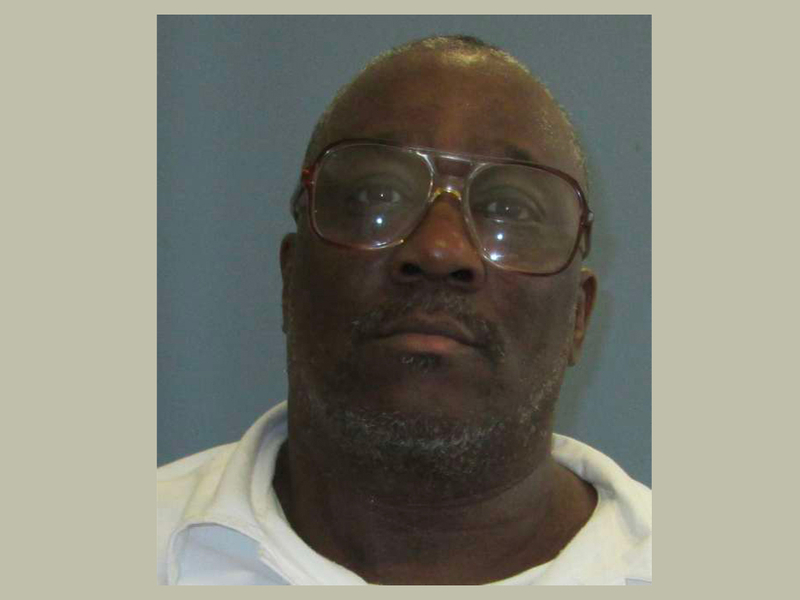
A Morgan County Circuit Judge Friday denied former death row inmate Robin "Rocky" Myers a new trial over his conviction for the 1991 murder of Ludie Mae Tucker in Decatur. Myers, who maintains his innocence, cited evidence that his defense attorney at his first trial had ties to the Ku Klux Klan. (Alabama Department of Corrections)
A Morgan County judge Friday denied a new trial for a former Alabama death row inmate who cited evidence that his attorney at his first trial had ties to the Ku Klux Klan.
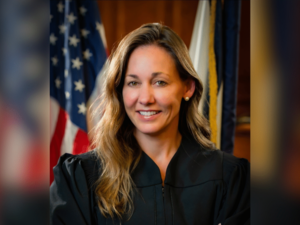
Morgan County Circuit Court Judge Charles Elliott denied the motion from Robin “Rocky” Myers, who is currently serving a life sentence for his alleged role in the death of Ludie Mae Tucker in Decatur in 1991. Myers, who maintains his innocence, was originally sentenced to death, but Gov. Kay Ivey commuted it to life in prison last year.
Elliott wrote that the Rule 32 appeals process, which allows people convicted of a crime the opportunity to present arguments for a new trial, “establishes a bright line rule on when a claim for ineffective assistance of counsel claim can be made.”
‘“In no event can relief be granted on a claim of ineffective assistance of trial or appellate counsel raised in a successive petition,’” Elliott wrote. “The only exception to this bright line rule is when a petition is filed to be able to obtain an out-of-time appeal.”
Messages seeking comment were sent Friday to John Mays, the attorney who represented Myers at his first trial, and the Morgan County District Attorney’s Office.
“No court has ever heard evidence or ruled on the central claim in this petition: that the lawyer appointed to defend Rocky Myers, a Black man on trial for his life, had spent the previous decade as the corporate counsel, public spokesman, and ideological champion for the United Klans of America,” said J. Mitchell McGuire, counsel for Myers. “That question has never been ‘tested.’ It has been avoided.”
Myers, who lived across the street from Tucker, was accused of entering her home in October 1991 to use the phone, getting into an argument with her cousin and husband, and stabbing Tucker, who died in the hospital a few hours later.
No murder weapon was ever found, and Myers maintains he never entered her home. No physical evidence connected Myers to the scene, and witnesses gave different descriptions of the potential assailant. A jury recommended sentencing Myers to life in prison, but the trial judge imposed the death penalty.
Gov. Kay Ivey granted Myers’ clemency petition last year, saying she harbored doubts about his involvement in Tucker’s murder.
“I am not convinced that Mr. Myers is innocent, but I am not so convinced of his guilt as to approve of his execution,” Ivey said in the news release when she announced that his clemency petition had been granted. “I therefore must respect both the jury’s decision to convict him and its recommendation that he be sentenced to life without parole.”
Myers filed his most recent request in September for a hearing to receive a new trial after members of his legal team learned that his attorney, John Mays, spoke at nine KKK rallies between 1977 and 1981 and defended Robert Shelton, an imperial wizard of the KKK, in a lawsuit filed against the FBI in 1977.
According to a newspaper account, Mays used a racial epithet when he spoke at a 1977 KKK rally in Suffolk, Virginia before 200 people.
The court filing from Myers also states that Mays spoke at KKK rallies in Alabama, Florida, Virginia, Kentucky, Mississippi and Tennessee. At one rally in Tennessee in 1981, Mays “exhorted caucasians to band together in the face of an oncoming race war,” according to a newspaper article published in 1981.
The DA’s Office for Morgan County opposed Myers’ request for a hearing because the accounts of Mays’ presence at rallies were already available and could have been presented at trial.
Myers plans to appeal.
Montgomery