Inside the network helping NJ immigrants during mass deportation effort
Sep 10, 2026 | 6:45 am ET
Description
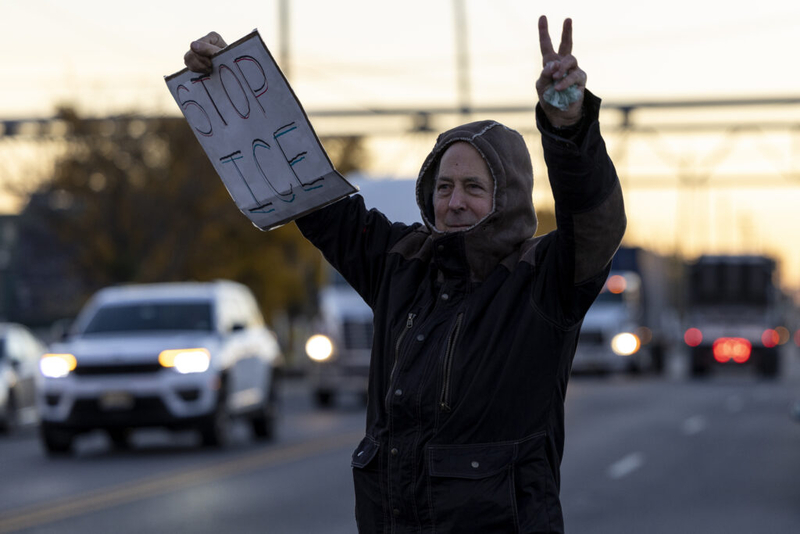
Pierre Delaforcade of Montclair holds a sign while flashing the peace sign outside the Delaney Hall immigrant jail in Newark on Nov. 6, 2025. (Photo by Anne-Marie Caruso/New Jersey Monitor)

This is the third in a three-part series examining President Donald Trump’s mass deportation effort and its effect on New Jersey.
New Jersey has become a key battleground in the national fight over President Donald Trump’s efforts of mass detention and deportation.
The Garden State is home to two detention centers, including one of the East Coast’s largest, with a third proposed in a warehouse in Roxbury. But it’s also home to a patchwork of advocates, officials, and faith leaders who are finding ways to respond to a crisis with no clear end.
These aren’t people who are in danger of deportation themselves, but are living with the consequences of this moment in different ways. Their roles are different — some hold institutional power, others operate entirely outside of it — but they’re all navigating new ways to help migrants living under direct threat.
At 16 years old, Jorge Torres left Ecuador with his family for the U.S. to chase the promise that has drawn immigrants to America for generations.
He overstayed his visa, ended up working in factories and fast food restaurants, and navigated nearly nine years without legal papers. His father gave him clear, simple instructions: Don’t tell anyone about your status, don’t speak Spanish, and don’t talk to the police.
He eventually gained citizenship through marriage. And now, at 41, he is a prolific immigration organizer in central Jersey. He settled in New Jersey in the early 1980s, founding what was then called Unidad Latina en Accion New Jersey, now known as Resistencia en Accion.
He’s also the director for the National Day Laborer Organizing Network and runs a rapid response operation that has grown in response to the escalating raids under Trump’s second term.
The exhausting work is always personal to Torres.
“I know what it is to live under that pressure firsthand,” Torres said in an interview in Spanish. “I have family members who are still undocumented.”
He has been calling for the abolition of ICE since he started his movement, then a radical stance even in progressive circles. While other nonprofits focused on policy wins like labor protections, driver’s license access, and wage theft legislation (policies he supports), he was focused on closing detention centers and defunding enforcement.
He remembers being treated like “the strange one in the room.” But he no longer feels that way; he feels vindicated and equally upset at the outcome.
Since 2025, Torres has helped build the ICE Out of New Jersey coalition, drawing on years of relationships with other grassroots organizations across the state, including CATA, New Labor, and Cosecha. The rapid response network stretches from Mercer County to Essex County.
When a raid is reported, the call goes into a coordinated group chat, the location gets checked against a statewide map, and trained volunteers — of which there are hundreds — are dispatched to the spot. He said that often, responders show up after ICE is already gone, but the volunteers serve other purposes, like tracking what’s happening, connecting families to legal help, and confirming that someone in the community is paying attention.
He’s also built out independent Spanish-language media, including his own radio show, because he said mainstream outlets were not challenging enough of Trump’s messaging.
“Only the people can save the people,” he said. “No politician is going to think about us without us. That’s why I keep doing this and finding new ways to bring attention to what is happening.”
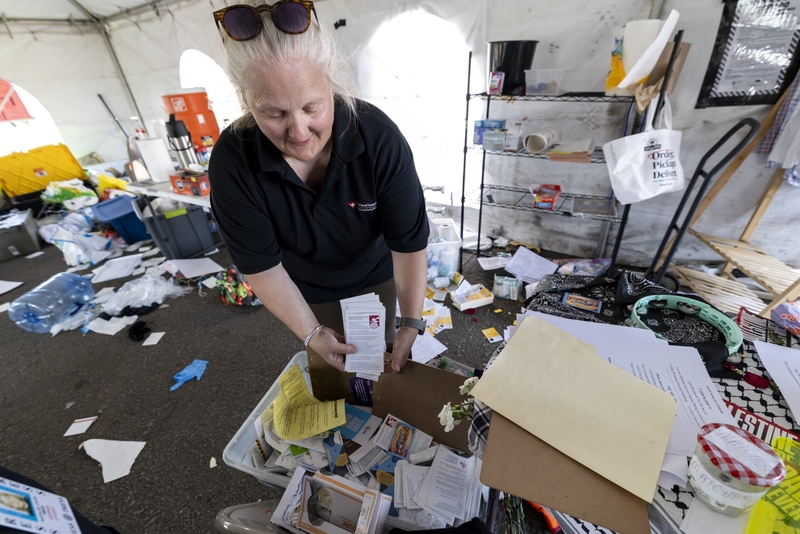
Every week, hundreds of people make their way to Newark to stand for hours on line outside of Delaney Hall, one of the largest immigration detention centers on the East Coast. Some of them make their first stop at a folding table near the entrance, where Kathy O’Leary hands out donated clothes.
Delaney Hall, which opened its doors in May 2025 and has regularly housed over 1,000 detainees at any given time, enforces a strict dress code. Ripped jeans, open-toed shoes, graphic tees, leggings are all reasons desperate visitors have been turned away by unforgiving guards. So O’Leary, who has done immigration advocacy in New Jersey for nearly two decades, keeps a supply of clean shirts and guard-approved pants on hand for anyone who shows up.
She started doing it last June after a woman who had driven four hours from Boston to visit her detained father was denied entry for ripped jeans. The visitor looked for a volunteer about the same size as her and switched pants in the parking lot to get inside.
O’Leary said she knows the dress code isn’t a safety measure, but a mechanism of attrition.
“We understood that getting people in to see their loved ones was an act of resistance. The system is set up so that people inside give up hope and sign voluntary departure forms and leave the country,” she said. “Having a visit from a loved one gives people the strength to keep fighting.”
Delaney Hall almost immediately became a flashpoint in the immigration enforcement debate upon its opening. Hundreds of protests have been held outside. Democratic politicians are regularly there to hold press conferences, calling attention to pastors and restaurant owners who have been arrested by ICE. The Newark mayor was arrested outside the gates, which led to the felony indictment of a congresswoman accused of assaulting agents during the arrest.
The unrest escalated sharply in late May of this year, when 300 detainees inside said they launched a month-long hunger and labor strike over abysmal conditions: moldy food, abuse by guards, and a severe lack of medical attention. It prompted massive protests outside the facility, and clashes between demonstrators and ICE agents armed with batons and pepper spray.
New Jersey State Police temporarily took command of the area before Newark police assumed control and Baraka imposed a nightly curfew; several protesters were arrested in the days that followed. That unrest also touched the visitation lines O’Leary spends her afternoons working. The curfew narrowed the hours families had to wait in line for a visit and required detainees to submit a list of approved visitors, more obstacles layered onto a dress code that advocates believe is meant to turn visitors away.
While she’s skeptical of politicians using Delaney Hall as a backdrop for press events, O’Leary has been there regularly, about four to five times a week, since the jail opened. She keeps track of the buses that drop off detainees, and takes an informal count of visitors on the line snaking around the front lot, where industrial trucks zoom past on Doreamus Avenue. Weeknights can see 200 visitors, and on weekends, she’s counted over 300, she said. She noted that the facility has been moving detainees between units and transferring others out on buses.
“We have lists of people in dire need of medical care. People are getting off the buses on crutches, people who are blind, people who are supposed to be getting chemotherapy, people who shouldn’t be in there under any circumstances,” she said. “To just use it as a backdrop for a political campaign doesn’t help anyone but themselves. There’s work that needs to get done.”
While immigration enforcement has escalated under Trump, she dismisses the notion that it’s only his fault. She started this work as a pregnant woman over 20 years ago after hearing a story of a woman who had been taken in a raid from her apartment while breastfeeding her youngest child, forcing the infant to be weaned. That mother spent months in detention before being deported.
Her advocacy has shifted from legislation and policy to helping people who are inside the jail and pushing for individual releases, along with overarching calls to close immigration detention across the country.
“This system wasn’t built by Trump. You can trace it back to at least Clinton. All the Democrats have lined up almost as quickly as Republicans to give more money to ICE over all these years,” she said.
She laments that the facility won’t close any time soon. She plans to return next week, and the week after, with more clothes at the folding tables.
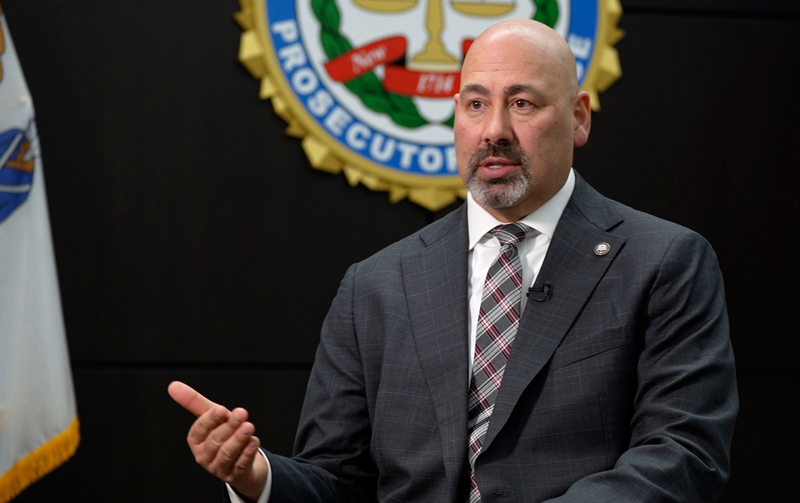
Raymond Santiago’s earliest memories are of large family gatherings. Eating roasted pig at barbecues, the aroma of gandules and pernil filling the air as relatives crowded together in his childhood home in Santurce, just outside of San Juan, Puerto Rico.
He lived there until he was 5, eventually moving to Brooklyn with his father, from Ponce, and his mom, from New York. He says he grew up carrying those roots with him. He took his own children back to see his small childhood home years later, to ensure they understood where their family came from.
He didn’t grow up expecting to become a prosecutor. And he didn’t expect that the job would one day require him to consider whether his last name would make him a target.
“Having the surname Santiago doesn’t help me at all,” he said with a chuckle.
He said he’s weighed avoiding international travel, and carries his passport more often than he used to.
Santiago is the Monmouth County prosecutor — only the second Latino in the state to hold that office in its roughly 200-year history — nominated by then-Gov. Phil Murphy in 2022. He has been a public defender, a private criminal defense attorney, and most relevant to this moment, an immigration lawyer. He knows the difference between a U-visa and a T-visa, and he’s witnessed what happens when someone’s work authorization lapses because their employer has retaliated.
He said that knowledge has become an animating force of his tenure in office as the Trump administration’s immigration enforcement has intensified across New Jersey, and the country. Santiago says the most profound change he’s witnessed in Monmouth County is the silence.
There’s a growing reluctance among immigrant residents to come forward as victims or witnesses in criminal cases, he said. And criminals who have long preyed on migrants because they know their targets fear the police are taking advantage. Domestic abusers use immigration status as a weapon.
Even people who may have trusted local law enforcement just two years ago are pulling back, he noted.
“I don’t want people suffering in silence,” he said. “Who’s suffering in silence that I can’t help because they won’t come forward?”
He says part of his role as prosecutor is to build trust between Monmouth County residents and local police. He’s held community events to explain that visas are available to victims of crime who lack legal status and how they offer a pathway to remain in the country in exchange for cooperating with police.
He launched We Are Monmouth, an initiative that brings together faith leaders, community activists, and local police chiefs. He attends town halls on immigration, and supports know-your-rights meetings hosted by immigrant advocates. He has re-briefed every police agency in the county on the state’s policy that largely bars local cooperation with federal immigrant agents.
A version of that directive, originally issued as an attorney general’s order in 2018, was signed into law by Democratic Gov. Mikie Sherrill earlier this year. Santiago had testified in support at the Statehouse, stressing the importance of codifying the policy into law. The law bars local officers from asking about immigration status, participating in civil immigration enforcement, or detaining people on ICE’s behalf in many circumstances.
For Santiago, he says it’s a legal shield and a practical tool. He bristles at the suggestion that it handicaps law enforcement, as other prosecutors have alleged.
“The ability for law enforcement to do their jobs in keeping communities safe involves being able to have trust with the community itself,” he said. “If that deteriorates, it’ll be very difficult for us to keep the streets safe.”
He said he’s petrified of the chaos surrounding immigration that has unfolded across the country and whether it could ever come to Monmouth County. He says he’s optimistic about a fresh administration in Trenton, and is confident that the state’s legal framework is on strong footing. But he’s also honest and clear-eyed about the damage already done, comparing the erosion of trust to the years it took to rebuild relationships with communities after the racial reckoning of 2020.
“What we’re seeing here is so much more profound in such a short time,” Santiago said. “I’m truly concerned with how we repair the damage that’s being done.”
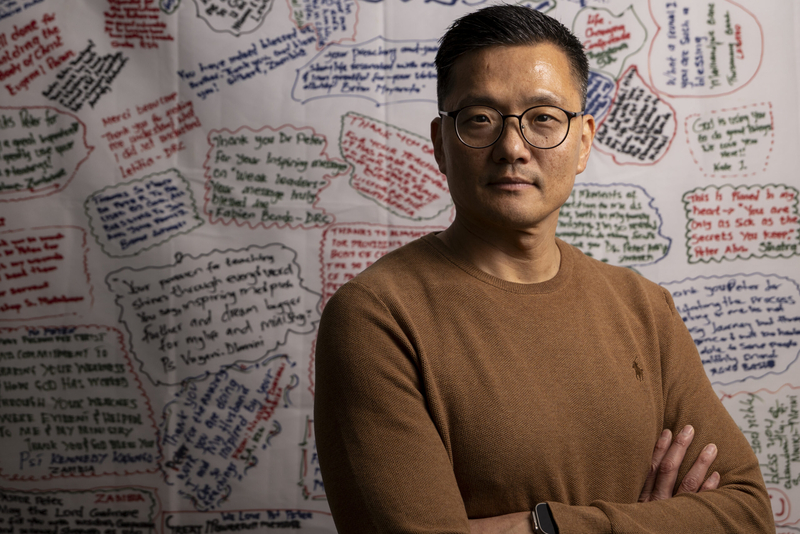
Pastor Peter Ahn founded the Metro Community Church in Englewood 22 years ago on a simple premise: people shouldn’t gather around strength and achievement, but around vulnerability, struggle, and shared pain.
He said the church, where the congregation is about 75% Asian, draws people who feel like they don’t fit anywhere else. And when the Trump administration launched its crackdown on immigrants, that instinct to shelter the vulnerable was put to the test.
Some Latino families who attended Metro regularly stopped showing up on Sundays, too scared to leave their homes. Now, Ahn and his staff developed what he calls an “ICE drill,” a protocol for what the congregation would do if federal agents show up during a service.
His staff includes a Guatemalan pastor who holds a green card and constantly wakes up fearing it will be the day he gets unlawfully deported. Ahn wanted to bring him on a mission speaking trip to Argentina this fall, and asked lawyers whether it was safe. They said no — he might not make it back into the U.S.
“That’s the climate we’ve been living in,” Ahn said. “It’s not just the undocumented community. It’s people who are here legally too. They’re afraid to travel. They’re afraid they’re not going to be able to get back to their families.”
Ahn is Korean-American, the son of immigrants who came to America in the 1970s when South Korea was among the poorest nations in the world. He was born malnourished, and when doctors told his parents the medicine he needed to survive didn’t exist there, they moved to New York when he was 3 months old. He later moved to Bergen County, home to over 100,000 Koreans.
He said the story of his own family’s immigration isn’t so distant from the stories of the immigrants sitting in his church pews. They all came here to chase safety and dreams, and that drives his work.
But Ahn acknowledged that it doesn’t always land with everyone in the congregation. He’s made the case that welcoming immigrants isn’t a political act, but a spiritual one, pointing to biblical stories like Joseph and Mary fleeing to Egypt when Jesus was an infant. He’s recognized that many members don’t hear it that way.
People have left his church over these sermons in the past. When he was vocal about Trayvon Martin’s killing over a decade ago, a churchgoer wrote him a letter saying he committed a sin from the pulpit, and he lost generous donors. But Ahn said he had no choice but to continue, and the congregation emerged stronger for it, because people who stayed built something powerful.
Most Korean American congregations in Bergen County are silent on what’s happening to their immigrant neighbors, he said, in part because it doesn’t touch their community directly. He finds that disappointing, and theologically indefensible.
“The gospel is about fighting injustice,” he said. “There’s a political aspect to it, and for some reason, a lot of churches just really believe in this idea of separation of church and state, so a lot of churches stay silent on it. It’s tragic.”
Ahn said he’s still learning lessons. Earlier this year, a family who lacked legal status left his congregation and quietly moved back to their home country because they feared they’d be separated from their children. Ahn questions whether the church did enough to help them, and he thinks the answer is no — he got too focused on running the church.
“Who cares about a budget? We should have done whatever we could to support that family, even financially. If it means our church goes into debt, I think that’s a beautiful thing for us to do,” he said.
Now, Metro has begun paying for immigration attorneys for congregation members who can’t afford representation, and has helped people complete asylum applications. He wants to do more, like offer housing and deeper legal support. He wants to open his home to Latino families for dinner, even though he doesn’t speak Spanish.
“We’re on a journey. We’re not amazing at this. We’re growing,” he said. “And I dropped the ball, but I think I have a second chance at doing better now.”
This story was produced as part of the Center for Cooperative Media at Montclair State University’s 2025 NJ News Commons Investigative Reporting Initiative, and supported with funding from the Robert Wood Johnson Foundation.

Trenton, NJ