Indiana Supreme Court rules Sen. Spencer Deery winner in 3-vote Republican primary
Sep 10, 2026 | 3:03 pm ET
Description
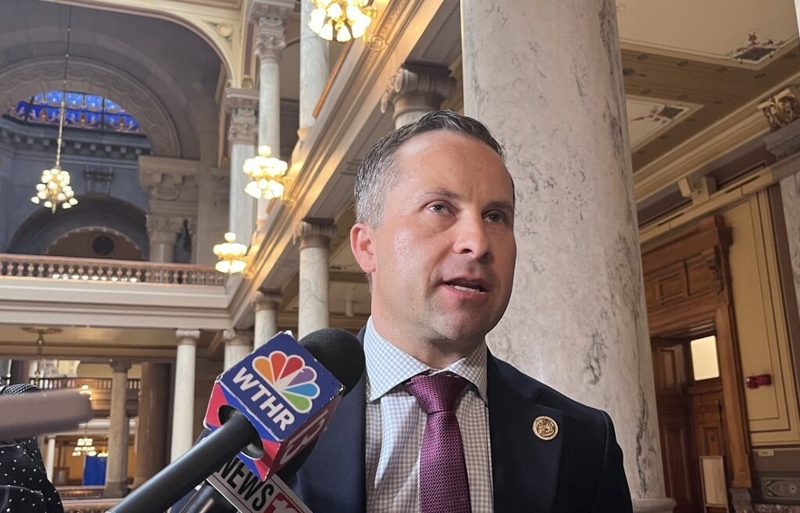
Sen. Spencer Deery, R-West Lafayette, speaks with reporters outside the Indiana Supreme Courtroom on Thursday, Sept. 10, 2026. (Photo by Tom Davies/Indiana Capital Chronicle)
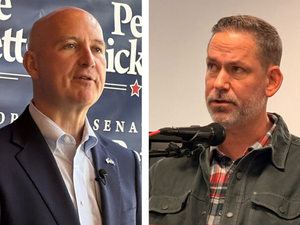
The Indiana Supreme Court on Thursday declared state Sen. Spencer Deery as a three-vote Republican primary winner over a President Donald Trump-endorsed challenger.
The court issued its decision about three hours after hearing arguments over whether the Indiana Recount Commission acted properly in disallowing six ballots — all cast for Deery — that lacked a county clerk’s stamp or signature.
The court’s one-page order said a majority of the five justices had voted to overturn the Recount Commission’s decision certifying challenger Paula Copenhaver as the primary winner.
Deery, a first-term senator from West Lafayette, said the court’s decision was “a lot bigger than me.”
“I think it’s important that Indiana draw a line that says when voters do their part that vote shouldn’t be at risk of either incompetence or even intentional incompetence by individuals who want to change that vote,” Deery told the Indiana Capital Chronicle. “So this is a victory for voters.”
The court’s order directed the Recount Commission to certify Deery with 6,335 votes to Copenhaver’s 6,332 votes in Senate District 23, which spans all or parts of six counties in the area between Lafayette and Terre Haute.
“Election preparations for District 23 shall resume using candidate Spencer R. Deery’s name on the ballot as the Republican candidate for Senate District 23,” the order said.
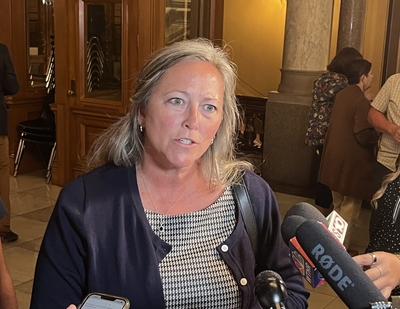
Copenhaver, the Fountain County Republican chair and a staffer to Lt. Gov. Micah Beckwith, did not immediately comment on the court’s decision.
The order did not explain the decision, instead saying that the court will issue a written opinion later.
The ruling in favor of Deery came after justices pressed Copenhaver’s attorneys during Thursday’s hearing for reasons to justify tossing out the six Deery ballots. That Recount Commission decision last month temporarily flipped the May primary outcome and gave Copenhaver a three-vote lead.
Deery’s attorneys argued that the commission’s majority abused its discretion to disallow those ballots because the missing county clerk seals or signatures were the result of election worker omissions rather than anything the voters did.
Thursday’s decision came a little more than a week before the Sept. 19 deadline in state law for county election offices to have started mailing out absentee ballots. Early in-person voting starts Oct. 6.
Justice questions “plot” over six ballots
During the hearing, questions from the five justices included why the six Deery ballots shouldn’t be counted without any evidence of fraud or tampering.
Justice Mark Massa asked one of Copenhaver’s attorneys “how is it the voter’s fault” in knowing that the clerk’s seal was needed.
Justice Derek Molter later said he struggled to understand how there could be some sort of “plot” involving those ballots.
“It’s hard for me to reverse engineer how only six ballots, not 200 or something like that, just six spread across three counties could be something other than a valid indication of how those six people were trying to vote,” Molter said.
Four of the disputed ballots were absentee ballots submitted by mail, with the two others cast during in-person early voting.
Copenhaver attorney William Bock told the justices that the clerk’s seal and the initials of two election officials are valid steps to prevent absentee voter fraud.
“That’s why the seal and signature are on an absentee ballot as authenticators, because the problem can come in any part of the process,” Bock said. “It need not be a voter error.”
Justice Christopher Goff said the law treats ballots without the bipartisan election worker initials differently and those are clearly out. But the six in question involve a missing clerk stamp or signature.
“It just seems to me that we don’t have a reason here statutorily to kick (these) out. The savings clause applies,” he said.
Trump-backed candidates romp to wins in Indiana Senate races
That clause was added by lawmakers in 1986 and says “A ballot that has been marked and cast by a voter in compliance with this title but may otherwise not be counted solely as the result of the act or failure to act of an election officer may nevertheless be counted … unless evidence of fraud, tampering, or misconduct affecting the integrity of the ballot is presented by a party to the proceeding.”
The primary race gained attention as Trump included Copenhaver in his endorsements of challengers to GOP senators who voted last year against redrawing Indiana’s congressional districts.
Six incumbent Republican senators lost to primary challengers after being targeted over their redistricting votes. Deery and Sen. Greg Goode of Terre Haute were the only ones to defeat Trump-backed challengers.
Deery said he was grateful for the narrow victory after national pro-redistricting groups spent several million dollars against him and the other senators who “crossed the powers that be in Washington.”
“The track record isn’t good for people in my shoes,” Deery said. “On one hand, I would have liked it to have been a larger margin. On the other hand, just surviving may be the single biggest political feat that I will ever accomplish.”
Right to vote “a paramount interest”
The Recount Commission’s two Republican members — Secretary of State Diego Morales and attorney Paul Mullin — disallowed the six Deery ballots in a series of 2-1 votes last month.
Deery attorney Karen Celestino-Horseman argued Thursday that the commission has not set standards for tossing out ballots.
“Election integrity is one interest, but also the voter has a paramount interest in his right to vote and having that vote count and not having it thrown out due to the neglect of an election official,” said Celestino-Horseman, who is a Democratic member of the Indiana Election Commission.
Molter also quoted the American Law Institute: “A paramount principle of election law upon which there is the greatest degree of consensus is that the rules for counting ballots should be specified without ambiguity insofar as possible before the ballots are counted.”
He said an election manual created by the Indiana Election Division makes clear the votes will be counted as long as no wrongdoing is alleged. But he noted that Morales — chair of the recount commission — flipped and voted to toss them after knowing who would benefit.
Copenhaver, a former Fountain County clerk, told reporters after the hearing she believed the commission was consistent in its decisions on which ballots were valid.
“We have laws in place to authenticate the ballot,” she said. “Do we know that a ballot may have been substituted or may not have been substituted? We didn’t really have that, and that’s the reason and that’s the importance of authenticating the ballots.”

Indianapolis, IN