Indiana reviewing possible Medicaid work requirement grace period
Nov 17, 2026 | 11:03 am ET

Description
Indiana’s Home and Community-Based Services Medicaid waiver helps children and adults with intellectual, physical, or developmental disabilities and older adults live at home instead of in a nursing home or facility. (Getty Images)
The Indiana Family and Social Services Administration is reviewing new federal guidance allowing states to delay enforcement of Medicaid expansion work requirements set to begin in January.
The Centers for Medicare & Medicaid Services updated its guidance to states last week to create an optional six-month transition period, during which states can roll out the new 80-hour work rule without disrupting coverage for otherwise eligible people who aren’t yet in compliance.
Able-bodied adults between the ages of 19 and 64 insured through the Healthy Indiana Plan, or Medicaid expansion, must show they are working, volunteering or in school for at least 80 hours a month starting in January, unless they meet an exception or meet a monthly income threshold.
The work reporting rules are required by state and federal law.
Indiana will use a three-month look-back window to determine compliance, meaning Hoosiers must show they met the requirements three months before applying for coverage or undergoing the eligibility redetermination process.
While work reporting rules will still take effect Jan. 1, it is unclear whether the Family and Social Services Administration will delay enforcement.
Marcus Barlow, a spokesperson for the agency, told the Indiana Capital Chronicle that FSSA is reviewing the CMS guidance on the optional enforcement delay, as well as the agency’s statutory authority and state requirements.
“We are carefully evaluating the guidance and its implications and will provide additional information as it becomes available,” he said.
The optional six-month grace period follows a district court ruling in October which found CMS exceeded its authority in narrowing the definition of medical frailty to qualify for an exception from work requirements.
CMS wrote in a statement last week that it’s established an “optional hold harmless period” to give state governments more time to update their systems and improve the processes they have in place.
“States have made real progress, and they’ve been clear with us about what it takes to get this right for beneficiaries—at scale and for the long term,” Director of the Center for Medicaid and CHIP Services Dan Brillman wrote in the statement.
“If the state can use data to show that someone is working or qualifies for an exclusion, that person should not have to track down paperwork to prove it. And when someone needs support, they should know exactly what to do, when to do it, and where to go. That’s how we build a Medicaid program that works better for people, connects them to work, education, and training opportunities, and supports paths to prosperity.”
Democrats in Congress raised concerns as recently as this week that states hadn’t had enough time to prepare for the new 80-hours-a-month requirement.
House Energy and Commerce Committee ranking member Frank Pallone Jr., of New Jersey, and Senate Finance Committee ranking member Ron Wyden, of Oregon, wrote in a letter dated Wednesday that administration officials use their “discretion to give states additional time to implement work reporting requirements and protect eligible beneficiaries from losing coverage.”
The provision in the law requires Medicaid enrollees between the ages of 19 and 65 to work, participate in community service, or attend an education program for at least 80 hours a month.
The law detailed several exceptions, including for pregnant people, parents of dependent children, people who have complex medical conditions, tribal community members, those in the foster care system, people who were in foster care who are below the age of 26 and individuals released from incarceration in the last 90 days, among others.
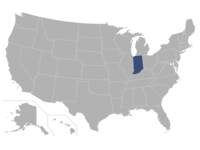
Indianapolis, IN