Indiana cannot afford uncertainty in its energy future
Oct 29, 2026 | 5:00 am ET
Description
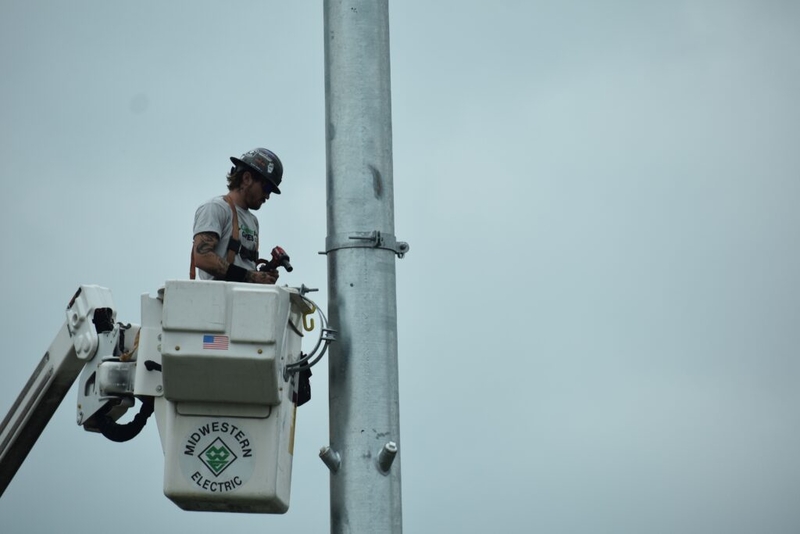
An electric lineman on July 28, 2026 in Hendricks County. (Photo by Jack Forrest/Indiana Capital Chronicle)
Indiana has spent much of this summer debating electricity rates, utility regulation, and the future of our energy system. That debate has now entered another chapter. The Indiana Utility Regulatory Commission is reconsidering the recently approved AES Indiana rate increase.
Every Hoosier should care deeply about keeping electricity affordable for working families and local businesses. However, recent events also raise a larger question about whether large, long-term investors can rely on Indiana to maintain the stable investment environment necessary to finance our growing energy needs.
That question deserves attention because investment analysts are already expressing concerns about Indiana’s changing regulatory environment. Wolfe Research recently downgraded its assessment of Indiana’s regulatory independence from average to below average. Jefferies Group separately reported that investor confidence in Indiana’s utility regulatory environment had materially deteriorated.
Those warnings should concern anyone interested in Indiana’s long-term economic growth and energy affordability. When uncertainty increases, financing can become more expensive, infrastructure projects can become harder to build, and investors can decide their capital belongs elsewhere that offers greater regulatory certainty.
During my years representing Indiana in Congress, including service on the House Energy and Commerce Committee, I spent considerable time thinking about these challenges. I learned that successful energy policy requires balancing affordability, reliability, economic growth, and responsible long-term investment.
AES small modular reactor announcement highlights nuclear summit at Purdue University
I also learned that energy policy is fundamentally about working people and their communities. Electricians, operating engineers, laborers, pipefitters, ironworkers, and other skilled tradespeople actually build the infrastructure supporting our economy. Organized labor understands what sustained infrastructure investment can mean for working communities across America. Major construction projects expand apprenticeship programs, create opportunities for younger workers, and provide careers that cannot simply move overseas.
Recent digital and manufacturing developments demonstrate how significant investment can produce exactly these opportunities. Rico Albacarys, an official with IBEW Local 24 in Maryland, recently described how data center construction helped his local organize more than one thousand new members. His union also doubled its incoming apprenticeship class while hundreds of electricians found employment building a major data center campus.
Indiana should be working to create a similar pipeline of projects to deliver greater opportunities for our existing workforce and to generate additional high-paying skilled jobs for Hoosiers to raise a family on. Our state is already attracting advanced manufacturing and other businesses requiring enormous amounts of dependable electricity. Meeting that demand will require billions of dollars for generation, transmission, and grid modernization.
Those investments require patient capital willing to remain committed across decades and political cycles. Recent infrastructure transactions in Indiana like the proposed acquisition of AES, demonstrate that long-term investors remain interested in making those commitments. That capital matters because investment creates projects, and projects create good jobs for Hoosiers.
I have always believed private investment must operate alongside meaningful public accountability. Utilities provide essential services, and regulators must protect consumers from unreasonable costs and unreliable service. Large new electricity customers should also pay an appropriate share of infrastructure required to support their operations.
However, strong regulation and a stable investment environment should never become competing objectives. Regulators can protect consumers while maintaining predictable rules that encourage responsible long-term infrastructure investment. Consumers ultimately benefit when utilities can finance necessary projects efficiently and reliably.
The recent concerns from investment analysts therefore deserve serious consideration from Indiana policymakers. Utilities require enormous amounts of debt and equity capital to finance infrastructure before customers receive any benefits. Increasing perceived regulatory risk can raise financing costs and make Indiana less attractive for future investment.
Washington also has an important responsibility for maintaining a healthy infrastructure investment environment. The Federal Energy Regulatory Commission should carefully review utility transactions for consumer protection, competition, reliability, and reasonable rates. FERC has also recognized the extraordinary investment requirements confronting America’s electricity system, with U.S. utilities now expected to invest nearly $1.4 trillion between 2026 and 2030. FERC should help move responsible projects and investments like the AES deal forward before prolonged uncertainty causes capital to become more expensive or flow toward competing opportunities elsewhere.
Responsible long-term private investors can provide substantial portions of the capital our energy system currently requires. FERC should provide workable pathways for investments satisfying established consumer protection and competition standards. State policymakers should similarly provide predictable oversight while welcoming responsible capital into Indiana.
Indiana can bring those priorities together by putting workers and consumers at the center. We should welcome responsible long-term investment while expanding opportunities for union workers and skilled apprentices. We should protect consumers while maintaining stable regulatory institutions that investors can confidently understand.
Indiana knows how to build things, and Hoosier workers are ready for what comes next. Our challenge is creating the stability necessary for capital to arrive while ensuring communities share its benefits. Done correctly, energy investment can deliver reliable electricity, economic growth, and good jobs for Indiana families for generations to come.
Indianapolis, IN