How will the Idaho Legislature cut the Medicaid budget? Likely disability services, lawmakers say.
Mar 18, 2026 | 6:25 am ET
Description
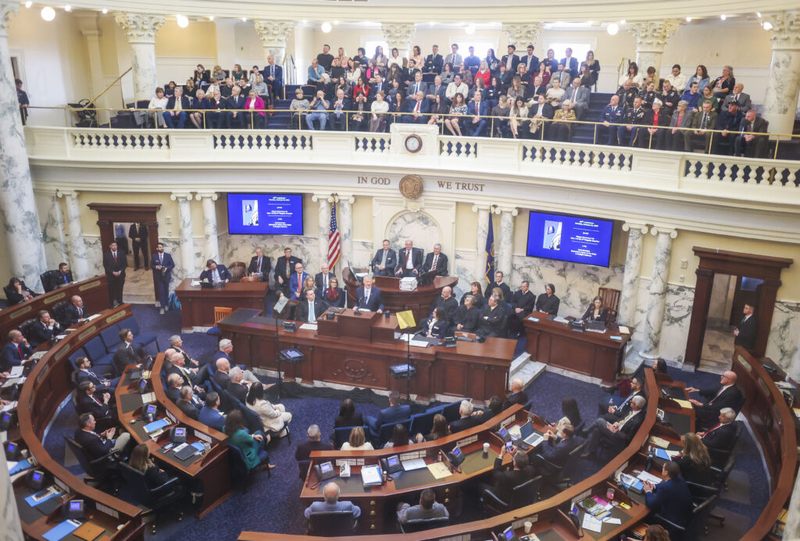
Idaho Republican Gov. Brad Little gives his State of the State Address from the House chambers on Jan. 12, 2026, at the State Capitol Building in Boise. (Photo by Pat Sutphin for the Idaho Capital Sun)
The Idaho Legislature’s plans to cut nearly $22 million from Medicaid disability services hit a road block Monday.
Now, lawmakers are working behind the scenes to find a path forward on making additional Medicaid cuts that the governor called for in his budget plan. The Medicaid cuts are among several high-profile budget decisions left for the Legislature in the 2026 legislative session.
To balance the state’s budget amid lagging revenues after years of tax cuts, the Legislature has pursued deeper, across-the-board cuts to state spending. But the budget committee has exempted Medicaid from those extra cuts. In the governor’s list of Medicaid cut options, he listed several disability services — but not Medicaid expansion.
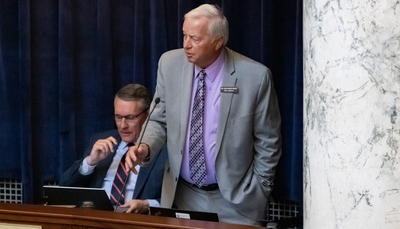
“I’ve reviewed that list again. And this still, to me, seems like the best place to make those cuts,” House Health and Welfare Committee Chairman John Vander Woude, R-Nampa, told the Idaho Capital Sun on Tuesday.
For now, the approach seems to be trying to rally behind the same bill that Idaho senators shelved on Monday. The bill, House Bill 863, would cut provider reimbursement rates for residential habilitation services by $21.8 million next fiscal year.
The hang up? Trying to convince some skeptical lawmakers.
“When they come back around, I think we’ll probably end up with what we started with,” Vander Woude said.
In Senate committee, the bill faced sharp criticism from patients, providers
The bill lacks a clear mechanism for the cuts, which are meant to come by reducing pay raises for providers that the Legislature approved in 2022. Those raises were meant to expand services and use a new budget tool, which didn’t end up happening because of a court order in the KW v. Armstrong lawsuit, the bill’s fiscal note says.
If Idaho cuts Medicaid, ripple effects on the budget are likely. Will they drive up costs elsewhere?
The cuts, combined with the Medicaid rate cuts made last year, would amount to a 10% reimbursement rate reduction for residential habilitation providers. But after the cuts, lawmakers behind the bill say providers would still be left with reimbursement rates that are 33% over where they were four years ago.
The proposal has faced delays twice.
When Vander Woude first brought an earlier version of the bill, his committee voted to delay a decision on the bill. Days later, he brought what he said was an alternative: A bill to repeal Medicaid expansion. The next day, his committee approved a new bill for disability cuts, which widely passed the full House without debate last week.
But in the Senate Health and Welfare Committee on Monday, the bill faced sharp opposition from patients and providers.
Before Katie Hodges received residential habilitation services, she told lawmakers she was institutionalized — in jails, prisons and hospitals. She read a prayer and asked lawmakers to not make the cuts.
“Lord, I pray that they make the right decision. And that whatever that may be, that you give them wisdom and that you give them the help they need to help people with disabilities all over Idaho,” Hodges said.
Teton Supported Living Owner Jodi New said the cuts could push some providers to close. Ritchie Eppink, the lead attorney in the KW v. Armstrong lawsuit, also told lawmakers that the cuts could open the state to more litigation risks.
The committee voted to delay the bill after Sen. Brian Lenney, R-Nampa, tried to reject it.
“Real fiscal conservatism would find the $21.8 million somewhere else that doesn’t involve breaking a promise we made to the people caring for Idaho’s most vulnerable citizens,” he said.
That bill is coming back for another Senate committee hearing
Senate Health and Welfare Committee Chairwoman Julie VanOrden, R-Pingree, said she is planning to hold another hearing soon on the bill for disability cuts.
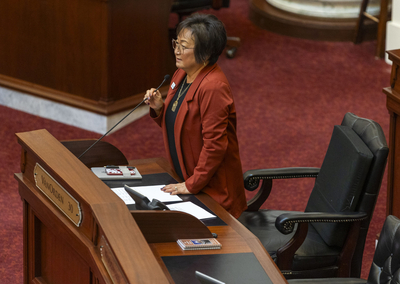
“I think there’s been some explanations of some of the pieces of the process and the legality of what was brought up in the committee,” she told the Idaho Capital Sun on Tuesday.
She and Vander Woude are sponsoring the bill.
Vander Woude said he doubts a repeal of Medicaid expansion would end up passing the House, or get the governor’s approval.
But Rep. Jordan Redman, R-Coeur d’Alene, said he thinks the time is getting close to putting a Medicaid expansion repeal on the table.
“We only have so many levers to pull, and we’re at a roadblock right now in the Senate,” Redman told the Sun on Tuesday.
But he reiterated that the goal is to try to build consensus for the disability cuts bill.
“If not, we’re going to have to kind of go back to the drawing board,” Redman said.
Lenney told the Sun that he wishes the Legislature was directing the cuts toward Medicaid expansion instead of services for people with disabilities.
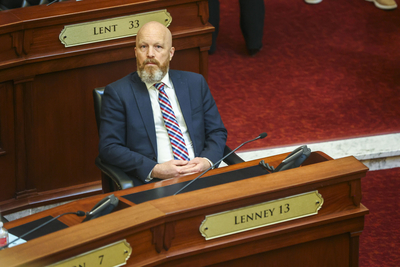
“I think if we’re going to make any cuts, it should be to the (Medicaid) expansion population. But I think the Legislature’s too — I don’t think the political will is there to do it,” he said.
But he said that would be his path forward. Lawmakers have many other options for cuts that “would be less detrimental,” Lenney said.
Early Tuesday, the House Ways and Means Committee introduced two more Medicaid-related bills by Vander Woude. One calls for implementing Medicaid work requirements by the end of the year.
He said those work requirements are modeled after what was in the One Big Beautiful Bill Act, so he hopes Idaho wouldn’t need permission from the federal government to do them.
But he isn’t sure if those work requirements will cut costs.
“I think it’ll save money, but anybody’s guess is what it will. I have no idea how many people aren’t working, or how many people won’t submit (the paperwork),” Vander Woude told the Sun.
About 48% of able-bodied adults on Idaho Medicaid are working, according to a December report by the Idaho Department of Health and Welfare.
Boise, ID