Here’s How Much Hawaiʻi Seniors Need To Cover Basic Monthly Costs
Oct 15, 2026 | 6:01 am ET
Description
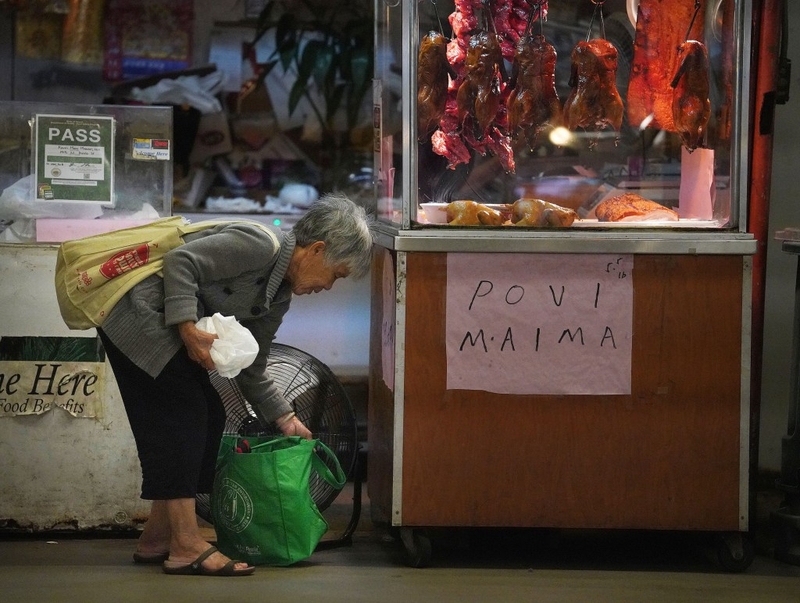
Photo courtesy of Honolulu Civil Beat
Hawaiʻi renters over the age of 65 need an average of $4,585 per month to cover basic needs without public or private help — and that's if they're healthy. That is roughly $670 more than the national average, according to a preliminary analysis from the University of Hawaiʻi Economic Research Organization, or UHERO.
The author, economist James Mak, used the 2025 Elder Economic Security Standard Index developed by the Gerontology Institute at the University of Massachusetts Boston. It estimates the minimum income older adults living independently need to afford housing, healthcare, transportation, food and other essentials. The budget is bare bones in that it leaves out restaurant meals, vacations, savings, gifts and entertainment.
Mak's report reveals that for elderly homeowners who have paid off their mortgage, the cost of basic needs is barely above the national average. Housing is what makes the cost high in Hawaiʻi.
In 2024, 21.5% of Hawai‘i residents were 65 or older. By 2035, the number is expected to grow to one in four.
The oldest group is growing too, and within 15 years, a quarter of those seniors will be 85 or older. The UHERO report writes that those residents will mostly be out of the work force, living on fixed incomes and facing the highest medical costs, requiring greater community support.
The report continues: “Ignoring the rapid rise in future health care costs and accessibility would be a mistake. Managing health care costs and increasing accessibility would also benefit all Hawaiʻi residents, not just the elderly.”
Mak, author of the UHERO analysis, added that fixing the "clear cut doctor shortage we have in Hawaiʻi" is essential.
Housing And Healthcare
Mak calculates that a single renter in Hawaiʻi in good health spends $3,436 a month, 21% more than the national average. A single homeowner still paying a mortgage needs $4,173, or 27% more than the average across the country.
For homeowners with no mortgage, the cost of living is not much higher than seniors throughout the country, he found.
A single senior needs $2,197 per month in Hawaiʻi, compared with $2,162 nationally. An elderly couple needs $3,346, compared with a national average of $3,244. Hawaiʻi's housing costs for those owners are actually slightly lower than the national figure, possibly because of the state's low property taxes, Mak writes.
Federal data shows that Hawaiʻi had the second-highest cost of living in the country in 2024, following California.
Healthcare is the second largest expense for renters and owners, the UHERO report found.
For couples who own their homes outright, healthcare is the largest, at about $1,046 a month. But for a couple who rents, monthly health costs climb 31% to $1,374 if they are in poor health and fall to $866 otherwise.
The UMass Boston index has limits. It uses identical food budgets for Hawaiʻi and the U.S., which Mak said "can't be correct" and is not realistic, since grocery prices are higher in Hawaiʻi. The index also leaves out long-term care, including the cost of home healthcare aides.
Honolulu, The Most Expensive County
Honolulu is the most expensive county for older adults in every category. Hawaiʻi County and Kauaʻi are the least expensive, according to the UHERO report.
According to UHERO’s report, housing accounts for most of the difference in nearly every case. A mortgage-carrying owner's housing costs are $865 higher in Honolulu than in Hawaiʻi County.
Healthcare is priciest for a couple on Hawaiʻi island, at $1,172 a month, and cheapest on Maui, at $956. Transportation is the reverse: Maui is most expensive, and Honolulu is cheapest.
Mak writes that the findings demonstrate a need for increasing housing supply, which would help residents of every age.
A study by University of Oxford professor Zach Parolin released earlier this year found that lowering rents by 20% would cut Hawaiʻi’s overall poverty rate by a quarter.
Honolulu, HI