Grinnell College reports $272 million annual impact on Iowa economy
Nov 19, 2026 | 3:18 pm ET
Description
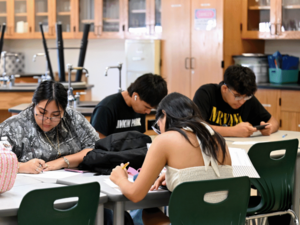
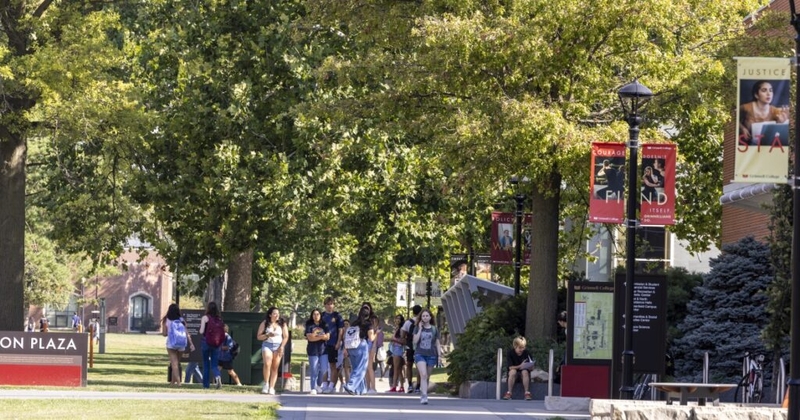
Grinnell College has released data from an economic impact report showing its impact has grown by more than one-quarter from 2020. (Photo courtesy of Grinnell College)
A new economic impact analysis of Grinnell College details how its contributions to the state of Iowa and its communities have grown in the 2020s, through employment, community partnerships and student programming.
The Grinnell private college announced in a news release Thursday its 2026 economic study, conducted by Decision Innovation Solutions in spring 2025, shows a 28.7% increase in the college’s contributions to the state economy from the first study in 2020, reaching $272.3 million annually.
As more Iowa institutions report data on their economic impacts, Grinnell College President Anne Harris said in an interview they want to “demonstrate their value in all sorts of ways,” not just for students but for the communities where they are housed.
“It has been said to me, you know, you hate higher (education), but you love your local college because that’s where you can swim, that’s where you can go see sports events, and that’s where the students are volunteers in your school, things like that,” Harris said. “So I think demonstrating the value … for us at Grinnell that has really meant pushing ourselves and being more visible, inclusive, available to be partners — partners, not experts, but partners — and we’ve got several different avenues to do that.”
Over the past 25 years, the economic study states, the college invested nearly $500,000 annually in local priorities, totaling $12 million for health and safety, education, downtown development, public infrastructure including road maintenance, and placemaking.
Four out of five Grinnell College faculty members live in the 9,000-person town, Harris said, and the college is the source of 1,761 jobs in the state. The economic impact report also totals the number of Grinnell graduates living and working in the state at more than 1,700.
Initiatives like mini grants for local nonprofit projects and dining dollars for students to spend at local businesses, totaling $173,000 in the 2025-2026 academic year, as well as a new residence space and community pavilion opened by the college in downtown Grinnell, are evidence of the college’s work to be a good neighbor, Harris said.
When asked about the effect of state and federal policies bringing more scrutiny to higher education, Harris said she doesn’t believe Grinnell’s work or its impacts have been hampered but the political climate has brought more visibility, and maybe importance, to the work.
“I think it’s made us want to be a more visible good neighbor, and what I mean by that is again not just like, ‘Hey we’re here contributing money,’ you know,” Harris said. “I don’t want to be the big neighbor, I want to be the good neighbor.”
Grinnell College students and visitors bring $6.9 million annually to the Poweshiek County economy, according to the release, with $4.4 million stemming from student spending and the rest from visitors. Total economic impact on the county, which has a population of 18,368 people, rose from $96.2 million in 2020 to $109.1 million in the most recent analysis.
One of Harris’s goals for building off this data is to expand the college’s relationships at the county level, going beyond Grinnell’s town borders to see where the institution can make an impact. She’d also like to isolate the data on Renfrow Hall, the student residence and community hub in downtown Grinnell, to see its specific impact on the town.
While they’re still digging into the numbers, Harris said she attributes the growth in economic impact to better understanding the college’s role in its community long term, not just with year-over-year support, and changing financial structures to ensure initiatives and projects align with that.
“We are all embedded in all these different communities, and I think with rural communities, there’s a special kind of impact because we’re partners for the roads in a way that in a big city you wouldn’t need … our pool is used by everyone at the high school…” Harris said. “It is a trend of saying, ‘Hey, we’re here as economic partners, economic stimulants, we’re here as good neighbors.’”
Des Moines, IA