Governor releases Medicaid Fraud Elimination Task Force recommendations
Oct 29, 2026 | 7:35 pm ET
Description
(Photo by Getty Images)
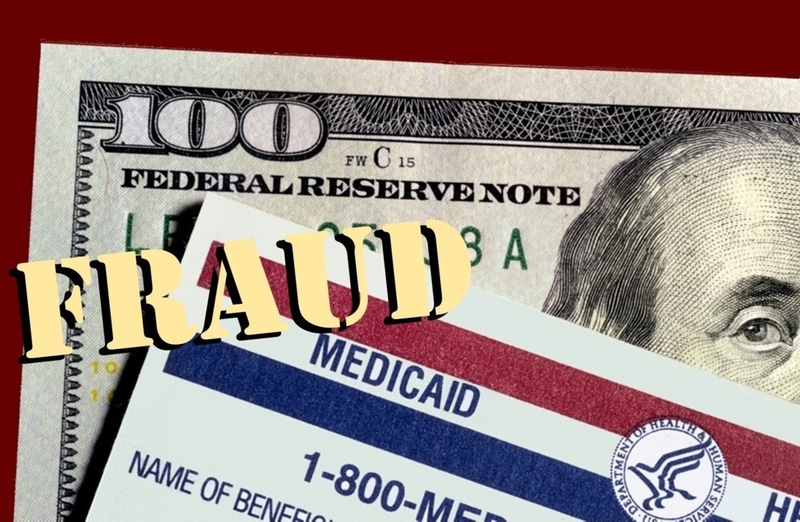
Finalized recommendations from the Iowa Medicaid Fraud Elimination Task force include suggested legislative changes to increase penalties for Medicaid fraud, give investigators more authority and add anti-kickback and civil penalty laws.
The task force, which was initiated by Gov. Kim Reynolds over the summer, submitted its recommendations Tuesday and Reynolds released the finalized document Thursday.
The task force evaluated Iowa’s Medicaid Fraud Control Unit and found that the unit was significantly smaller in size compared to states with similar Medicaid programs and laws. While Iowa’s unit “produces results far beyond its size,” the task force recommended more than doubling staff.
Increasing the staff from nine to 24 would cost roughly $3.3 million annually, but according to the recommendations, the federal government would cover 75% of the cost, leaving Iowa to come up with $550,000 for the unit.
“That increase—especially accompanying civil fraud enforcement—will create an enormous return on investment for Iowans,” the report stated. “Going forward, the unit’s budget should grow with Medicaid spending rather than stand still.”
According to the report, Iowa’s Medicaid program grew 129% since 2013 but the unit budget grew only 31%, meaning each staff member “polices nearly $1 billion in Medicaid spending.”
The task force also recommended that part of the staff serve under the attorney general, as it said is common with many other states. Those staff could pursue civil fraud enforcement under the Iowa False Claims Act, while other investigators pursue criminal enforcement.
“Civil enforcement is where the money is, and the Iowa False Claims Act makes it far easier to reach,” the report said.
The report said Iowa “leaves civil money on the table” because it has no “civil litigators to recover money under the Iowa False Claims Act.”
A group of former state officials who have criticized the task force as being politically motivated have argued that the attorney general could have dedicated staff to this effort without the task force’s recommendation to do so.
Many of these recommendations would require statutory changes, which the report said “could be accompanied by Executive action” to start the process.
Greater authority and punishment
The task force also recommended changes to Iowa law that would make Medicaid fraud a Class D felony, similar to insurance fraud, and a Class C felony for instances over $10,000.
The evaluation of Iowa’s current system concluded that the Medicaid Fraud Control Unit’s legal tools “are weaker than its mission requires.”
To address that issue, the task force recommends giving unit investigators the ability to execute their own warrants and allow investigators with proper certifications to carry firearms.
It also recommends the unit have investigative subpoena authority and a formalized partnership with U.S. Attorneys’ offices.
When compared to other states, the report said Iowa “lacks” a Medicaid-specific anti-kickback statute and a state civil monetary penalties law, which are “tools nearly every peer state has.”
The task force recommended legislative action for these regulations that would prohibit parties from offering or accepting kickbacks to generate health care business and give the state the authority to seek civil monetary penalties.
“If the Legislature enacted those laws, it would let the State penalize referral schemes in managed care, laboratories, and medical equipment that fall below federal enforcement thresholds,” the report stated.
The report also noted a need for better data management and case litigation tools, and called for AI-assisted analytics software within the unit.
These recommendations comprised the first and largest section of the report.
Other sections detail recommendations to improve public knowledge and reporting of Medicaid fraud, to strengthen the quality and oversight of high-risk Medicaid services, to improve data resources and to encourage managed care organizations to oversee their networks to ensure billings are coming from real providers for appropriate services.
In a news release, Reynolds said the recommendations will help to make Iowa’s Medicaid system “one of the most accountable and secure in the nation.”
“While we work to protect Iowa taxpayers’ investment in these programs, we’re equally focused on ensuring that quality care and services are available for every eligible Iowan who relies on them,” Reynolds said. “The recommendations put forth by the task force help advance these goals and will support the system’s long-term sustainability.”
Des Moines, IA