Gov. Kay Ivey to send $2 million to Alabama food banks amid SNAP suspension
Nov 04, 2025 | 3:39 pm ET
Description
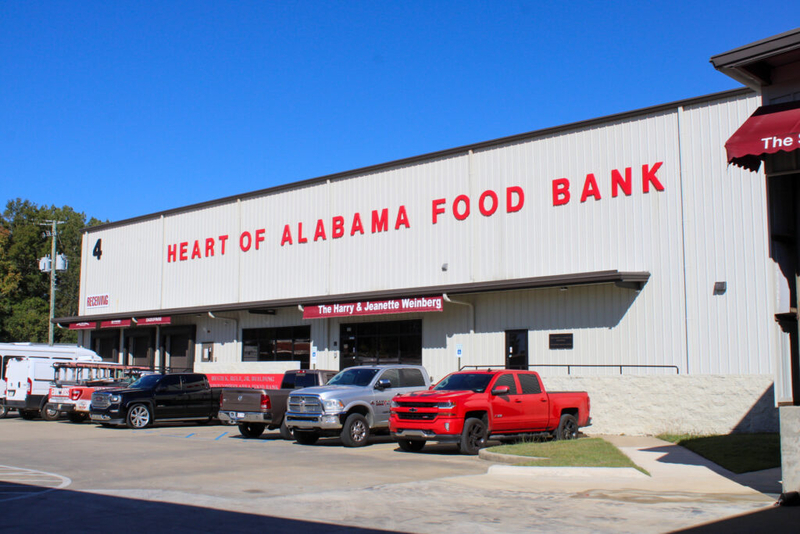
The Heart of Alabama Food Bank warehouse on Nov. 3, 2025, in Montgomery, Alabama. The compound has five warehouses that store food, fresh, canned and frozen, for volunteers and staff to pack to distribute across the state. It is one of eight food banks in Alabama that will receive a portion of $2 million in state emergency funds that Gov. Kay Ivey released Tuesday.(Anna Barrett/Alabama Reflector)
Alabama Gov. Kay Ivey will send $2 million in state emergency funds to eight state food banks amid federal suspension of the Supplemental Nutrition Assistance Program (SNAP) benefits.
The release comes one day after Alabama Democratic lawmakers called on Ivey to call a special legislative session to fund the food assistance program. The governor said in a press release that she has no plans to do so.
“According to the law, in order to use Rainy Day funds, the state would need to be in proration, which is not the case,” Ivey’s office said in a statement.
Last week, the U.S. Department of Agriculture (USDA) announced benefits for SNAP were suspended for November. According to the Alabama Department of Human Resources, more than 726,000 Alabamians receive SNAP benefits, which is about 15% of the state population. Of that number, 330,000 (44%) are children, according to DHR.
DHR officials said SNAP benefits cost about $142 million a month.
The $2 million will be sent to the Community Food Bank of Central Alabama; the Food Bank of East Alabama; the Food Bank of North Alabama; Feeding the Gulf Coast; Heart of Alabama Food Bank; the Selma Area Food Bank; West Alabama Food Bank and the Wiregrass Area Food Bank.
A message seeking comment from Heart of Alabama Chief Development Officer Varina Mead was left Tuesday afternoon.
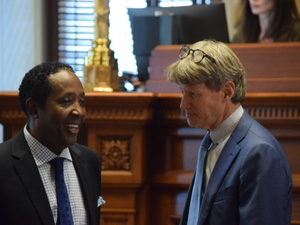
House Minority Leader Anthony Daniels, D-Huntsville, said in an interview Tuesday afternoon that the emergency funds are a good first step, but it is not enough.
“I think we’ve got to think through it. Is that enough? And how long would that last? How far would that, $2 million go?” Daniels asked.
According to staff at Heart of Alabama Food Bank, one dollar can buy enough food for five meals. If the $2 million is used solely to purchase food, it would buy enough for 10 million meals. According to September data from DHR, more than 726,000 Alabamians received SNAP benefits.
Feeding Alabama, a food bank network, said in a statement Tuesday afternoon that the money will help food banks expand operations.
“At a time when many Alabama families are facing heightened food insecurity, this investment will provide critical relief to food banks across the state, enabling them to increase food purchases, enhance distributions, expand operations, and ensure more Alabamians do not go hungry,” the company said in a statement.
A federal court on Saturday ordered the Trump administration to resume payments to SNAP beneficiaries by Wednesday. The Trump administration told a federal court Monday that it would use a contingency fund — which it had previously refused to employ — to pay about half the benefits for the month, though an official said that could take months. However, Trump said in a social media post on Tuesday that he would not obey the court order until the government shutdown ended.
“There are real Alabama families who rely on SNAP to put food on their tables, and that includes more than 300,000 children, more than 102,000 seniors and those who are disabled,” the statement said. “We are now in the longest federal government shutdown in history, and it is absolutely ridiculous that families all across our country are suffering – whether that is the school children who rely on SNAP, the air traffic controller not receiving a paycheck or even our military and high number of federal government worker families in Alabama.”
According to the release, USDA Secretary Brooke Rollins announced SNAP guidance has been sent to states to help partially fund the program while the federal government remains shut down. The team at Alabama DHR is closely reviewing those details today to act as quickly as possible, but timing is unknown.
Ivey also condemned U.S. Senate Democrats for not reopening the federal government. The federal government shutdown is a dispute over health care. Republicans in Congress lack the votes to overcome a budget filibuster. Democrats say they want a bipartisan agreement to extend looming cuts in subsidies for Affordable Care Act plans, which provide health insurance to nearly 478,000 Alabamians, according to KFF. Republicans said they won’t negotiate that until a stopgap spending bill is passed.
Daniels urged Democrats in Congress to “stay the course.” He also called on members of Congress and the Alabama Legislature to donate their monthly government income to food banks.
“When you remove those subsidies from those individuals that are going to get insurance, that’s where the 94% increase are going to happen, and how they’re going to afford that. So then you create another crisis,” he said. “We are appropriators in the Legislature. We need to feel just like what these families are feeling.”
This story was updated at 2:59 p.m. to include a statement from food bank network Feeding Alabama and at 4:30 p.m. to include comments from House Minority Leader Anthony Daniels, D-Huntsville.
Montgomery