Georgia renames park named after minstrel songwriter, ‘father of American music’
Sep 08, 2026 | 1:00 am ET
Description
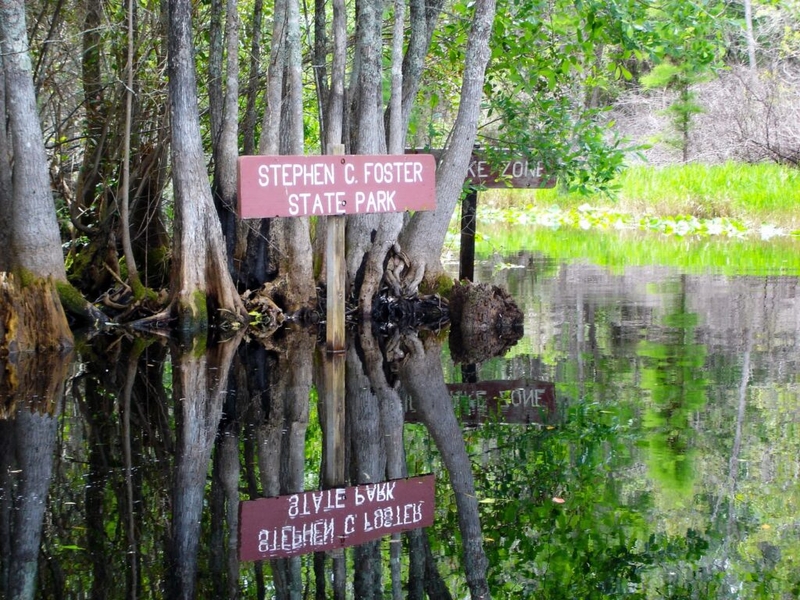
Stephen C. Foster State Park has been officially renamed to Okefenokee State Park. Georgia Department of Natural Resources
The Georgia Department of Natural Resources removed the name Stephen Foster from a state park, though a spokesman said the name change is unrelated to the 19th century songwriter’s association with racist minstrel music.
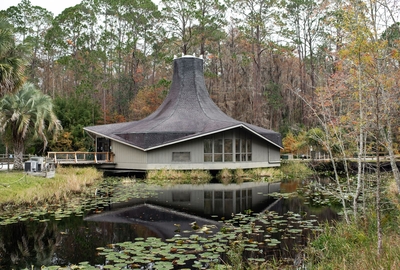
What was previously the Stephen C. Foster State Park was officially renamed the Okefenokee State Park effective Tuesday. The park serves as the main entrance to the Okefenokee National Wildlife Refuge, which was officially named a United Nations World Heritage Site in July.
The change deletes the name of a man who has been called the father of American music but whose legacy has been tarnished by the association with minstrel shows, performances in which white performers wore blackface makeup and mocked African Americans with racist tropes.
Foster is the author of more than 200 songs, the most popular of which were performed in minstrel acts. He is best remembered for classics like “Camptown Races” and “Oh! Susanna,” which were sung in forms that would be considered racist today.
In a statement, Georgia Department of Natural Resources spokesman Austin Suhr said the name change had nothing to do with Foster’s history.
Suhr said the department renamed the park in light of the World Heritage designation and ongoing improvements to facilities there, and because the new name more accurately reflects its location.
He said the previous name has caused confusion as tourists sometimes showed up with reservations for Florida’s Stephen Foster Folk Culture Center State Park, about 50 miles away in White Springs, Florida. The previous name for the Georgia park was adopted by the state because it was already the name of a camp on the property when the state acquired it in 1954.
“The decision was made in service of our core mission and values as publicly stated on our website,” he said in a phone call. “Any other noise or things coming in, that’s not really what we’re focused on as an organization.”
Former Georgia NAACP president Gerald Griggs said he appreciates the name change regardless of the given reasons.
“I think that there’s pressure, and there’s been pressure since 2020 throughout Georgia to recognize these symbols of racism and inequity ingrained in state monuments,” he said.
Monuments to the Confederacy and proponents of white supremacy have long been a political flashpoint in Georgia. A bill with the backing of the Sons of Confederate Veterans Georgia Division that aimed to protect historic monuments from removal narrowly failed this year after a handful of Republican House members voted no or abstained from voting.
Griggs said a park named after Foster would risk turning off potential visitors. A 2024 report found that the number of visitors to the Okefenokee each year could double from 800,000 to 1.6 million by 2035 if it were to become a World Heritage site.
“They’re in a place where, politically, it’s not advantageous to say the real reason, but economically, it is advantageous to remove symbols of hate if you’re trying to gain an international audience,” Griggs said.
Griggs said he’s hopeful the move will portend changes at other state parks with ties to unsavory parts of the past, like Stone Mountain, which contains a 90 foot by 190 foot carving of Confederate leaders and A.H. Stephens State Park, which is named for Alexander Stephens, the vice president of the Confederacy.
Foster’s life
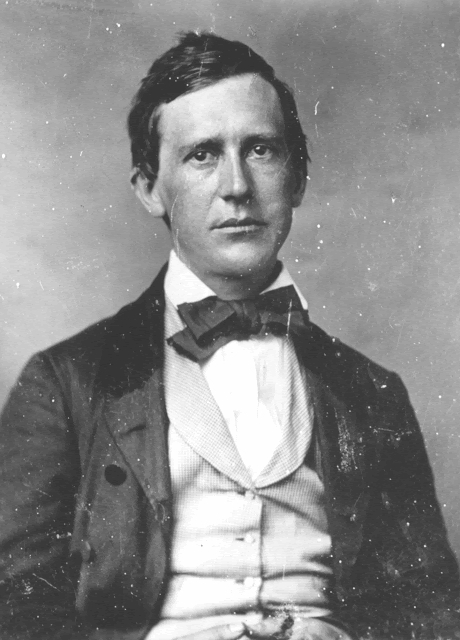
Foster lived from 1826 to 1864, a time when minstrel shows were the most popular American artform, said Esther Morgan-Ellis, a professor of music history at the University of North Georgia.
“When I hear my niece play ‘Oh! Susanna’ on the violin, it makes me a tiny bit uncomfortable,” Morgan-Ellis said. “Because I know the original words to that song, and they are horrible. Now, my little niece doesn’t know the words, and her mom doesn’t know the words, and her violin teacher doesn’t know the words. None of them know anything about that song. It’s just a nice, catchy melody to them. So to me, that’s when things get complicated about what’s appropriate and what we should be setting aside as we try to create a more just society.”
Historians say Foster helped to take minstrel shows from an artform associated with lower classes to something that was, at the time, considered more respectable.
“It was certainly a version of minstrelsy that was less offensive, but still pretty offensive, and a lot more widespread, a lot more ‘polite,’” said Jason Lee Guthrie, a Clayton State University professor and host of Foster at 200, a podcast that seeks to critically appraise Foster and his legacy.
“He was talented,” Guthrie said. “He did have a certain vision, he was a forerunner of a lot of things in so many ways. But he also, kind of in microcosm, captures so many of the problems in American culture and history. That racial aspect was there, that class aspect was there.”
Foster died broke and largely unknown before the Civil War ended, but he would go on to experience a revival from proponents of lost cause ideology, a false narrative that romanticizes slavery and the Confederacy.
“About 20 years after he died, his legacy was really taken up by people in various parts of the South who upheld him as really their antebellum ideal,” Morgan-Ellis said. “Somebody who wrote beautiful and beloved songs about how ‘great’ the South was back when we had slavery. So all of these monuments to him are put up, and that includes parks named after him.”
If some of Foster’s songs sound familiar, it may be thanks to characters like Bugs Bunny and Daffy Duck. The producers of “Looney Tunes” often used Foster songs in their cartoons because they were catchy — and old enough to be in the public domain — keeping them in the ears of subsequent generations.
Guthrie said the reason that Georgia and Florida had state parks named after Foster is that those parks are along the Suwannee River. Another of Foster’s most remembered songs, “Old Folks at Home,” starts with the line, originally written in a racist caricature of Black dialect, “Way down upon de Swanee ribber, far, far away.”
Guthrie said Foster, who lived mostly in Pittsburgh and likely never traveled to Georgia, picked that name out of a book and shortened it to fit the meter of the song.
“So it’s not even the actual name of the river,” he said. “He’s certainly not writing about a place that he visited, that he loved.”


Atlanta, GA