Fort Dodge pharmacist takes state licensing board to court
Sep 28, 2026 | 1:32 pm ET
Description
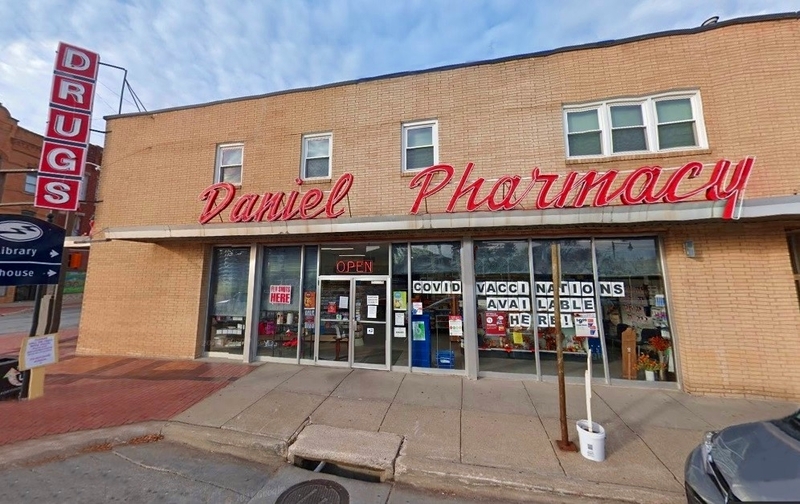
Daniel Pharmacy of Fort Dodge. (Photo via Google Earth)
A Fort Dodge pharmacist is taking the Iowa Board of Pharmacy to court over recent sanctions imposed against his practice.
State records show that in 2022 the board charged Daniel Pharmacy of Fort Dodge with failing to comply with standards related to the compounding of hazardous drugs. The pharmacy was given 30 days to come into compliance, but in January 2022, the pharmacy remained in a state of noncompliance, the board alleged.
As a result, in June 2022, the board charged Daniel Pharmacy with two regulatory violations and issued an emergency order indefinitely restricting owner John Ferris Daniel III’s ability to compound hazardous drugs, alleging his store posed an “immediate danger” to the public.
In July 2026, Daniel appeared before the board and outlined the steps he had taken to safely resume compounding hazardous drugs. The board agreed to let Daniel return to compounding the drugs subject to certain conditions — one of which was that he must complete at least 25 hazardous compounds before restrictions on his practice would be lifted.
Daniel is now seeking judicial review of that requirement, arguing that his past customers for the compounding of hazardous drugs have taken their business elsewhere during the years his practice has been restricted. He “therefore has no existing customer base or established market from which he can reliably obtain 25 hazardous-compounding orders,” the lawsuit asserts.
The net effect of the order is that it relies substantially on customer demand rather than on Daniel’s competence, the lawsuit adds.
Conditioning practice restrictions on customer volume, even though the restriction itself impedes Daniel’s ability to achieve that volume, isn’t rational, the lawsuit asserts, and it seeks a court order reversing or modifying the requirement.
The board has yet to file a response to the lawsuit.
In addition to the 2022 disciplinary case, in July 2024, the board charged Daniel Pharmacy with three regulatory violations: failing to document within its continuous quality improvement program an unspecified “event” of some kind; failing to include all of the required elements in records related to compounding records; and failing to follow a set of standards related to compounding medications.
According to the board, the charges stemmed from a determination that Daniel Pharmacy’s procedures had resulted in an error that was not properly documented with a root cause analysis of the incident.
State records show a board compliance officer had reviewed the pharmacy’s quarterly reports and found that an error had occurred in in the compounding of dexamethasone – a drug often used to treat inflammation or manage autoimmune disorders. The error went undetected by the pharmacy and the medicine was dispensed to the patient, according to board records.
Daniel allegedly told the investigator the incident marked his first compounding error in 25 years. In 2025, the board agreed to settle the 2024 case with a warning.
Des Moines, IA