Florida wildlife agency put a homebound dementia patient under surveillance
Oct 29, 2026 | 12:05 am ET
Description
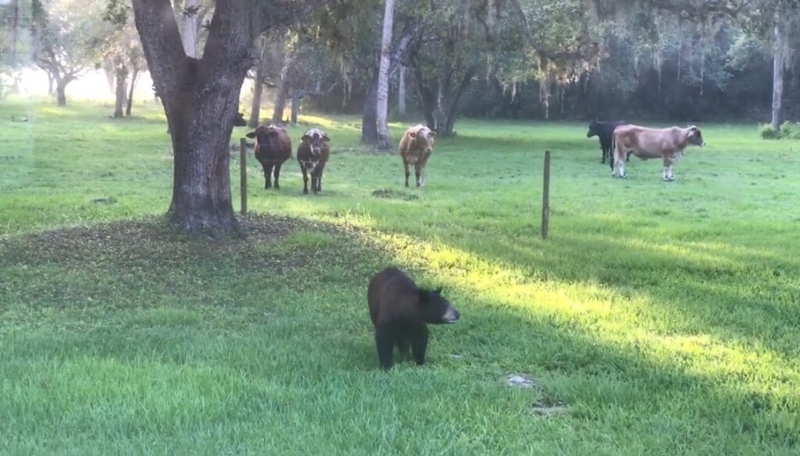
A bear wanders through one of the pastures on the Olsen family cattle ranch in Davie. The natural beauty of Ben Olsen's family property motivated him to become an environmental activist, which has led to the Florida Fish and Wildlife Conservation Commission putting him and his parents under surveillance. (Photo via Ben Olsen)
Growing up, I watched a lot of Bugs Bunny cartoons. I always cracked up when inept hunter Elmer Fudd would turn to the camera, put a finger to his lips and tell viewers, “Be vewwy vewwy quiet — I’m hunting wabbits!”
So, when I was talking to Ben Olsen last week, naturally the image that popped into my mind was Florida Fish and Wildlife Conservation Commission Chairman Rodney Barreto saying, “Be very very quiet! I’m hunting CRITICS!”
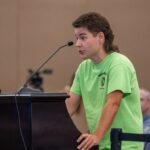
You’ve probably never heard of Olsen, a law firm employee whose family owns a ranch in Davie. He’s not a name-in-lights Florida environmental champion, leader of a big organization, or someone who makes a lot of headlines. He’s just one of those people who gets important things done in the background.
Among the organizations he has volunteered to help: The Florida Fish and Wildlife Conservation Commission.
Turns out he’s also one of the people the FWC has been spying on.
You can imagine, he said, how this discovery blew his mind. “Hey,” he thought, “you’re tracking a guy who’s HELPING you guys!”
Then he discovered that the list of people the FWC had put under surveillance included his mom, then 67.
“They did a search on me, my father, and my mother 50 times in one day,” Olsen told me. “This is clearly a bigger issue than we thought. … They were going after a woman with dementia.”
Yes, you read that right. At the time that the FWC decided her activities merited a criminal investigation, Olsen’s mom was living with Alzheimer’s disease.
In her declining years, Sallie Olsen never left the house, much less showed up at FWC meetings to comment on environmental issues, Olsen said.
Yet the FWC classified this frail, elderly lady as a major threat to the agency and its leadership.
A bogus investigation
I first wrote about the FWC’s surveillance in July.
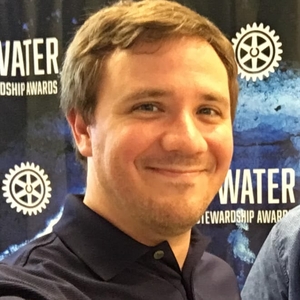
A documentary filmmaker named Brent Fannin had discovered that people who criticized the wildlife agency — many of them opponents of its anti-science bear hunt — had had their driving records pulled.
The FWC’s declared reason for doing this? An ongoing criminal investigation that didn’t actually exist. It was as big a bunch of humbug as anything P.T. Barnum put on display.
In July, the known number of critics the FWC had been keeping an eagle eye on totaled 16 — more than a dozen but fewer than a score.
Fannin has continued digging into this and encouraging others to file their own public records requests. He told me last week that the number of souls the FWC snoops scrutinized had now climbed to 49.
The words “driving records” don’t adequately describe what the J. Edgar Hoovers of the FWC were hoovering up concerning these 49 folks.
“The records were in the Driver and Vehicle Information Database, known as DAVID,” the Miami Herald reported in July: “The system contains people’s driving records and other sensitive information like their Social Security numbers, medical disability records, addresses, signatures and emergency contacts.”
The suspicion, the Orlando Sentinel reported then, is that the FWC used those DAVID records to trace its critics’ travel patterns. How? By employing the system of Flock cameras that dot our highways and read passing license plates. That way, the state agency could keep tabs on where their critics go and who they meet.
So many Florida cops have abused the DAVID system to track their ex-wives and ex-girlfriends that five years ago the Legislature boosted the penalties for misusing it. To me, it sounds like the FWC’s silly searches ought to trigger those enhanced penalties for our wildlife cops, too.
I asked Fannin this week if the FWC has ever apologized for pulling his records under false pretenses.
“Haha hell no. they haven’t apologized,” he told me via e-mail. “In fact, they tried to make us seem like violent criminals.”
Strictly routine
When the Herald ran the whole situation by Baretto, the politically influential Miami developer who chairs the wildlife commission, he didn’t deny his agency was pulling the records.
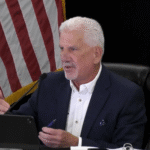
But Barreto, an ex-cop, tried to make it sound like it was no big deal, everybody settle down, this is strictly routine!
He told the Herald that during the bear hunt debate, he and the other commissioners had received threats. That’s why, he said, FWC officers checked out those extremely violent environmental sickos: “When people sign up to speak, their names are checked. That’s all.”
However, Barreto was — well, let’s be kind and say he was misinformed.
FWC spokeswoman Shannon Knowles told me in July that the agency’s law enforcement officers were not vetting speakers at the agency’s meetings. They were tracking potential threats, a much more serious endeavor indeed.
“Claims that the FWC misuses or weaponizes its law enforcement authority are false,” she said three months ago. “Threats concerning the harming of officers, staff, and commissioners are taken seriously and is why it’s imperative that law enforcement works to ensure public safety by monitoring, preventing, and assessing potential security risks to maintain safe public spaces.”
Why, this is clearly the most important criminal investigation since the Justice Department probe of former FBI director James Comey for taking a picture of seashells arranged to spell “86 47”.
The FWC’s reasoning for its First Amendment violations fell apart when the agency — in response to public records requests — released unredacted copies of the threats. The records clearly showed that none of the threats came from the people being investigated.
Needless to say, a homebound woman with dementia was never any threat to the FWC.
A majestic paradise
Olsen told me he has never sent any threats to state officials in any agency. He doesn’t need to.
When he’s got something to say to the wildlife commissioners, he’ll show up at one of their meetings to speak to them in person.
After all, he volunteers with five programs the agency runs, including deer management and python removal.
He has met Barreto and shaken his hand, although not since he learned about the FWC pulling his parents’ files. He has not had much direct interaction with FWC executive director Roger Young, who came from the agency’s law enforcement side.
Olsen (and his parents) never took a position for or against the bear hunt, he told me, although they have seen bears on their property. What pushed him to become an environmental activist was his discovery of a threat to his family’s 608-acre ranch from the federal government.
“We’ve been on the land for 100 years and owned it for 75,” he told me. “It’s a beautiful, majestic paradise.”
To his dismay, he learned of a plan by the U.S. Army Corps of Engineers to seize the ranch via eminent domain and flood it as part of the joint federal-state billion-dollar Everglades restoration program.
Using historical land records, Olsen put together a 68-page report that challenged the Corps’ assumption that the ranch had been part of the vast Glades marsh. Nope, he said, this was always dry land. (He’s suing the U.S. Department of Interior over its failure to promptly hand over public records about the issue.)
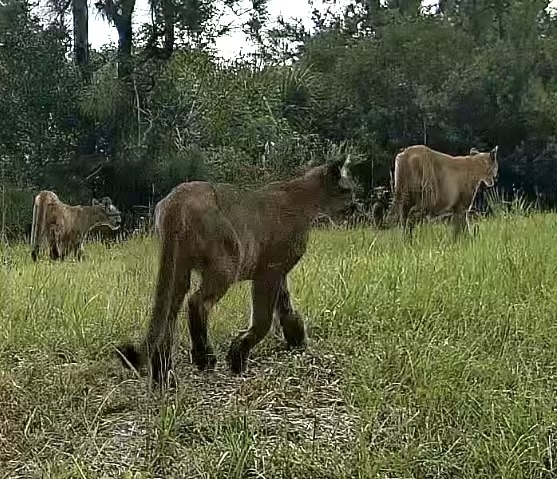
Olsen also pointed out that his family’s land was prime Florida panther habitat. Motion-sensor cameras have snapped more than a few photos of the endangered cats stalking across the grassland.
Flooding the ranch, he said, would eliminate that exceedingly scarce habitat, which is rapidly being eroded by rampant development.
When he sought assistance in resistance from the FWC, Olsen encountered a very cold shoulder.
‘I was begging them to help me and the leadership of the FWC kept saying, ‘We can’t do anything,’” Olsen said. The state agency had signed onto the federal plans to flood the property and wouldn’t change its stance, despite Olsen’s evidence.
That’s what led to him becoming the subject of this phony investigation, he said.
“I was living with my parents at the time, taking care of my mother through the end stages of early-onset dementia,” he told me. Because of where he lived, and the fact that he drove a truck registered to his parents, the investigators pulled their DAVID records as well as his.
“I was tracked because I exposed how the state was not protecting panthers,” he told me. His only crime was “advocating in public meetings for private property rights and endangered species habitat.”
A Flock-ing mess
After talking to Olsen, I was keenly interested in hearing how the FWC could justify putting Olsen’s mother under a microscope.
I tried reaching Barreto. He never returned my calls.
Knowles, the FWC spokeswoman, said she couldn’t comment on the Olsen situation. Turns out there’s now a REAL investigation of the phony investigation.
“A formal complaint has been filed with our Inspector General’s Office, and therefore we are unable to address any further questions,” she told me.
However, she added, the FWC “maintains that we complied with all applicable user agreements and all legal requirements governing access to and use of DAVID records.”

The guy who filed the complaint is Sen. Carlos Guilllermo Smith. He’s from Orlando, so he’s used to dealing with people stuck in Fantasyland.
In an interview with the “Florida Matters” radio show, Smith said news about what the FWC was doing “was throwing up all kinds of alarm bells.”
Smith pointed out that Gov. Ron DeSantis, who appointed all seven of the wildlife commissioners, had yet to make any comment about what the agency had done.
Except he kind of did, in a roundabout way.
On Aug. 25, Olsen spoke to the Everglades Restoration Joint Working Group about the use of Flock cameras to track FWC critics. He also talked to several state employees at the meeting and gave them details about the tracking of his mom and dad. They promised to pass the word up the chain of command.
The very next day, DeSantis announced that he wanted legislators to tighten regulations on the use of Flock cameras, explaining, “I don’t want to have this become a surveillance state.”
Five days later, he issued an executive order banning Flock cameras from all state highways.
Yet he said not a word about the wildlife commission’s use of them.
Desperately seeking something
When the story about the FWC’s investigation first broke, two of the victims, Bear Warriors United founder Katrina Shadix and Speak Up Wekiva founder Chuck O’Neal, told me they planned to sue the agency for violating their privacy.

So far, neither has filed suit, but both say legal action is on the way. Shadix promised me that her suit would include more than two dozen plaintiffs.
Olsen, meanwhile, is planning a legal strategy for forcing the FWC to hand over all its records and acknowledge its wrongdoing. It helps that he works at a law firm run by family members.
While it’s tempting to just pop a batch of popcorn and munch it while we watch this all play out, I have a suggestion for a more constructive activity. I see by the calendar that Halloween is this weekend, so I think everyone reading this column should celebrate that spooky holiday in a particular costume.
I think we should pay tribute — yeah, that’s the right term! — to Chairman Barreto.
We should all cosplay as him dressed as Elmer Fudd. And when we’re knocking on people’s doors, instead of shouting, “Trick or treat!” we should say, “Be verrrrry verrrrrry quiet! I’m hunting … EXCUSES!”
Tallahassee, FL