Fisheries, rising costs and schools dominate Southwestern Alaska House debate
Oct 23, 2026 | 2:12 pm ET
Description
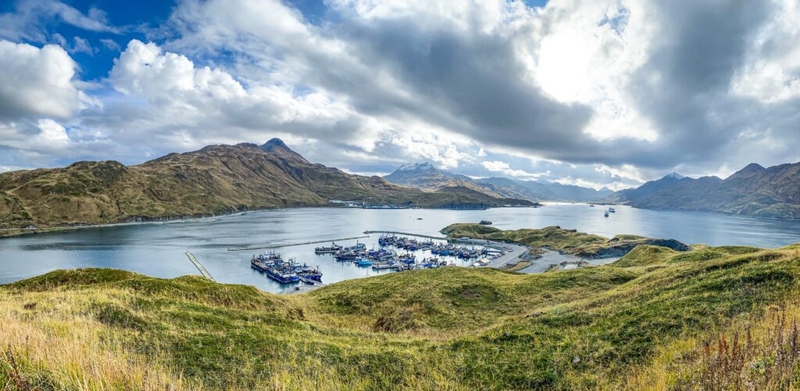
Vessels in the commercial crab fishing fleet out of Dutch Harbor, Alaska, prepare for the 2020 king crab season in mid-October. (U.S. Coast Guard photo by Petty Officer 2nd Class Holly Hugunin)
Four candidates are vying for an open seat to represent the Southwestern Alaska House District 37, one of the state’s largest rural districts where fisheries, skyrocketing costs of living, transportation and schools are top of mind this election season.
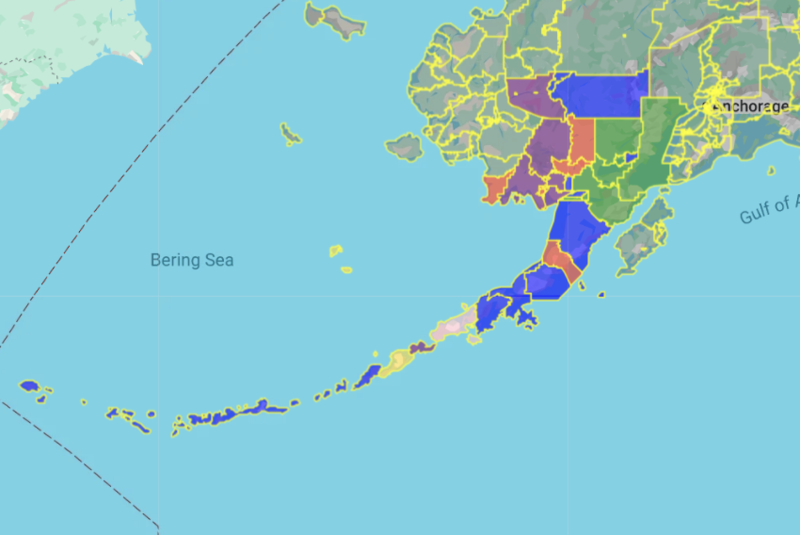
The district includes communities from the middle Kuskokwim region including Aniak and Sleetmute in the north, southeast across Bristol Bay and Lake Clark regions to Cook Inlet, and south across the Alaska Peninsula, the Aleutian Islands and Pribilof Islands.
The four candidates are Republican Brenda Wilson of King Cove, Democrat Evelynn Trefon of Newhalen, independent Mark Smith of Aleknagik and independent Cade Woods of Dillingham.
Rep. Bryce Edgmon, a Dillingham independent and House Speaker, has represented the region since 2007 and declined to run for re-election this year to make a bid for the Senate seat representing the region.
In the primary, Wilson got 22.6% of the vote, Trefon received 19.8%, Smith received 17.5%, and Woods finished sixth with 9.2% of the vote. Voter turnout was 25.1% with 2,468 ballots counted.
The race could have implications for the balance of power in the Alaska House. The multi-partisan majority coalition holds 21 seats, compared to the Republican-led minority with 19 seats. Each House District represents approximately 18,335 residents, and representatives serve two-year terms.
Three of the four candidates appeared Wednesday in an online candidate forum called the Aleutian Debates, a non-partisan citizen-led initiative broadcasted online and on KSPD Radio. The questions were compiled by residents across the Aleutians region.
“Too often, candidates pass through our region quickly or not at all. So we wanted to bring the conversation here to you, to the people living with the issues every day,” said Amy Mack of Sand Point, who works for the local tribe and KSPD radio. She and co-hosted the debate with Carter Uttecht, a small business owner from King Cove.
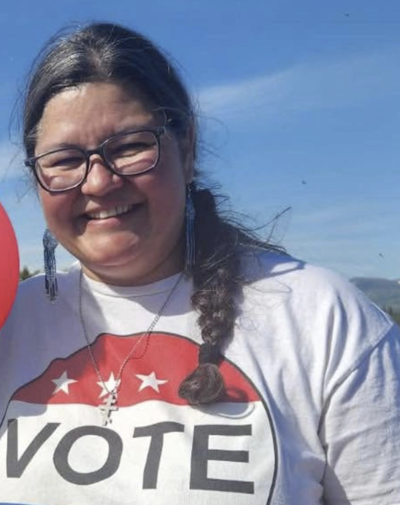
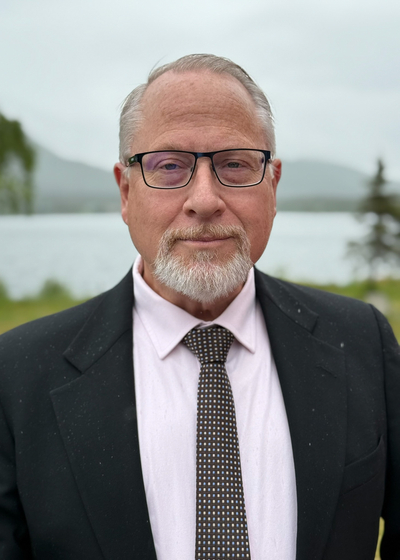
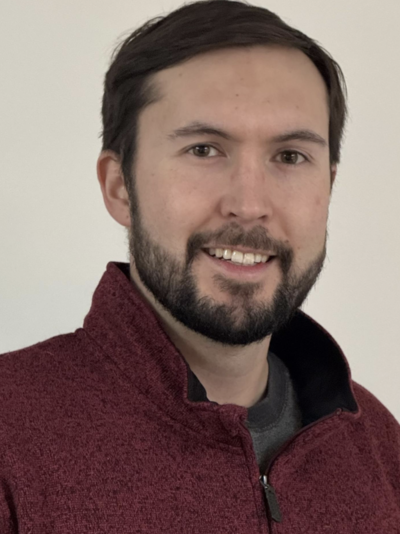
Wilson, Trefon and Smith participated in the Zoom forum and expressed their commitment to representing the rural communities of the district, which are only accessible by boat and plane.
Wilson is a long-time resident of King Cove, where she raised her family, and where she most recently worked as the behavioral health director for Eastern Aleutian Tribes. She serves on the Aleutians East Borough School Board and the Aleutians East Borough Assembly, and has served on the local city council and tribal council.
“So I have a lot of experience in working with monies. I’ve gone to Juneau many, many times,” she said. “To make sure that our communities had what they needed, not just King Cove. So it’s been a lot of work to make sure that we have the resources we need.”
Trefon is of Yup’ik heritage and lives in Newhalen, a community near Lake Iliamna, with her family. She has worked as a secretary for the Lake and Peninsula School District for the last twelve years, and previously served on the local city council and electric cooperative board.
“I’m tired of arguing with our school district over funding. I want to see what can be done at the state level, so that’s why I signed up to run this year. I was the first one to sign up on April 26th,” she said.
Smith lives in his home-town of Aleknagik, on the west side Bristol Bay, and has commercially fished and managed fuel companies delivering to communities across Southwestern Alaska. He’s also served on his local city council and as mayor.
“I have had the privilege of serving most of District 37 from the pilot house of a tug, and delivered fuel along the coast and up the tributary rivers, the Kuskokwim and the Bristol Bay rivers. So, really, I’ve spent my life being part of those communities,” he said.
Woods could not attend the Wednesday forum, according to organizers. He lives in Dillingham and works as a fuel terminals manager and serves as chair of the Dillingham Planning Commission.
All four candidates are running for the Alaska State Legislature for the first time.
Fisheries and economic development
All three candidates expressed support for the district’s wide variety of fisheries. Dutch Harbor is the nation’s No. 1 fishing port by volume, and Bristol Bay sees the largest sockeye salmon returns in the world, but smaller fisheries like in the Chignik, Yukon and Kuskokwim rivers have seen dramatic declines in recent years.
Moderators asked how candidates would represent all fishing user groups, particularly as the southern Aleutian Area M fishery, which they said is often blamed for declining runs in Western Alaska.
Wilson said she would support all user groups fairly regardless of gear type. Trefon said she would prioritize support for subsistence fishing above others, and said she thinks the Alaska Department of Fish and Game is underfunded and understaffed, contributing to management issues. Smith said he would work to ensure the Board of Fisheries is making management decisions based on science not politics. He also noted the need for timely data to help address declining salmon runs in Western Alaska.
All three candidates said they support the trawl fishing fleet in state waters. Trawl bycatch – the accidental harvest of nontargeted species — has become a hot-button issue this election season. But all three candidates said they oppose any state bans because trawl fishing is a major economic driver in the region. Smith noted improving management data could help reduce bycatch numbers, and he begged the audience to seek news and information about trawling beyond social media.
“Trawling is part of vital Alaska fisheries, and it helps both the Aleutians and the Bering Sea,” Smith said. “It also helps make the processing of other smaller stocks possible, where otherwise there’d be a difficulty in keeping year-round processing.”
The three candidates were asked about processor closures and unpaid fishermen. Processing plants receive fish harvests from fishing fleets and have seen a wide variety of turnover and closures in recent years. In 2024, the owner of a major King Cove plant that was backed by state-funding, Peter Pan Seafoods, went bankrupt. Peter Pan Seafoods shut the plant and failed to pay fishermen and boat owners millions they were owed, as reported by ProPublica.
All three candidates said they supported increased accountability and oversight of processors, and wanted to see processors pay fishermen what they’re owed. Smith floated the idea of a payment bond system to ensure fishermen get paid.
Trefon said she wanted to see the new plant owner paying those existing debts, like back taxes. Wilson said she would support legislation to make sure processors can’t walk away from local debts, though bankruptcy is regulated by federal laws.
“If a processor fails to meet its obligation, the state should have the authority to impose penalties, restrict future operations and require restitution. Accountability must mean something,” Wilson said.
Rising costs and rural subsidy programs
Rural Alaska communities are seeing skyrocketing fuel costs this year, driven by the U.S. war in Iran, which is pushing up the cost of groceries, heating fuel and travel. The state’s Power Cost Equalization program helps rural communities subsidize high energy costs, but not all communities qualify — including King Cove, which lost eligibility after switching to hydropower in 2017.
All three candidates said rural energy costs are a concern, and said they would support state investment in infrastructure to help utilities connect regionally and lower costs.
Wilson said she would support changing the formula for power cost equalization eligibility to be “renewable-friendly” to incentivize communities switching from diesel to renewable forms of energy.
“I support legislation that allows communities to qualify for PCE based on needs and location,” she said. “Coal-based extreme electricity costs threaten services all over the region.”
All three candidates expressed support for building a controversial road to connect King Cove and Cold Bay, which would run through the Izembek National Wildlife Refuge and is currently being litigated in federal court. The candidates said they see it as essential for medical evacuations, transportation and the economic future of the two communities.
Another area of agreement between candidates was supporting state ferry service and affordable air travel throughout the region. Air travel across the district is at an all-time high, moderators said, and asked how the candidates would address affordable and reliable air service.
Wilson said she would work with Alaska’s federal delegation, the state and commercial airlines to invest in a central air service to the region and ongoing runway maintenance. Smith said he would also support investments in infrastructure, and expressed hope the U.S. military’s promise to invest $115 million in Adak would benefit the larger region.
Trefon said she would work to protect Essential Air Service, a federal subsidy program for passenger transit, mail, medical evacuations and groceries, as well as advocate for investments in infrastructure.
“We do need to make it more affordable and reliable by investing in our transportation systems,” she said. “And we need to make sure the federal government is doing their part to make sure that the instrument landing systems are up and running continuously, not just sometimes.”
Education
All three candidates said they support increasing state funding for education by boosting the base student allocation, the core of the state’s funding formula.
In House District 37, many schools are facing declining enrollment, moderators said, which puts them at risk for closure if they fall under the state-funding threshold of 10 students.
Trefon said she would work to protect rural schools and prevent any change to that rule. “Urban legislators have often suggested raising that number to 20. If that were to happen, that would close a tremendous amount of schools through rural Alaska,” she said.
Wilson said she would work to stabilize schools through housing incentives for teachers, local teacher training and dual credit and distance learning opportunities, “ensuring rural students receive the same opportunities as every other child in Alaska,” she said.
Smith emphasized the need for diversifying state revenue to address deferred school maintenance. He also said he supports reviving the defined benefit pension system for teachers, which he said could reduce turnover and help stabilize small schools.
All three candidates said they support reliable state funding for preschool programs statewide.
Size of the Permanent Fund dividend
While the amount and cost of the annual Alaska Permanent Fund dividend can be a highly partisan topic, all the candidates agreed they support a dividend that is balanced with the state budget.
Trefon said she would support boosting new state revenues by implementing what she called a high-earners’ income tax, “which would tax the people making $120,000 or more annually and individually, and I think that that would generate a lot of revenue for the state of Alaska,” she said.
“Until we get more revenue into the state of Alaska, then I don’t think that we are able to pay a full statutory permanent fund dividend. But I would like to,” she said.
Smith said he supports diversifying state revenues, particularly income from natural resources, to counteract state funding fluctuating with the price of oil. “We’d all like to pay a full dividend, but it’s just not realistic until we address the budget issues,” he said.
Wilson said she supports a dividend that is fair but also protects the long-term health of the state budget. “The PFD is important, but so is a balanced budget,” she said. “A balanced approach helps rural Alaska most.”
Campaign fundraising
According to campaign finance reports filed one month ahead of the general election with the Alaska Public Offices Commission, Smith is leading in fundraising efforts with more than $43,600 raised. He also contributed more than $17,000 to his own campaign, plus a $5,000 loan.
Trefon has raised more than $21,000, with over $4,200 in non-monetary donations to her own campaign, such as airline miles and supplies. Wilson has raised more than $4,500, with $500 from the Alaska Republican Party and over $3,500 in non-monetary contributions to her own campaign. Woods has raised roughly $650, with $450 in self-funding.
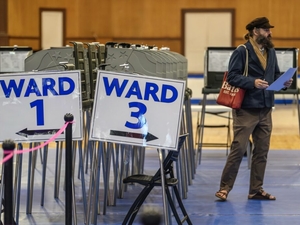
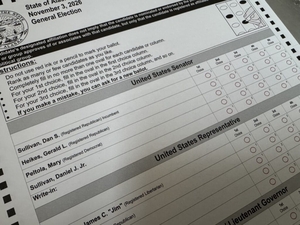
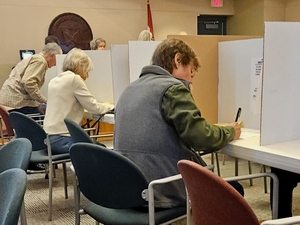
Early voting has begun across Alaska and will continue until the polls close at 8 p.m. on Nov. 3.
Juneau