With the federal Voting Rights Act ‘gutted’, Michigan Democrats have crafted their own version
May 19, 2026 | 4:39 pm ET
Description
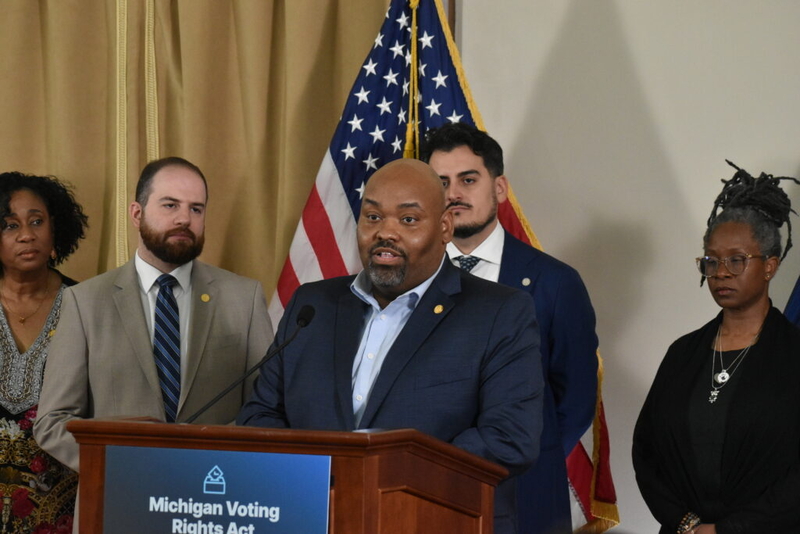
State Rep. Jason Hoskins (D-Southfield), speaking at a Lansing press conference to announce the reintroduction of the Michigan Voting Rights Act. May 19, 2026 | Photo by Ben Solis/Michigan Advance
Michigan Democrats have for the past several years warned that the conservative majority on the U.S. Supreme Court could and eventually would dismantle key provisions of the federal Voting Rights Act.
That fear is now a reality with the U.S. high court’s latest action in Louisiana v. Callais, in which the six Republican-appointed justices voted to gut Section 2 of the act, which was the primary tool against discriminatory voting rights policies from states hostile to voters of color. But the Callais decision was just the latest alarm bell as the court has been striking down key provisions of the act since 2013, and well before the court took such a conservative swing.
The Michigan Senate during the 2023-24 session introduced its own version of the Voting Rights Act to protect against any future threats to the longstanding civil rights law. But it failed to gain passage as the Democratic trifecta’s legislative agenda was cut short during a chaotic lame duck session.
While those bills were merely preemptive attempts at preventing the curtailing of voting rights in Michigan, the Senate is now trying again by reintroducing the same bills that passed in June 2024, but this time as a response to the Callais decision.
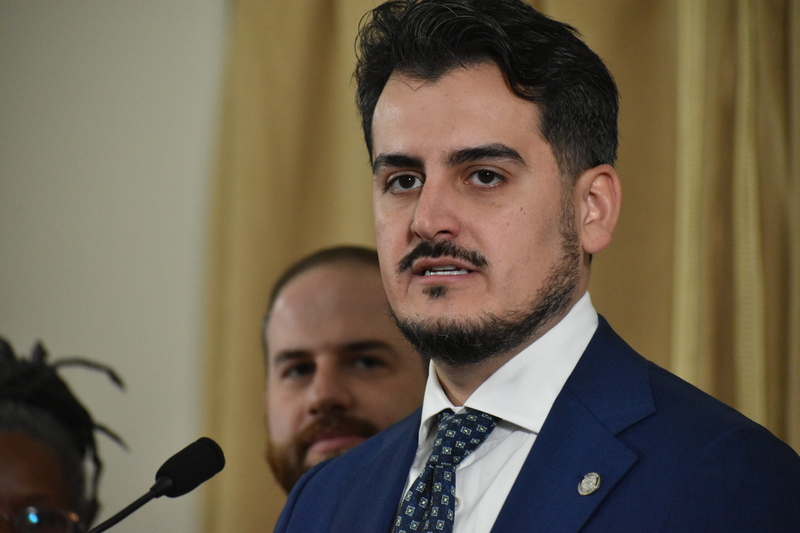
Several members of the House and Senate Democratic caucus held a press conference on Tuesday to reacquaint members of the Capitol press corps and the public with the bills that they said would be a hedge against any federal attempts to strip away more access to the ballot box or key voting rights for communities of color.
The legislation includes four pieces, Senate Bills 961, 962, 963 and 964.
“As Washington continues chipping away at fundamental voting protections, it’s up to the states to stand up and ensure our elections remain free, fair, and accessible to all eligible voters,” state Sen. Darrin Camilleri (D-Trenton), who is leading the effort, said. “Here in Michigan, we’re taking that responsibility seriously. We’ve made registering to vote easier, expanded access to early and mail-in voting, and now, with the Michigan Voting Rights Act, we’re protecting voters from discrimination and helping ensure every community receives fair representation.”
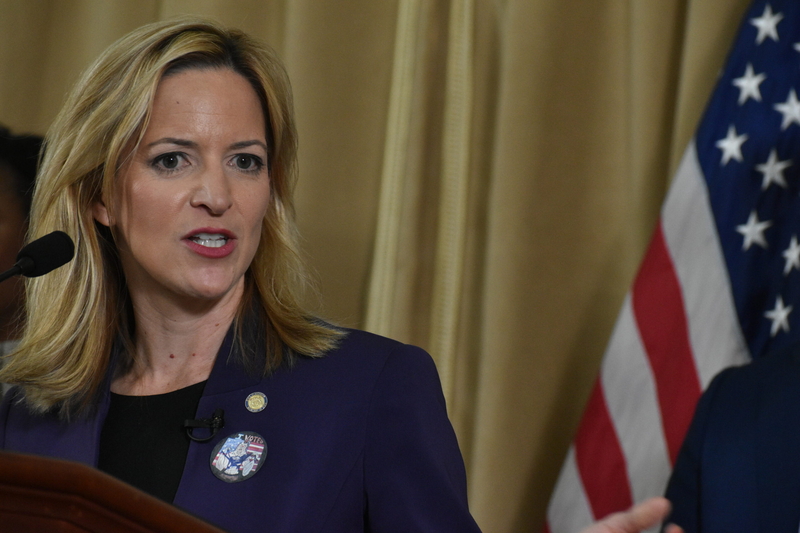
Secretary of State Jocelyn Benson was also present at the press conference.
“As secretary of state and Michigan’s chief election officer, I will stand up to anyone who tries to silence your voice or block your vote. But protecting democracy takes all of us. We cannot stand by in this moment,” Benson said. “Now is the time to pass a Voting Rights Act for Michigan to restore the voting protections that the U.S. Supreme Court eviscerated. History proves that when we stand together and refuse to back down, we win.”
The package’s sponsors noted that Benson and other advocacy organizations had a hand in developing the legislation.
Why was it so important to protect the provisions now-excised from the Voting Rights Act?
According to the Brennan Center, Section 2 of the act was the main “sword” used by states, their federal counterparts and the courts to “battle against voter discrimination.” It allowed both the U.S. Department of Justice and average citizens to challenge election laws and new legislative maps forged through the decennial redistricting process if they had racial biases or racially discriminatory effects.
When Michigan adopted a constitutional amendment to allow for independent citizens redistricting, free from the influence of a politically-minded state Legislature, it did so with provisions to mirror the federal act and its subsequent sections.
That posed some difficulties when a group of Black former lawmakers and private citizens challenged the Michigan Independent Citizens Redistricting Commission maps because they used race as a primary factor when drawing new lines for the Detroit area. Those lawmakers and citizens won, causing a wholesale redraw of seven state House districts and six state Senate districts.
Although the Agee v. Benson lawsuit ultimately rested on the Equal Protection Clause of the U.S. Constitution and the 14th Amendment, the plaintiffs did raise Section 2 concerns.
The Callais decision essentially rewrote Section 2 to allow for racial discrimination and partisan gerrymandering, the Brennan Center noted. Camilleri on Tuesday went further and called the court’s decision in Callais a “death blow” to Section 2. He also said he was disappointed that their position has turned urgent following the court’s action.
“We tried very hard, got very close. We passed it out of the House Elections Committee before, and our goal this year is to obviously do it again, pass it again, and get this bill signed into law,” Camilleri said. “We, the secretary, and I talked about this a long time ago, and this is why we introduced this legislation last term, is because we knew that these threats were coming. We’ve seen other cases where the federal VRA has been diminished by the U.S. Supreme Court. It is easy to predict where this court is going, because their only goal is to reduce the rights of American citizens.”
Camilleri said he hopes that the public and his colleagues on the Republican side of the aisle will see the groundswell of disdain for the court’s decision and support enshrining stronger voting rights, and those in line with the intent of the original Voting Rights Act, in Michigan.
“What we have learned from this federal Supreme Court is that the states can act. So, we are saying today that the state of Michigan must act,” Camilleri said. “We have to do more to protect the voting rights of our people in this great state, and that’s what we’re going to do with the Voting Rights Act.”
State Sen. Jeremy Moss (D-Bloomfield) said Michigan has made large strides in protecting residents’ right to vote, but the state still faces current and potential threats if the high court continues to roll back other key civil rights laws.
“Still, we face chaos from Washington and with a President threatening to intervene in state-run elections and a Supreme Court that gutted the federal Voting Rights Act,” Moss said. “Our Senate majority is stepping up again to ensure voters can participate in our elections without discrimination, intimidation, or any undue burden.”
State Sen. Erika Geiss (D-Taylor) said the state’s Democrats had both the opportunity and responsibility to lead on protecting voting rights here at home.
“The MVRA would be a historic civil rights achievement for our state, protecting the access voters have today while also shielding our elections from future efforts to undermine fairness or restrict participation — particularly in historically disenfranchised communities,” Geiss said. “As other states are moving backward to a pre-1965 era, Senate Democrats are determined to keep Michigan moving forward.”
Skepticism remains on whether the Republican House majority will make the legislation a priority.
A message seeking comment from the office of House Speaker Matt Hall (R-Richland Township) was not returned at the time of publication.
Camilleri said working with the House under Hall has been a challenge, this year and last, when the GOP took control of the gavel in the lower chamber of the Legislature. Still, he said the Senate was going to step up to the plate whether or not the House wants to play ball.
State Rep. Jason Hoskins (D-Southfield), as well as state Reps. Stephanie Young and Tonya Myers Phillips, both of Detroit, will lead the effort in the House.
Hoskins said that the assault on Section 2 and the Voting Rights Act overall smacks in the face of the generations of Black and allied political activists who gave their blood and sweat to enhance civil rights and voting rights across the U.S.
“I wish that I can say that this was some kind of accident, that this was some kind of unfortunate coincidence, that these decisions by the Supreme Court, for example, it’s just them interpreting the law in a fair and unbiased way,” Hoskins said. “But when the outcome is consistently the erosion of opportunity for communities of color, for representation of communities of color, and the erosion of political power of communities of color, it is all but impossible to ignore what’s happening. We know what this is going to look like, we’ve seen this playbook before.”
Hoskins added: “We cannot depend on the federal government to protect our people.”
Lansing, MI