Federal judge strikes down SNAP deadline that put Virginia at risk of added costs
Sep 24, 2026 | 5:28 am ET
Description
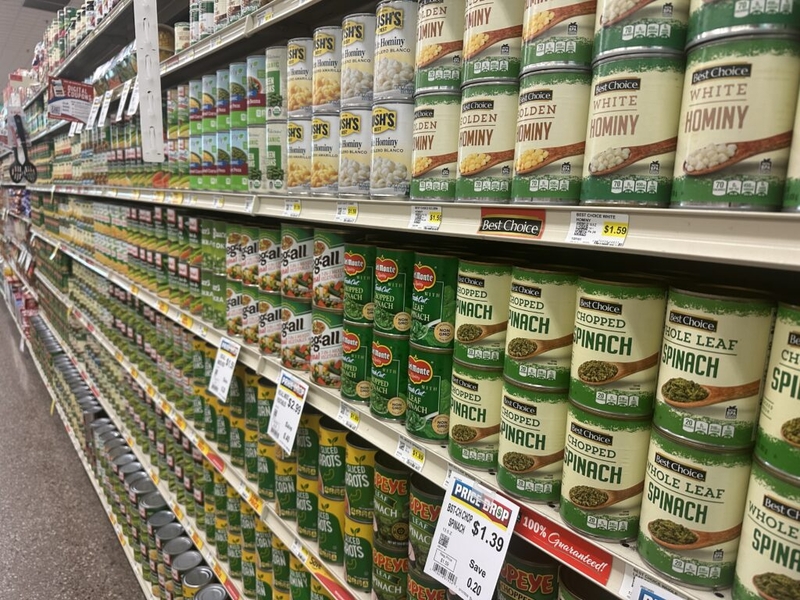
Canned foods line grocery store shelves. A federal judge has struck down Trump administration SNAP guidance that threatened penalties for Virginia and other states. (Photo by Cami Koons/Iowa Capital Dispatch)
Virginia and other states cannot be penalized under a Trump administration deadline that gave them too little time to put new federal food assistance rules into effect, a federal judge in Oregon has ruled.
The decision also rejects federal guidance that would have denied benefits to some lawful permanent residents, including people who previously entered the country as refugees or were granted asylum.
The Sept. 17 ruling resolves a lawsuit brought by a coalition of 22 states, co-led by Oregon and New York. Virginia joined the case in January, after the court had issued a preliminary injunction in December.
For Virginia, the decision removes a potential source of added costs as state and local agencies work through changes to the Supplemental Nutrition Assistance Program, or SNAP.
It does not undo the changes Congress made to the program in its 2025 tax and spending law H.R. 1, including a provision requiring states with higher payment error rates to cover part of the cost of benefits beginning in fiscal 2028.
Virginia Attorney General Jay Jones welcomed the decision in a statement Wednesday, describing access to food assistance as a priority for his office.
“Virginians are already stretching paychecks as far as they can,” Jones said. “We will not stop fighting for the programs and agencies created to support our most vulnerable Virginians.”
Jones’ office announced Virginia’s joining the lawsuit in February, following a review of existing litigation after he took office in January.
At the center of the case was a 120-day grace period intended to give states time to put new SNAP rules in place without mistakes counting against their payment error rates.
The U.S. Department of Agriculture treated that period as beginning July 4, 2025, the day the law was enacted. But according to the court ruling, the agency did not issue its first implementation guidance until Aug. 29 that year and waited until Oct. 31 to tell states how to handle changes to noncitizen eligibility.
That left states just one day under USDA’s timeline to make those eligibility changes. A later memo, issued Nov. 14, told them the grace period had already expired.
U.S. District Judge Mustafa Kasubhai rejected that approach, finding that states could not reasonably be expected to implement federal changes before USDA told them how to do it.
The agency’s position “unfairly exposes Plaintiffs to financially ruinous penalties,” Kasubhai wrote.
He vacated the deadline in USDA’s guidance and ordered the agency to give states 120 days after issuing an implementation memo, along with adequate notice of when changes must be made.
For most states, those deadlines carry potentially significant financial consequences.
Payment errors can include benefits issued to ineligible households as well as overpayments or underpayments to people who qualify. Under the 2025 law, a state’s error rate can determine how much it must contribute toward SNAP benefits in future years.
Virginia’s SNAP error rate was around 11% as of January of this year, and the state’s SNAP Forward initiative is designed to reduce it to 6% or less to comply with the new federal standards.
States argued that counting mistakes made while they were still waiting for federal instructions could drive up those costs. Kasubhai found USDA’s approach particularly difficult to square with the agency’s own timing, noting that it took months to issue some of the guidance states needed.
The ruling also settles a dispute over which noncitizens remain eligible for SNAP.
The 2025 law includes lawful permanent residents among those who may qualify, but USDA’s guidance excluded some people who had gained that status after entering the country as refugees or seeking asylum.
Kasubhai found that their previous immigration status does not disqualify them. He also ruled that those lawful permanent residents are exempt from the usual five-year waiting period for SNAP benefits.
USDA later issued an explanation consistent with the states’ interpretation, but continued defending its earlier guidance in court. Kasubhai found the dispute was therefore not moot and formally declared that lawful permanent residents are eligible regardless of their prior status.
The court fight unfolded as states prepared for a much larger shift in how SNAP is funded and administered.
The 2025 reconciliation bill changed eligibility requirements and shifted more of the program’s costs to the states. Earlier this year, Virginia lawmakers set aside $135 million in the state budget to prepare for a possible SNAP cost share if the state cannot lower its payment error rate to the required level.
About 740,000 Virginians received SNAP benefits in July, the latest month for which the state has published a participation report.
Gov. Abigail Spanberger directed state agencies in August to help eligible Virginians retain food and health benefits as the federal changes take effect. The work includes explaining new requirements to recipients and trying to prevent eligible people from losing assistance because of missed paperwork or confusion over the new rules.
The Oregon case is not Virginia’s only legal fight with the USDA.
The commonwealth is part of a separate challenge to federal conditions on funding SNAP and other programs. In June, a judge temporarily blocked conditions concerning diversity programs, gender identity and benefits for undocumented immigrants while that case proceeds.
Richmond, VA