Federal appeals court weighs Mississippi DEI ban. AG wants judge replaced after use of AI for flawed order
Sep 01, 2026 | 11:36 am ET
Description
Photo courtesy of Mississippi Today
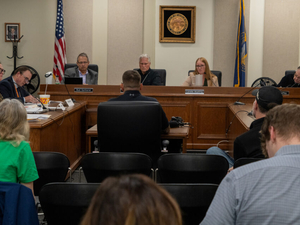
Attorneys argued in a federal appeals court on Monday whether a state law that bans diversity, equity and inclusion programs in Mississippi public schools and universities should be enforced and whether a new lower-court judge should oversee the case.
Attorneys for a group of students, parents and educators believe the law violates their First Amendment rights, while Mississippi Attorney General Lynn Fitch’s office contends state government has the right to regulate educational content in public schools.
The state is asking for a new judge, in part, because U.S. District Judge Henry T. Wingate’s staff last year used artificial intelligence to write a flawed order in the case, which drew national scrutiny, including from the U.S. Senate Judiciary Committee.
Wingate granted a preliminary injunction in the case a year ago, after plaintiffs’ attorneys argued that the law was dangerously vague and violated the constitutional right to free speech.
Fitch’s office argued that the plaintiffs’ interpretation of the law was “overwrought.” Wingate sided with the plaintiffs. The injunction prevents the law from being applied until there’s a final ruling in the case. Fitch’s office appealed that injunction.
Anthony Shults, the state deputy solicitor general, told the three-judge appeals panel that Wingate’s preliminary injunction should be overturned because the restrictions in the DEI law only apply to state institutions and educators – not to students.
He argued that the state, to some degree, has a legal right to regulate the material that public educators teach students. If not, he said the state, for example, would not be able to prevent an educator from teaching something incorrect like “the Holocaust didn’t happen.”
Rob McDuff, the attorney for the educators and students, argued that the law is incredibly vague and overbroad and would cause mass chaos in Mississippi’s public school system.
“What does ‘engagement’ mean?” McDuff said. “Does it really mean you can not discuss issues related to race, sex, color, gender, identity, sexual orientation and national origin even though some of those issues have been part of classes for years, some for decades?”
Judge Catharina Haynes, a President George W. Bush appointee, asked if the two sides could somehow reach a compromise to dismiss the litigation. Shults said he found that unlikely, while McDuff said he would be willing to negotiate.
The attorneys also disagreed whether the appellate court should assign the litigation to a new district judge after Wingate admitted that someone on his staff used artificial intelligence to craft an order.
Last year, after an inquiry from U.S. Senate Judiciary Committee Chairman Chuck Grassley, Wingate admitted that his law clerk used an AI program to write an order in the case. It named defendants and plaintiffs who weren’t parties to the case, misquoted state law and referenced a nonexistent case.
Wingate, a President Ronald Reagan-appointed judge, replaced the order with a corrected version after the Mississippi Attorney General’s office raised concerns and wiped the flawed order from the docket. Initially, he refused to explain the errors and referred to them as “clerical” mistakes.
Though Wingate told Grassley in a letter that he’s taking steps to ensure the mistake isn’t repeated, the U.S. 5th Circuit Court of Appeals’ clerk sent a letter to attorneys in the DEI case on Aug. 21, telling them to prepare to argue whether the case should be transferred to another district judge over the AI blunder.
As AI usage rises in the legal profession, more lawyers are being punished by judges across the country for “hallucinations” or other mistakes caused by the systems. But there’s little accountability when the roles are reversed.
Judge Jerry Smith, appointed by Reagan, asked if McDuff thought it was a “pretty serious matter” that Wingate’s office relied on incorrect information from AI to craft the order.
“It is serious, but it’s not as if AI told Judge Wingate to grant the (Temporary Restraining Order),” McDuff responded.
Shults, though, said he believed a new lower-court judge should take over the case.
The three-judge appellate panel is expected to issue a ruling in the coming weeks. If it reverses Wingate’s injunction, it would likely mean that the Mississippi law can go into effect.
The rest of the case is still playing out in the lower court. Both sides are in the evidence collection phase, or discovery. After discovery, Wingate will conduct a bench trial, where he will issue a final ruling.

Jackson, MS