FDA acknowledges estrogen patch shortage, says it’s working to increase supply
Sep 16, 2026 | 2:01 pm ET
Description
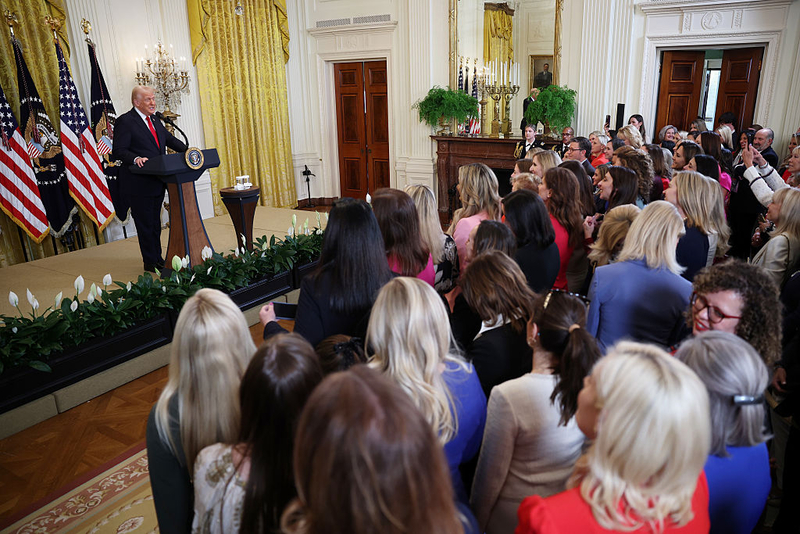
Women gather to listen to President Donald Trump at a Women’s History Month event in the East Room of the White House in March 2025. The U.S. Food and Drug Administration this month acknowledged a nationwide shortage of estrogen-based hormonal patches, which are prescribed for women experiencing symptoms related to menopause. (Photo by Win McNamee/Getty Images)
The U.S. Food and Drug Administration says it’s helping manufacturers increase the supply of estrogen-based hormonal patches and acknowledged a current nationwide shortage as more women seek hormonal therapies for symptoms related to menopause.
In a release earlier this month, the FDA said it is expediting actions to increase supply, and said all six manufacturers are working to expand capacity and prioritize production of the patches.
Shifting attitudes on menopause drive lawmakers to push for new protections
“The FDA views increased interest in menopause treatment as an important development for women’s health and is working closely with manufacturers to help ensure that the supply of estradiol patches keeps pace with demand,” the release said.
Menopause typically occurs between the ages of 45 and 55, according to the National Institute on Aging, when a woman stops having menstrual periods. That hormonal change can cause symptoms such as hot flashes, night sweats, bone density loss, insomnia and more. Estradiol transdermal patches worn on the skin can replace estrogen lost through menopause and reduce those symptoms for some women.
Stateline reported in May that more awareness of menopause and its effects was leading to more states introducing legislation around the topic to mandate more insurance coverage for treatment and to create more workplace accommodations. At that time, the FDA did not list the patches in its list of shortages — this month marks the first time the agency has acknowledged a shortage. The American Society of Health-System Pharmacists first noted a shortage in January, two months after the FDA removed the treatment from its longtime “black box” warning status.
As of May, the National Menopause Foundation said more than 60 pieces of legislation related to menopause had been introduced nationwide this year. Twenty-six, and 26 states have enacted menopause-related laws since 2019, and more bills are expected to be introduced in the upcoming 2027 legislative sessions.
Stateline reporter Kelcie Moseley-Morris can be reached at [email protected].