Families want meeting with UAB officials over organ harvesting of loved ones
Oct 14, 2026 | 6:01 am ET
Description
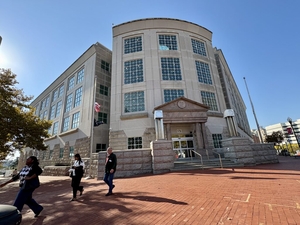
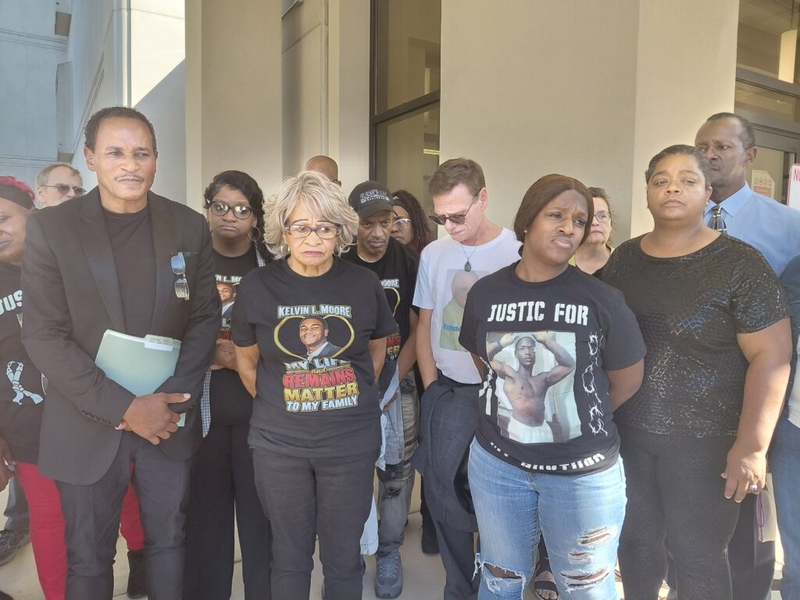
Families of loved ones whose organs were harvested after they died in Alabama prisons prepare to speak with reporters after a hearing on Tuesday, Oct. 13, 2026, at the Montgomery County Courthouse. The families want to meet with officials with the University of Alabama Birmingham. (Ralph Chapoco/Alabama Reflector)
Families of incarcerated Alabamians whose organs were harvested after their deaths demanded a meeting with University of Alabama Birmingham officials Tuesday as delays in their civil lawsuit continue to mount.
Speaking after a court hearing in Montgomery, in which UAB sought to have some counts dismissed, relatives said they wanted administrators to listen to stories of their relatives and demanded justice for their loved ones.
“If the attorneys for the Alabama Department of Corrections and UAB want to prolong this, they are the only ones who are benefitting financially,” said Simone Moore, whose brother Kelvin Moore died in Limestone Correctional Facility in 2023. “I don’t know what they are telling the trustees at UAB, but I believe the trustees should summon the attorneys and say to the attorneys, ‘Give us justification why you are prolonging this process and putting off the inevitable?’”
UAB declined comment on Tuesday.
In 2024, eight families sued the Alabama Department of Corrections, alleging that the department harvested the organs of their loved ones who died while in prison, and sent them to the University of Alabama Birmingham Heersink School of Medicine.
According to the lawsuit, a group of medical students from the school noticed that many of the specimens they worked with in the curriculum were taken from people who died while in Alabama’s prisons. The plaintiffs allege the organs were harvested without their permission, a violation of the law.
Montgomery Circuit Judge J.R. Gaines heard arguments Tuesday over UAB’s motion to dismiss but did not immediately rule on it. A trial in the case is tentatively scheduled to begin December 2027.
Since the original lawsuit, several other families have filed separate actions that have since been consolidated.
The university and the ADOC argued in February 2025 that state agencies enjoy absolute immunity and therefore cannot be held liable in civil lawsuits.
Gaines ruled against UAB and ADOC in April 2025 and allowed the case to proceed into discovery. However, defendants appealed the ruling for one of the lawsuits filed by the family of Charles Edward Singleton, 74, who died while in prison and whose organs were harvested without their permission.
Defense counsel appealed directly to the Alabama Supreme Court. In January 2026, the justices dismissed six of the seven claims, and leaving one related to the Alabama Uniform Anatomical Gift Act (AUAGA). The justices wrote that attorneys for the defendants had not formally requested that it be dismissed in circuit court.
During the hearing Tuesday, UAB and ADOC attorneys argued that the statute of limitations to file a civil claim based on AUAGA had expired and that the officials who signed the agreement are individuals employed by the state and have immunity. Defense counsel also sought to dismiss the additional claims filed by plaintiffs against individuals on the grounds that the families filed their lawsuits after the two-year statute of limitations had expired.
Attorneys for the plaintiffs said defendants do not have immunity from their alleged wrongdoing and that the timeline on the statute of limitations did not begin until the family members knew they had a case, which did not happen until well after the autopsy had been done and was within the statute of limitations.
Several families Tuesday spoke about the grief they experienced knowing that their loved ones’ organs had been removed.
“It has been heartbreaking because every time we go to court, we get to live it and do not see that justice has been done,” said Tyrus Franklin, the brother of Kelvin Moore.
Montgomery