East Texas Republicans ran their campaigns differently than the rest of the state by bucking culture war rhetoric
Nov 12, 2026 | 12:00 pm ET
Description
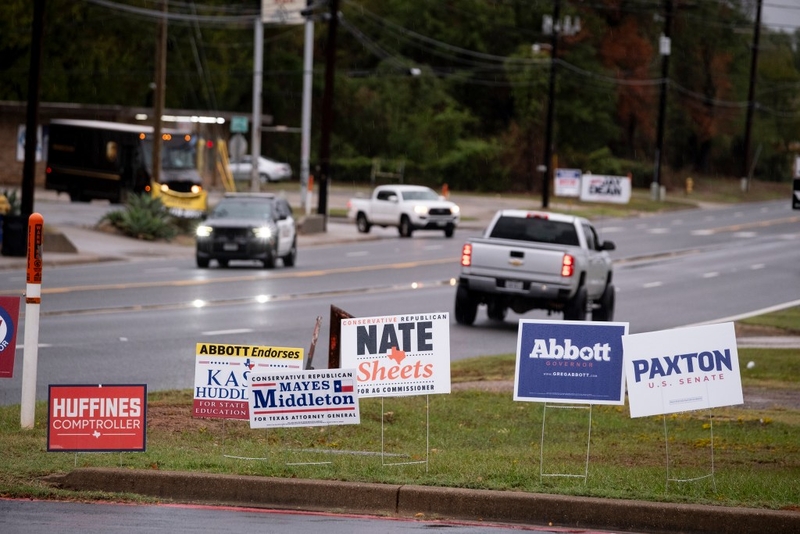
Voters brave the morning rain to cast their ballot at Spring Hill First Baptist church in Longview on Election Day, Tuesday, Nov. 3, 2026. (Michael Cavazos for The Texas Tribune)
Subscribe to The Y’all — a weekly dispatch about the people, places and policies defining Texas, produced by Texas Tribune journalists living in communities across the state.
BURKE — The results of election night hadn’t really sunk in for Bobby Dean, a lifelong East Texan, as he sat for lunch with a friend at a local cafe in the tiny town of Burke.
Burke is a community located in East Texas, a massive region home to nearly 800,000 people. East Texas stretches from Texarkana, which straddles the Texas-Arkansas border, through Miranda Lambert’s hometown of Lindale, to the boggy pinewood forests where Texi-Cajun cuisine was born.
More than a dozen lawmakers, from the state House to the U.S. Congress, represent a wide range of policy positions for this area, and most are Republican.
Republicans typically have no problem winning the public’s votes from outer regions like East Texas. This year, however, many in statewide races lost the midterms because of their messaging, which focused too much on culture-war social issues, according to rural voters interviewed by the Texas Tribune.
But not in East Texas. Diverging from most in their party, East Texas politicians held on to their positions by focusing their campaigns on policy and trust.
Republican candidates who won their U.S. House seats in the region typically saw a little more than 50% of the vote, with a few outliers like Congressman Tom Sell in Lubbock. But state House seats representing East Texas communities were won with between 65% and 80%.
Incoming freshman state representatives Rocky Thigpen, R-Lufkin, and Ray Callas, R-Beaumont, for example, each received close to 75% of the votes. Rep. Cole Hefner, R-Mt. Pleasant, a returning lawmaker, saw nearly 80% of the ballots cast for him. Even in Nacogdoches, where Talarico took 42% of the votes, state Rep. Joanne Shofner received 71%.


State Rep. Trent Ashby, R-Lufkin, who sought state Sen. Robert Nichols’ seat this year, accumulated nearly 70% of the ballots, in line with state Sen. Bryan Hughes, R-Mineola, who won re-election with nearly 72% of the ballots. State Sen. Bob Hall, R-Edgewood, whose district is in both East Texas and the Dallas area, only received 51%.
“These candidates are rooted in East Texas, and it shows,” said Brandon Rottinghaus, a political science professor at the University of Houston. “The best way to win rural votes is to engage in casework, make appearances at local events, build relationships with county officials and advocate for district projects. These are all things that these candidates did, and even in a wave election, that personal connection can create a meaningful amount of ticket splitting.”
Relationships are key in rural Texas. Politicians have to be known by the communities they represent, and residents don’t have the luxury of voting based on culture war issues that dominate national races.
None of the state representative candidates represented real, everyday people to Dean. They were all politicians who had no clue what life was like for a regular Texan, he said.
“They wanted to make you think everything looks good, and it’s not,” Dean said. “It’s a struggle right now. I feel bad for the young kids out here trying to start out right now, I mean even buying groceries, and it’s not getting better.”
Not running on a “statewide Republican brand”
East Texas lawmakers who won this cycle said they stuck to key issues that affected voters at their dinner tables. Affordability, water and housing were among the most important issues, as were common-sense responses to the explosive nature of AI.
But most importantly, they said they were present at community events long before the election cycle started. They’ll have to maintain those relationships over the next four years if they want to stay in power.
“Frankly, I think that is the most important thing to do: be in front of your constituents, be present and working daily for them, and then communicate,” said Congressman Nathaniel Moran, R-Tyler, who won his election against Yolanda Prince with nearly 70% of the vote across a section of East Texas.
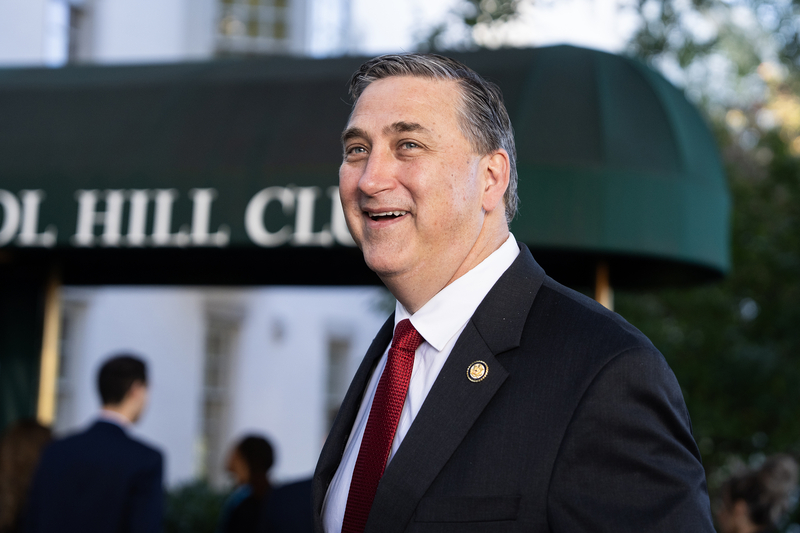
Moran was one of few Republican outliers vying for a U.S. House seat whose votes tallied higher than 60%.
East Texas wasn’t immune to the general shift left in the latest midterm election that ultimately turned Texas blue. But some practices helped maintain the Republican stronghold behind the pine curtain.
The region was built almost preemptively to serve as a Republican stronghold through redistricting and an understanding of the voters who lived in the area, said Mark Jones, a professor in the Department of Political Science at Rice University.
“The districts in East Texas were drawn to provide a substantial buffer for Republicans, so they already had a large advantage — or a large cushion — and were able to therefore withstand the blue wave better,” Jones said.
The Hispanic or Latino population that shifted politics in other parts of the state isn’t as strong in the East. The majority of East Texas voters are white, blue-collar workers with strong Christian backgrounds — a demographic that tends to vote Republican. There were still parts of the region that shifted more strongly to the left, such as Nacogdoches County, where the voting pool also includes college students. But many communities remained red.
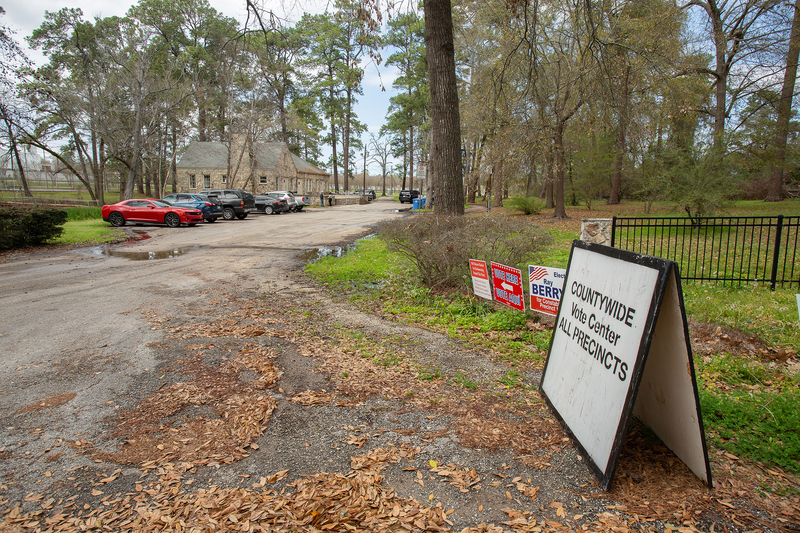
Candidates told the Texas Tribune they believed their success had to do with the way they handled their campaigns. They focused on local issues and were well-known voices in their communities before the election cycle began.
For example, Thigpen spent more than a year meeting with small groups planning service projects in old church buildings, listening to hundreds fighting their city council members about data centers and Flock cameras, and standing among the thousands who attended rallies for water protections.
“My wife told me one time that I could say no to attending something. I can’t. I can’t say no because my constituents expect me to be there,” Thigpen said.
East Texas candidates who established themselves within the community so they were seen as more than “merely Republicans” withstood the rejection of the partisan politics that colored this campaign season, said Rottinghaus.
Men in women’s sports, God’s gender and the potential for Sharia Law are fine fodder for arguments over Thanksgiving dinner across much of the region. But Texans, regardless of their political stance, face the same struggles. Groceries are expensive, and so is gas. They’re worried about who will pump water from their lake and what that property down their county road will be turned into. And they want to know how much property taxes will go up this year or if they can expect some relief.
“I fully think that’s the difference between how these Republicans survived and their colleagues didn’t,” Rottinghaus said. “They localized the election instead of simply running on a statewide Republican brand.”
Will East Texas ever go blue?
East Texas wasn’t always deeply red. In fact, community members who in 2024 proudly flew Trump flags also voted for Charlie Wilson – a 12-term Democrat – in the 1980s and 90s.
Despite that shift, Republican dominance really started in the 1960s as the Civil Rights Movement took hold, Rottinghaus said.
Since then, East Texas has become a Republican stronghold, with redistricting further solidifying the party’s grip on the region. By 2011, after local Angelina County leaders had also switched to Republican parties, easily 90% of the region was red with small blue islands scattered throughout.
This set up Republican candidates to come into this election cycle with built-in name recognition, instilled trust and deeper pockets than their Democratic counterparts.
Democrats didn’t expect to win in the metro areas where they actually succeeded, let alone East Texas, said Jones of Rice University. As a result, the national party didn’t prioritize those seats the same way Republicans did.
The party did, however, find a Democrat to run in every state and U.S. seat, a task that has not been accomplished in recent years — and it showed.
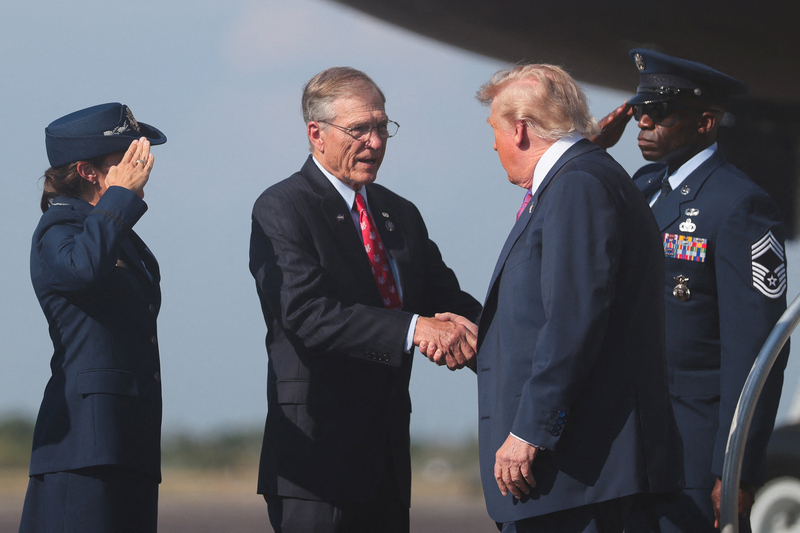
There were races, such as U.S. House District 36, where Republican Brian Babin scraped together just 54% of the vote compared to nearly 70% of the vote in 2024. His opponent, Rhonda Hart, didn’t win but her campaign destabilized the idea that this district in East Texas is deeply red.
Turning East Texas blue is a feat Jones doesn’t believe Democrats can accomplish in four years, but he expects the party will chip away at Republican support in the region to further degrade what has served as an insurance policy for the Grand Old Party.
“For Texas Republicans, East Texas is the base upon which they would rebuild toward the future,” Jones said. “If Texas Republicans start to lose East Texas, then Texas is on its way to becoming a California-style state. It’s not an overstatement to say: If Texas Republicans lose East Texas, then any hope for a return to Republican majority government in Texas is lost.”
Disclosure: Rice University and University of Houston have been financial supporters of The Texas Tribune within the past five years. The Texas Tribune is a nonprofit, nonpartisan news organization that is funded in part by donations from members, foundations and corporate sponsors. Financial supporters play no role in our journalism. Find a complete list of them and more information about our financial and disclosure policies here.
Austin, TX