East Lansing on republished federal list of identified ‘sanctuary’ cities
Aug 06, 2025 | 11:55 am ET

Description
An Immigration and Customs Enforcement officer's badge is seen as federal agents patrol the halls of immigration court in New York City on June 10, 2025. (Photo by Michael M. Santiago/Getty Images)
The city of East Lansing was again placed on a federal list of identified sanctuary cities, which was republished Tuesday by the U.S. Department of Justice after it retracted the initial list months ago.
Republishing the list continues the federal government’s interest in seeking to pressure jurisdictions into dropping policies that shield people from immigration enforcement efforts.
East Lansing was previously on the list, along with Ann Arbor and other Michigan cities, WKAR-FM reported. The new list contains no other Michigan city or jurisdiction.
The department issued the renewed list in a news release along with criteria for why a particular city, county or state was identified as a sanctuary for immigrants and place where they could possibly evade federal law enforcement.
President Donald Trump’s Executive Order 14287, signed in April, was aimed at “protecting American communities from criminal aliens.”
It asserts that some state and local officials were using their authority to violate, obstruct and defy federal immigration enforcement laws, and that it was imperative for the federal government to restore enforcement efforts across the nation.
East Lansing officially declared itself as a sanctuary city via a resolution passed by the East Lansing City Council in 2023.
Several messages seeking comment from the city of East Lansing were not returned at the time of publication.
Official sanctuary cities are rare in Michigan, although some cities like Lansing operate as unofficial sanctuary municipalities, instructing law enforcement not to inquire about a person’s immigration status unless necessary. Other municipalities like Detroit and Bay City have adopted “welcoming” statuses to welcome individuals of all immigration statuses.
Michigan House Republicans passed legislation in May to ban sanctuary cities and counties that shield noncitizen residents from federal immigration enforcement, as well as bills barring those residents from receiving social welfare services. All three bills have yet to receive a hearing in the Democratic-controlled Michigan Senate.
Trump directed Attorney General Pam Bondi and the department to create a list in collaboration with the U.S. Department of Homeland Security.
“Sanctuary policies impede law enforcement and put American citizens at risk by design,” Bondi said in a statement. “The Department of Justice will continue bringing litigation against sanctuary jurisdictions and work closely with the Department of Homeland Security to eradicate these harmful policies around the country.”
Case in point: the department said it recently filed several lawsuits seeking compliance with federal law, including one in New York on July 24. The department’s tactics appear to have already intimidated one city, Louisville, Kentucky, into action, with the city’s mayor revoking sanctuary policies following a threat of legal action from the federal government.
The department noted that its list was not exhaustive and will be updated as federal authorities gather more information.
Several factors informed the department’s decisionmaking on the list. A breakdown of those factors provided by the department show that the jurisdictions’ public declarations, certain laws and ordinances and restrictions on sharing information with federal authorities are the top three characteristics of a supposed sanctuary city.
Non-cooperation with federal law enforcement, limits on ICE detainers, jail access restrictions and the presence of immigration community affairs offices were also noted aspects of what Trump’s administration considers a sanctuary for immigrants.
The department also noted that it was willing to assist any locality, county and state get off the list, but that would require the elimination of their sanctuary policies.
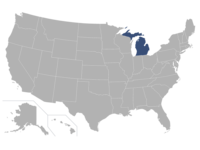
Lansing, MI