Don’t just say ‘no’ to school referendums and data centers
Sep 25, 2026 | 5:00 am ET
Description
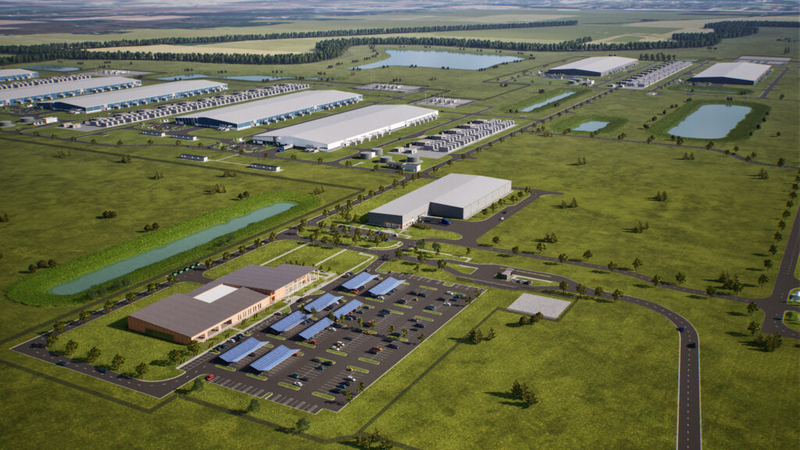
A rendering of Meta's massive data center campus coming to Lebanon. (Courtesy photo)
What do school referendums and data centers have in common? They are all unpopular but not all of them are bad.
That’s why I hope Hoosiers consider each proposal on their individual merits instead of automatically opposing all of them. And there are key things you should think about when weighing the pros and cons.
Let’s start first with referendums.
Thirty-eight school districts in dozens of counties are asking voters this November to approve a property tax referendum that will give their schools additional money. Most of these are for operational dollars, but there are a few construction and public safety levies as well.
This is a record for one election in Indiana — spurred by lawmakers’ recent limits on when school districts can take these requests to the voters. The new law restricts the requests to once every two years rather than the previous maximum of twice a year.
Americans for Prosperity’s Indiana chapter launched a targeted digital ad campaign urging voters in counties across Indiana to vote no on school property tax referendums.
“Government spending accountability should come before tax increases, and we’re making sure voters have the facts they need before they go to the polls in November,” the group said.
This approach is bad for Indiana. Each community has its own needs and voters should consider that when casting their ballots.
Here are a few things I think provide important context for referendums:
- Has the school district asked for a referendum before? It could be that a district has already cut costs and now needs an infusion of funding to accomplish its goals.
- Does the referendum actually raise property taxes? Many of the proposals this year simply renew an existing levy that is set to expire. This means you won’t see an increase (which also means you won’t see a decrease.) Sometimes a district might have a bond payment obligation ending, so the referendum would simply takes its place on your bill.
- What will the money be used for? Paying for an extravagant new building is different than continuing base course offerings or even offering new programs for students. A public safety referendum could hire school resource officers or harden schools against outside attacks.
- Is the district responsible with its dollars? This is in the eye of the beholder, of course, but I hope you look into whether its budget has grown at an unreasonable rate or if administration salaries are out of line. If district leaders have been good stewards, then take that into consideration.
- What are the costs of saying no? In some areas, a referendum could lead to teaching jobs or an arts program being eliminated — especially if an existing referendum isn’t renewed. In others, a defeat could mean remaining status quo but forgoing new opportunities.
Now, let’s talk about data centers.
Hoosiers have revolted against the hyper-scale projects that eat up electricity and water. Dozens of counties and communities have put temporary or permanent restrictions on developments. Many state Republicans, however, support their growth and President Donald Trump believes they are important to win the global artificial intelligence race with China.
So, here are a few things to consider if a data center is proposed near you.
- What benefits will flow to the community? This could include direct payments from the company, increased property tax revenue and even jobs. Employment is high during construction but generally dips to lower levels for operation. I live in Lebanon and Meta is spending millions on roads, infrastructure and community programs.
- Are they paying for the investments in the electric grid needed to operate? This is important so those one-time upgrades don’t fall on existing customers. Companies in the beginning of the data center boom weren’t paying those costs. After residents pushed back, lawmakers established a threshold of covering 80% the costs, whether it be new generation or transmission lines. And many are paying 100%.
- What about the water? Some communities have plenty of water resources and some don’t. If water supply is ample, that is a big part of the equation. But if, like Lebanon, water has to be brought in via an extended pipeline, it might not be the right fit. And where will the wastewater go? These are all considerations you should research.
- Where is it located? Many of these data centers are gobbling up productive farmland, which I see as a negative. Or they are located close to homes where residents might be bothered by the noise and additional traffic — especially yearslong construction traffic. Vacant industrial land seems a better fit or at least land already zoned for business activity.
I don’t think either referendums or data centers are inherently bad if you consider all the factors involved and allow local communities to decide.

Indianapolis, IN