Distant polls, spotty mail obstruct Native American voting 6 years after law meant to help them
Nov 06, 2026 | 8:00 am ET
Description
Six years after California passed a law requiring the secretary of state to form an advisory committee to help improve voting access for Native Americans, the committee still has not been formed, the secretary of state’s office confirmed to CalMatters/ICT.
Advocates from the California Native Vote Project said they received some reports of problems at polling sites on Election Day, and say the underlying barriers the committee was meant to address, including distant polling places and unreliable mail service, remain.
A spokesperson for Secretary of State Shirley Weber who declined to provide their name said in an email that the office plans to begin recruiting members “after the November election.”
“It’s really frustrating,” said Calvin Hedrick, director of policy for the project, an advocacy group promoting voting rights for Native American peoples in California. “It’s a bummer to have to fight for something again after it was already promised by statute.”
A promise on paper
The law, Assembly Bill 2314, which called for a Native American Voting Accessibility Advisory Committee, was authored by Assemblymember James Ramos and sponsored by then-Secretary of State Alex Padilla.
“California’s nearly three-quarters of a million Native Americans deserve to have their voices heard in our democracy,” Padilla said in an August 2020 statement released by Ramos’ office.
Anthony Roberts, Chairman of the Yocha Dehe Wintun Nation, which supports the law, said in 2020 that a lack of polling places and the rejection of certain types of identification remained obstacles. “Until those obstacles are addressed, California’s Native Americans remain at risk of being excluded, with no voice in government, the education of their children and other vital services.”
The law required the committee to set guidelines for reaching Native American voters, recommend public service announcements at least 45 days before elections, suggest ways to improve Native American poll worker recruitment, and advise on language assistance and plain-language materials. But the committee’s recommendations would be nonbinding. The secretary of state was required only to consider them.
The law set no deadline for forming the committee, provided no funding and did not require input from tribal governments or groups.
Members, who are to be chosen by the secretary of state, would have to have experience with voting rights or be county elections officials. The law also set no meeting schedule. By contrast, the state’s separate Language Accessibility Advisory Committee, which is supposed to ensure voters can understand the voting process, must meet at least four times a year.
“Lacking those things, it’s pretty clear it’s just going to end up in the dustbin,” said Allison Neswood, senior staff attorney for the Native American Rights Fund, an advocacy group promoting the interests of Indigenous communities. Neswood is Diné.
Ramos, who is Serrano/Cahuilla and a lifelong resident of the San Manuel Indian Reservation, was not available after multiple requests from CalMatters/ICT. “It’s been difficult finding a time, but still working on it,” wrote a spokeswoman in his office, in October. A Democrat from San Bernardino, he is the first and only Native American from a California tribe elected to the Legislature.
The state’s response
A spokesperson for Weber acknowledged the committee does not exist, in response to questions from CalMatters/ICT in October. The office said it has been “working closely with Native American advocates to review our committee-related documents” and is planning to recruit members.
The secretary of state’s office did not respond to additional questions about why it had not done anything for six years, who it had contacted for recruitment, whether it had requested any funding and whether it had any documents available for review.
Hedrick said his organization, which promotes voter registration and provides nonpartisan voting information in California Native communities across the state, has been doing its own voter outreach without support from the secretary of state’s office. With only two employees to cover all of Northern California, he said, his team is “stretched really thin.”
Resources from a committee would be an important boost to his group’s efforts, Hedrick said.
“It’s something we need to really be pushing for over the next few years — and we can’t allow them to rest and forget about it,” said Hedrick. “We can’t allow them to promise us it’s something they’re going to do next year, we need to hold their feet to the fire and make sure it gets done.”
In California, the state’s broader responsibilities for ensuring voter access sit mostly with the secretary of state, who is the chief elections officer and must make reasonable efforts to promote voter registration and encourage eligible voters to cast ballots. But when it comes to where people vote, the state points to the counties.
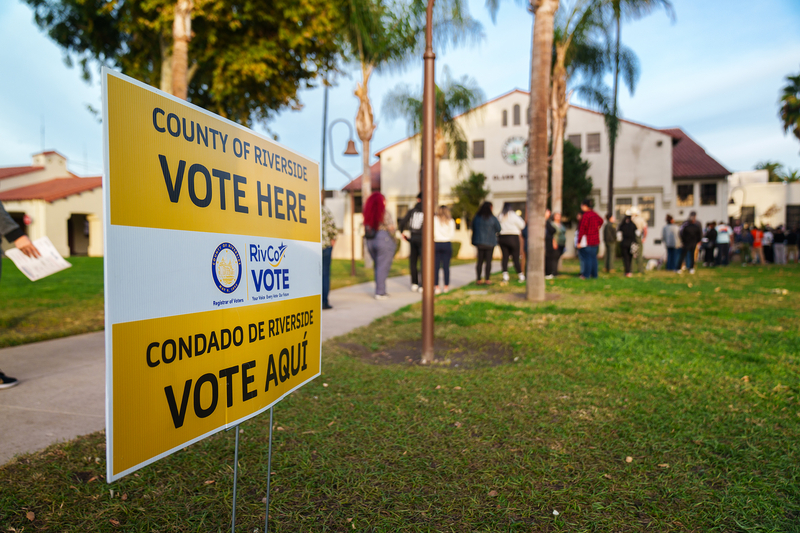
The state sets guidelines for drop boxes, including the minimum number per county. But county election officials decide where they go, whether to add any beyond the minimum and when they’re open. Unlike some states, California, which shares geography with 109 federally recognized tribal nations, does not mandate that there be polling locations on tribal lands.
Barriers that remain
In Shasta County, a monitor for the Native Vote Project saw a citizen of the Redding Rancheria turned away from the polls on election day. He later reported he was able to vote.
On the Hoopa Valley Indian Reservation, the largest reservation in the state, advocates coordinated a vehicle caravan to transport elders from rural areas of the tribe’s lands to reach the only polling site on the reservation.
The Native American Rights Fund produced reports in 2020 and 2026 that found significant barriers to political participation for Native Americans and Alaska Natives. The 2020 report drew on testimony at nine hearings, including two in California. The 2026 report analyzed federal election data from 2020 to 2024, but did not study any California counties specifically. Hedrick said that he continues to hear complaints from Native Americans, especially those in rural communities, about the time and resource costs of voting.
“For people who live in a city where their ballot box is often a 10-minute drive or less, it’s unfathomable to think someone would have to drive an hour or more to vote — but that’s the reality in many of our communities,” said Hedrick, who is Mountain Maidu.
Since 2021, California has mailed a ballot to every active registered voter. Advocates say that doesn’t fully address the gaps, because tribal communities, particularly in rural areas, often lack reliable, timely mail service. Some reservations lack even a single polling place or ballot box, forcing tribal citizens to take time off work and drive miles out of their way to cast their ballots.
A 2024 article in the Harvard Civil Rights-Civil Liberties Law Review found that voting by mail in Indian Country was “plagued” by overlapping barriers, including a lack of post offices.
“The inadequate postal infrastructure in Indian Country immediately impacts the ability of voters to receive and cast a ballot via mail,” wrote Torey Dolan, a Choctaw citizen and associate law professor at the University of Wisconsin-Madison.
Native Americans were not granted automatic U.S. citizenship until 1924 and were not able to vote in all states until 1962. According to Ramos, they often live long distances from post offices: About 89% of current post offices were established before 1920, research has found.
Registering is also difficult. Many Native people who live on tribal lands in California have no permanent address, which makes it hard to place them in a voting precinct. Tribal communities in California have also historically had less access to internet and broadband services.
At least one California tribe successfully brought voter services closer to its citizens in recent years. In September 2023, the Shingle Springs Band of Miwok Indians accepted a designation from the secretary of state making its tribally run health center a voter registration agency under the National Voter Registration Act. Weber said at the time it was the first such designation of a tribal medical facility in the country.
What the committee could do
Hedrick and his colleagues at the California Native Vote Project travel to tribal communities across the state, engaging with voters and educating them about the electoral process. He also meets with people who haven’t registered to vote and works to better understand what’s keeping them from doing so.
If the committee were established it could not require counties to open voting sites. But Hedrick said if the committee existed, it could do similar work and could play an important role in building trust between the state and communities that have long felt ignored.
That trust is thin, Neswood said, in part because Native peoples rarely see themselves reflected in government.
“If Native people consistently see that their voices and their priorities and their people aren’t represented in these institutions, it just reinforces the lack of trust,” Neswood said. “We’re fighting an uphill battle.”
Hedrick said rebuilding that trust starts with showing up in tribal communities.
“We need people out in tribal communities listening to voters and talking to people who aren’t registered — I think that’s something this committee could be doing,” Hedrick said. “It became statute in 2020, we’re talking in 2026, and (the committee) still hasn’t happened yet and it’s not happening now.”
Sacramento