Developers eye Native nations, tribal communities for new data center projects
Sep 04, 2026 | 6:00 am ET
Description
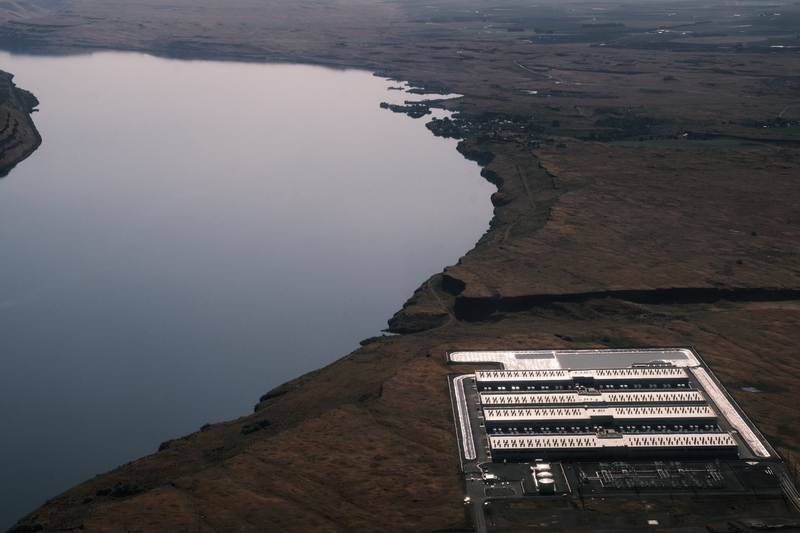
An explosion of data center facilities, including the one pictured here in northeast Oregon on May 18 have been built along the Columbia River Gorge during the last few years. (Photo by Jordan Gale/Oregon Capital Chronicle)
Officials in Page, Arizona, a small city near the Glen Canyon Dam, passed a land sale agreement last fall that establishes a framework for future construction of a data center.
The sale of the 500-acre parcel about a mile away from the Colorado River’s Horseshoe Bend — one of the most visited natural landmarks in the Glen Canyon National Recreation Area — to Huntley LLC for $7 million specifies that the company intends to build a 1 gigawatt data center.
Residents have been pushing back and launched a petition earlier this year to stop the planned data center from being built.
About 5 miles south of the city, a group of tribal leaders began to take notice. The proposed data center borders the LeChee Chapter of the Navajo Nation, located in the northwest corner of the Navajo Reservation.
Like most of Arizona, the community has run into challenges from severe drought conditions this year. After learning how much water it could take to cool the thousands of servers housed in the massive facilities, members of the tribe grew increasingly concerned about the proposed data center.
The LeChee Chapter also passed a resolution opposing Page’s decision to sell the land to the developers.
“Water is precious to us,” said Irene Whitekiller, president of the LeChee Chapter. “ … Water is used for everything, like with holy water in church and traditional ceremonies. But with a data center coming in, it's going to take a lot.”
Data center developments are continuing to spread throughout the country as the demand for digital processing power grows — especially as artificial intelligence systems become more prevalent. But in addition to concerned residents, some federal, state and local officials are worried about how data centers could drive up utility bills, strain water resources and hurt the environment.
And now, tribal communities are grappling with the fact that more developers are eyeing their land for future data center projects.
“Because of the history with treaties, removal actions and those sorts of things, tribal lands are probably more pristine and not as developed as other state, federal or local government lands,” said Tana Fitzpatrick, the associate vice president of tribal relations at the University of Oklahoma and a member of the Crow Tribe in Montana and a descendent of the Lakota Sioux, Ponca and Chickasaw nations.
“That might be one of the reasons why tribes are finding that people are coming and wanting to build data centers on their lands.”
Some tribal leaders are also concerned about President Donald Trump’s ability to alter regulations related to federal lands. While most of Trump’s executive orders don’t apply to federal land belonging to Native nations or reservations, Whitekiller said that could change.
In July, for instance, Trump issued two executive orders to revise the boundaries of the Grand Staircase-Escalante National Monument and the Bears Ears National Monument so the lands could be “put to a higher-priority use,” such as extracting minerals to invest in national security. The orders faced backlash from environmental advocacy groups and Native nations.
“We’re trying to educate our people to say no to this kind of thing (data centers) because we want the land the way it is. This is a federal land that we live on, but Trump doesn’t respect that,” Whitekiller said.
In March, the Seminole Nation of Oklahoma became one of the first Native nations to enact a complete moratorium on data centers. Honor the Earth, a national nonprofit organization advocating for the protection of Indigenous sovereignty and the environment, has helped communities like the Seminole Nation organize against data center development on their land.
Some companies see tribal land as a regulatory dream, said Ashley Leitka, an enrolled member of the Absentee Shawnee Tribe of Oklahoma and the director of the department of sovereignty and self-determination at Honor the Earth. She is also part of the Oglala and Sicangu Lakota nations.
While municipalities are pushing back against data center developers by tightening codes and enforcing stricter regulations, she said some companies are hoping that tribal nations will be more lenient. As sovereign, self-governing nations, tribes are not required to follow all state and local laws.
“These companies are really preying upon the lack of economic diversity in our tribal nations,” Leitka said. “The reality is our tribal leaders are given a mandate to care for their nations, and whenever there’s opportunities, it’s pretty difficult for them to assert why they would not consider it. I just think it’s several things happening at the same time — that makes tribal nations prime targets.”
A handful of other tribes have taken action against data centers. In July, the Kickapoo Tribe of Oklahoma’s Business Committee formally declared its opposition to construction and operation of data centers on its lands.
And in August, following a report detailing the impact of data centers on economy and environment, the Cherokee Nation announced it would be banning hyperscale data center development on tribally owned and trust lands, according to the nation’s official news site.
However, some tribes are considering how data centers could help their people. Colusa Indian Energy, for instance, has become one of the only tribally owned microgrid companies helping lead data center partnerships with Native nations.
And in the past few years, the U.S. Department of Energy’s Office of Indian Energy Policy and Programs has encouraged tribes to consider data center projects by offering financial and technical resources to assist.
Data centers are a significant way to bring economic opportunities to tribal communities, said Eric Mahroum, the office’s director. Mahroum said data centers also offer a number of jobs to community members.
“I think that’s why a lot of private companies are approaching tribal lands and the tribal governments to partner with them,” he said. “And we’re here to help them with that. I’ll be the first to say that there’s a lot of private companies and a lot of bad players that want to take advantage of the tribes. But then there’s a lot of great players that want to help the tribes.”
As more communities push data center developers out and states consider rescinding tax breaks, some of the country’s top tech developers and data center companies see tribal land as an easier option.
Microsoft, for instance, recently proposed a data center project in Fernley, Nevada, about a 10-minute drive from the boundary of the Pyramid Lake Paiute Reservation, according to Honor the Earth’s Data Center Tracker. The company’s community-first AI initiative outlines steps Microsoft will take to be a “good neighbor” in the communities where they build, according to an unsigned written statement from the company.
In the meantime, tribal leaders have expressed the need to continue studying the impacts of data centers through task forces. And now, more Native nations are considering moratoriums to allow time for more discussions, said Fitzpatrick, of the University of Oklahoma.
“In general, every tribe is their own sovereign nation,” Fitzpatrick said. “Regardless of the issue, every tribe is going to have their own ways of governing, choosing their priorities and looking at their citizens’ priorities.”
All States Newsroom content is free to republish. Read our republishing policy for more information.