Developers big and small to compete for Wilmington’s $8.4M housing subsidy
Aug 26, 2026 | 6:00 am ET
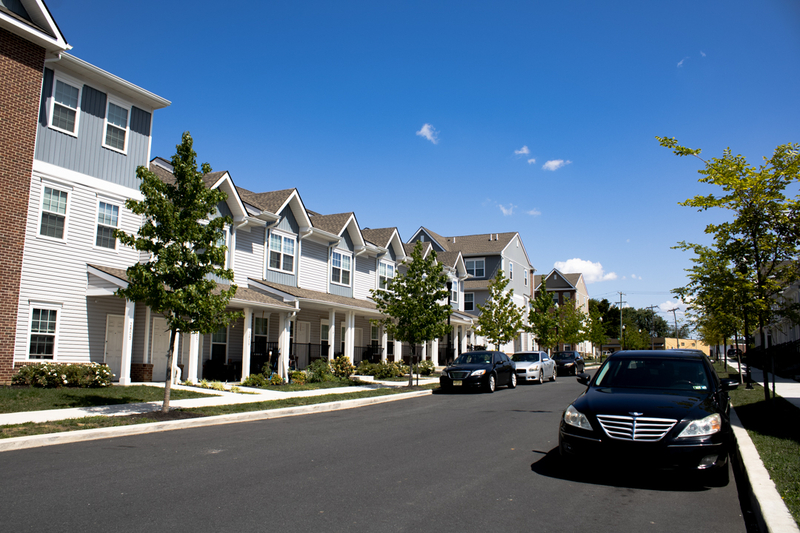
Description
Photo courtesy of Spotlight Delaware
Why Should Delaware Care?
Wilmington’s elected officials have spent much of the past year debating how the city should address its affordable housing crisis. In his second year in office, Mayor John Carney set aside more than $8 million in the city budget for subsidies aimed at encouraging developers to build affordable housing.
Wilmington Mayor John Carney opened applications this month for developers seeking a chunk of an $8.4 million fund to build new affordable housing in the city – a move that pushes forward a plan passed with the city’s 2027 budget following a contentious debate in the City Council.
And as developers return applications in the coming weeks, the city will get a glimpse of how many homes the new dollars can actually help to build, and whether it satisfies council members and advocates who pushed a different approach to housing.
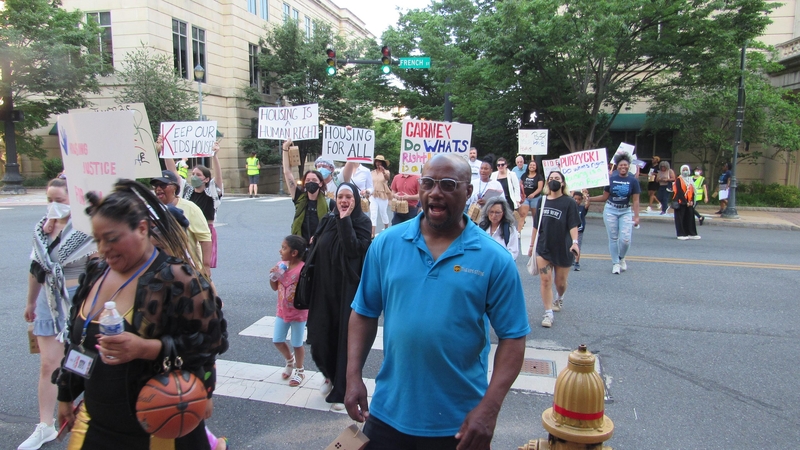
The rollout follows a contentious debate between the mayor’s office and city council members in May over how to spend city dollars on housing. The dispute exposed a divide over whether Wilmington should prioritize funding for affordable housing developers or immediate help for people in need.
That debate itself followed increased calls in recent years from housing advocates for the city to provide relief to residents who have been squeezed by rapidly increasing housing costs.
Ultimately, the $8.4 million the City Council approved is about half of what Carney proposed to pull from the city’s tax stabilization account, a compromise that emerged after council members raised concerns about drawing down such a large amount from city reserves.
“Strong neighborhoods begin with stable housing,” Carney said in an Aug. 4 statement. “This funding represents our commitment to creating and preserving affordable homes that allow families, seniors, and working residents to remain rooted in our communities.”

Bob Weir, city director of the Real Estate and Housing Department, said officials hope to build about 500 new affordable housing units with the funding.
“We’d like to show City Council that if you give us the money, we can make it work on the street,” said Weir during an Aug 11 pre-application meeting for developers.
Developers have until Aug 31 to submit their applications.
What developers need to qualify
Two weeks ago, the city hosted a pre-application meeting for interested developers, which drew more than 70 participants, including prominent developers, such as Woodlawn Trustees and Habitat for Humanity New Castle County.
According to Weir, the city is looking for developers with “shovel-ready” housing projects, meaning they already control the property, have secured other funding sources, and are prepared to begin construction.
The money will be distributed based on each approved project’s needs, Weir said.
The city is requiring the new homes to remain affordable for residents at 80% of area median income, which for the Wilmington area translates to a maximum annual household income of $98,150 for a family of four under U.S. Department of Housing and Urban Development standards. The units must also remain affordable for 10 years.
Developments that consolidate multiple units under a single roof will also have priority, Weir said, calling them easier to manage and more cost-effective. Weir also noted projects are allowed to incorporate market price units.
Weir says he hopes awards will be given out within 30 days from the date of application submissions.
Developers are also expected to show a track record of completed projects, though it’s unclear whether that standard will effectively favor large, established developers over smaller ones.
Rich Pyrzwara, president and CEO of the Todmorden Foundation and Woodlawn Trustees, says his company is applying for dollars to build a 56-unit complex in Wilmington’s ‘Flats’ neighborhood on the west side of the city. The project will include over 30 studio units to target seniors and individuals with disabilities who have limited income, Pyrzwara said..
Pyrzwara described the city’s initiative as “healthy” compared to other subsidy programs he’s encountered. He also said that many companies that used to invest heavily in the city have left, making it harder for developers “to get to the finish line without debt.”
“DuPont’s gone. MBNA is gone,” he said.
Pyrzwara said he expects his project to cost about $15 million, with Wilmington’s contribution representing only a fraction of the total. The development involves 11 other funding sources, as well as a bank loan, he said.
He acknowledged that navigating the complex financing needed to complete larger developments could be more difficult for smaller developers without experience in that area. But he said the city’s funding could still be feasible for developers working on smaller-scale projects with fewer units.
While larger, more established developers like Pyrzwara are seeking city funding to help move projects forward, newer developers such as Eric Bell see the program as a potential opportunity to gain a foothold in Wilmington’s housing market.
Bell, executive director of the Bell Community Development Foundation and co-founder of First State Development Partners LLC, is working to acquire a property in Wilmington for a proposed 35-unit affordable housing development, which he plans to submit for city funding.
As a newer developer without an established track record, Bell said the program offers an opportunity for smaller companies to compete, though emerging developers can face additional barriers when it comes to proving their experience and financial capacity. His company is trying to work with more experienced partners on the project to help fill those gaps, he said.
After the city shared a list of participants from a pre-application meeting, Bell said he reached out to eight developers he considered among the most influential but still hasn’t received any responses.
“Somebody has to give us, the little guy, a chance to prove that we can do the things that the big guys can do,” he said.
Carney’s affordable housing plan
The developer subsidy program is one piece of Carney’s $13.1 million housing initiative, which City Council approved this May as part of the city’s budget.
The developer subsidy emerged from a compromise after council members pushed back on the mayor’s original $16 million subsidy plan.
The finalized plan also includes $1.5 million for a community block grant program supporting eviction prevention, homeowner repairs, reassessment reviews and rental deposits. The City Council launched some of those programs last month. Another $500,000 was allocated to support the city’s land bank, which oversees the rehabilitation and redevelopment of vacant properties.
The final component is a $2.2 million Get-a-Lot Program designed to jumpstart construction on vacant, land bank-owned properties. Under the program, the city will install sewer and water lines and complete other pre-development work before turning the lots over to developers.
Weir said the program is expected to launch in October.
Dover