Democrats want to change the rules for recall elections. Voters get their say with Prop. 5
Oct 05, 2026 | 8:00 am ET
Description
In summary
Following the failed 2021 recall of Gov. Gavin Newsom, Democrats had the political will and momentum to call for changes to the recall process. What emerged was Proposition 5 on the November ballot, a measure to change the recall process.
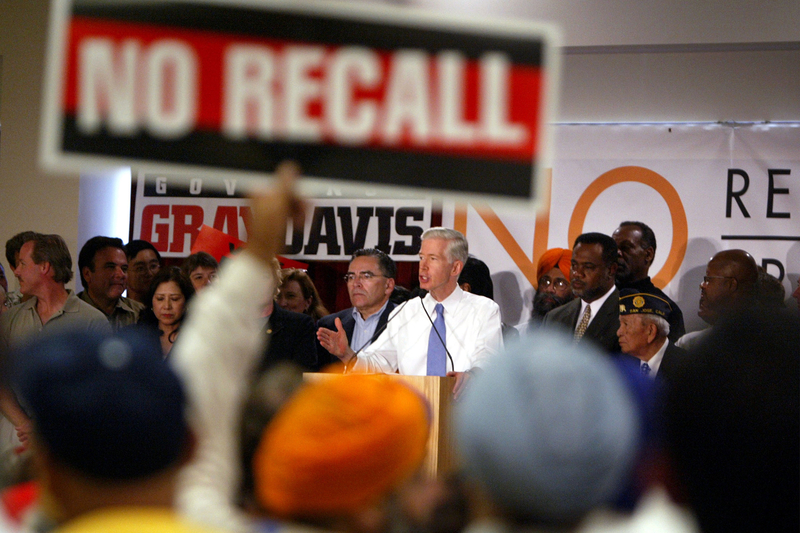
Sacramento State political science professor Kim Nalder was working out at a Sacramento gym in 2003 when she overheard a conversation about the upcoming recall election of then-Gov. Gray Davis, a Democrat.
She remembers “guys in the weight room just saying, like, “How cool would that be to have Arnold Schwarzenegger as our governor?’” she said. “It had nothing to do with policy at all.”
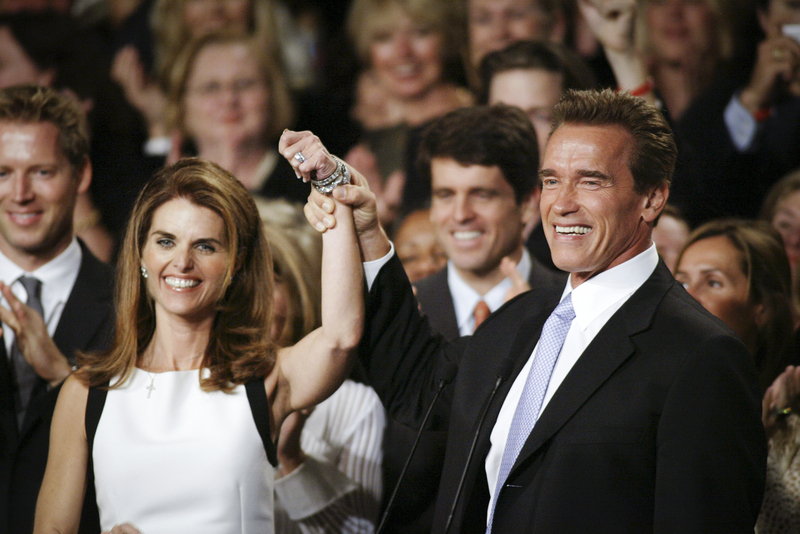
A few months later, the international action film star triumphed in a field of 135 candidates to replace Davis, who’d been re-elected the year before but had come under fire for rolling blackouts in the state and unpopular vehicle license fees. “The Governator” went on to serve nearly two terms.
If the election were just about whether or not Davis should keep his job, and not also who should replace him if he were recalled, Nalder doubts the Republican Schwarzenegger would ever have taken office. Accompanying him on the ballot were a host of other colorful characters, including actor Gary Coleman and porn star Mary Carey. Per the rules of the recall, the candidate with the most votes, not necessarily the majority, wins.
“I just think the recall probably wouldn’t have happened — because there wasn’t that much upset at Davis himself — if we didn’t, you know, have any fun alternatives,” she said.
California voters this year are deciding whether to approve Proposition 5, which would do away with “the second question” of who should replace a state elected official if they are recalled. Instead, depending on the office and the timing, a replacement would be appointed or elected in a special election.
The measure was placed on the November ballot by Democratic lawmakers in 2024 with the support of the secretary of state and good governance groups Common Cause and League of Women Voters. It came in response to the 2021 attempted recall of Gov. Gavin Newsom. Republican lawmakers voted against it, arguing that it would dilute the power of the voters and add costs associated with follow-up special elections.
However, with 14 propositions on the ballot and not a dollar raised so far in support or opposition, both sides may have to rely on voters’ gut reactions.
The “weak gazelle”
Aside from the recall of Davis, the only other successful state recall this century was that of the author of Prop. 5, Democrat Josh Newman.
In 2017, Newman was a freshman lawmaker representing a purple Southern California district when he joined 27 of his colleagues in approving the gas tax, which added a 12 cent surcharge to every gallon of gas purchased in California to fund transportation projects. Republicans fiercely opposed the effort, arguing new taxes weren’t necessary. The bill passed with the bare minimum of votes.
Less than two weeks later, then-conservative commentator and now-San Diego Assemblymember Carl DeMaio told Orange County talk show hosts that gas tax opponents needed to use the “gazelle strategy,” to begin taking out lawmakers who’d approved the tax.
“We’ve identified that weak gazelle, the slowest gazelle, the one with the limp,” he said. “And that’s Josh Newman, in Orange County.”
Why Newman? Because he was elected by the slimmest margin of any senator, fewer than 2,500 votes.
In the ensuing weeks, DeMaio’s organization, Reform California, led the effort to recall Newman, helping to collect more than 64,000 signatures — equivalent to 20% of voters in the last election — and centering its campaign on Newman’s “deciding vote” on the tax.
Close to 60% of voters chose to recall Newman in June 2018, replacing him with Republican Ling Ling Chang. The recall ended the Democrats’ supermajority in the state Senate.
In a recent interview with CalMatters, DeMaio stood by his “weak gazelle” strategy.
“If voters want to stop something from happening and being repeated, then mid-term, sometimes the only thing they can do is to use a recall as a way of expressing their opposition,” he said.
But Newman said that kind of “political gamesmanship” was not what former progressive governor Hiram Johnson intended when he proposed the law in 1911.
In a speech, Johnson characterized the recall process as “the precautionary measure by which a recalcitrant official can be removed.”
Newman said he doesn’t feel he fit that bill.
“I didn’t do anything other than cast a tough vote,” he said. “Was I malfeasant? I hardly think so. Especially given the state of the state’s road systems at the time.”
Newman made recall reform one of his priorities when he was elected back into office in 2020. After an expensive recall election for Newsom, other Democrats had the political will and Newman put forward Senate Constitutional Amendment 1, which became Prop. 5.
Newman said the title of the proposition, which says that it “Changes Recall Election Process for Statewide Officers,” may confuse voters, since legislators do not hold statewide office, though all California legislative races would be affected by the change.
How would it work?
If Prop. 5 passes, eliminating the replacement question, the governor would call a special election within about four months to replace a recalled state senator or assemblymember. If the governor was recalled within the first two years of their term, the secretary of state would call a special election. If they are in the second two years of their term, the lieutenant governor would finish the governor’s term. The ousted official would be allowed to run for the same office in the special election.
If a statewide official such as the state treasurer, attorney general, or insurance commissioner were recalled, the governor would appoint their replacement to serve until the next scheduled election.
If Prop. 5 were to pass, DeMaio said the gap in representation may dissuade voters from approving a recall, even if they want a change.
“The argument will now be made, if Prop. 5 passes, that if you vote yes on recall, then you’re going to be without a representative for months, if not longer, and so you’re going to silence your community,” he said.
He said extra special elections would lead to higher costs to taxpayers. The 2021 attempted recall of Newsom cost about $200 million to administer — a cost that would double if there were two separate elections.
However, Nalder suspects the change would lead to fewer recalls in general, likely a guiding force in Democrats’ support of the effort.
“It’s relatively easy to get the signatures, and it causes a lot of chaos and costs a lot of extra money,” she said. “That’s easier for Democrats to want to change because they’re the ones who win more in the races.”
A Public Policy Institute of California poll in early September found the measure faces long odds, though: 59% of likely voters said they likely would vote “no” and just 35% said they would vote “yes.”
Nalder said the poll was conducted before voters had done their ballot homework, and upon learning more, they’ll likely align with their party’s positions.
Sacramento